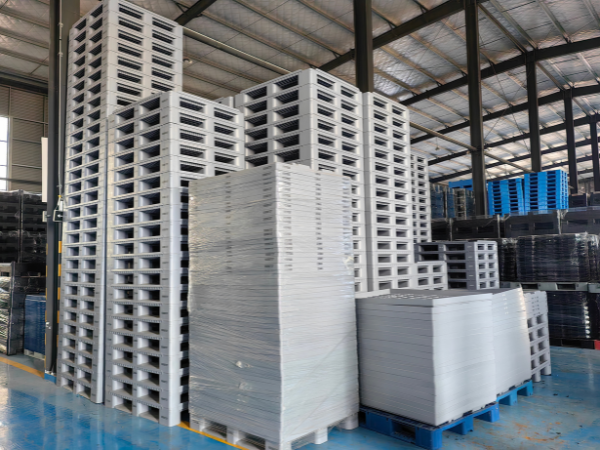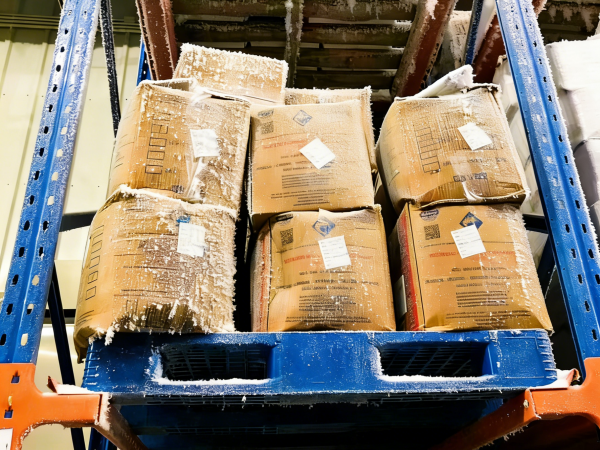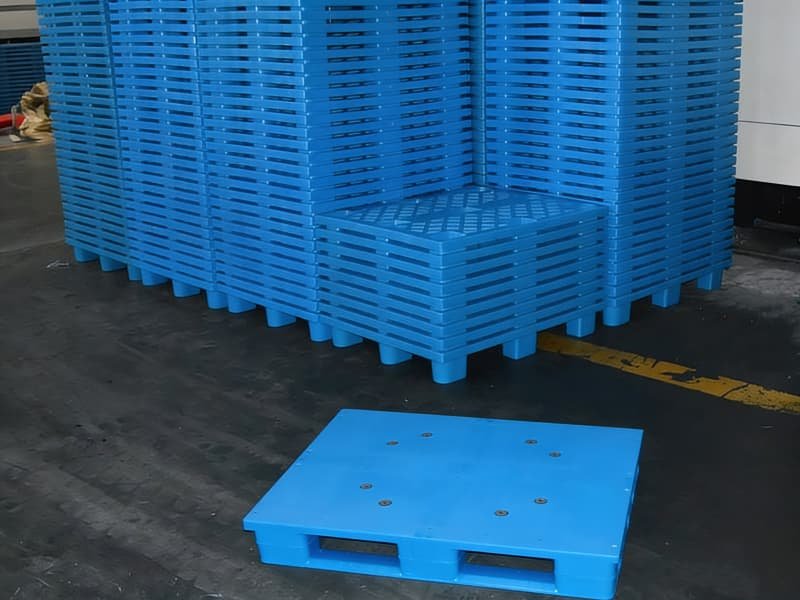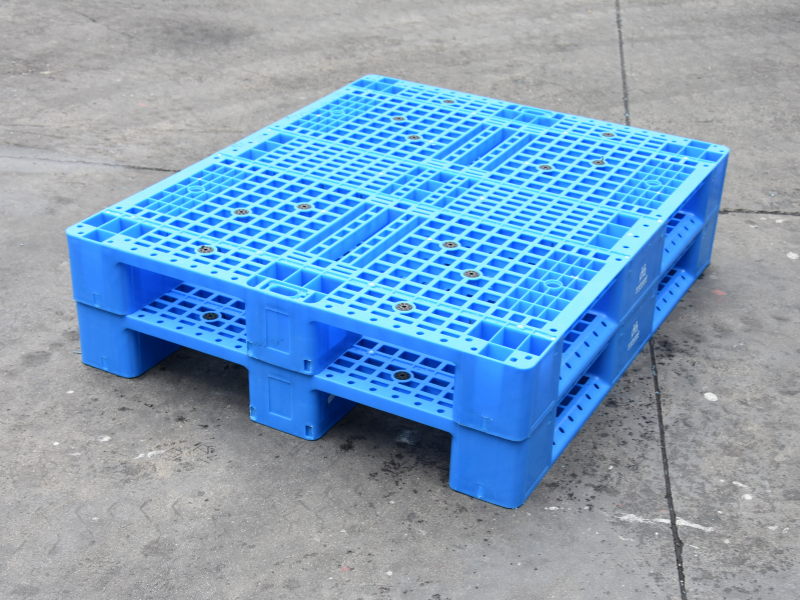
According to Smithers, global packaging waste is projected to reach 434.5 million tonnes in 2025 — and 30 to 32% of that will be discarded rather than recovered. Cardboard, stretch film, broken wood pallets, and single-use plastic packaging are filling landfills faster than supply chains can rethink them.
When sustainability enters the conversation, plastic tends to absorb most of the blame. The association is understandable: ocean debris, overflowing landfills, and packaging that gets used once and disappears into the waste stream. You might hesitate after seeing these headlines— even when the plastic in question is nothing like the plastic causing the problem.
We understand why you may hesitate. In fact, the plastics driving today’s environmental crisis are overwhelmingly single-use items — designed to be discarded. But reusable plastic pallets are different. They are designed for hundreds of trips, and when their service life ends, the material can be recovered and processed again.
In this article, we cover why reusable plastic pallets are a genuinely sustainable alternative to other material handling platforms — their operational advantages, who’s already using them, and when the switch makes sense for your operation.
Are Reusable Plastic Pallets Recyclable?
Yes, plastic pallets are recyclable — and that sets them apart from most other material handling platforms on the market.
Reusable plastic pallets made from thermoplastic materials such as HDPE or PP can often complete 200 or more trips before they reach the end of life. When you no longer want to use them, they can be collected, ground, and pelletized, then used again to produce recycled plastic pallets. After that, the recycled pallet reaches end of life, and the material can be recovered again. This loop is not endless. After multiple recycling cycles, the material may no longer meet the load requirements for another pallet. Even then, it can still be downgraded into other plastic products instead of going straight to a landfill.
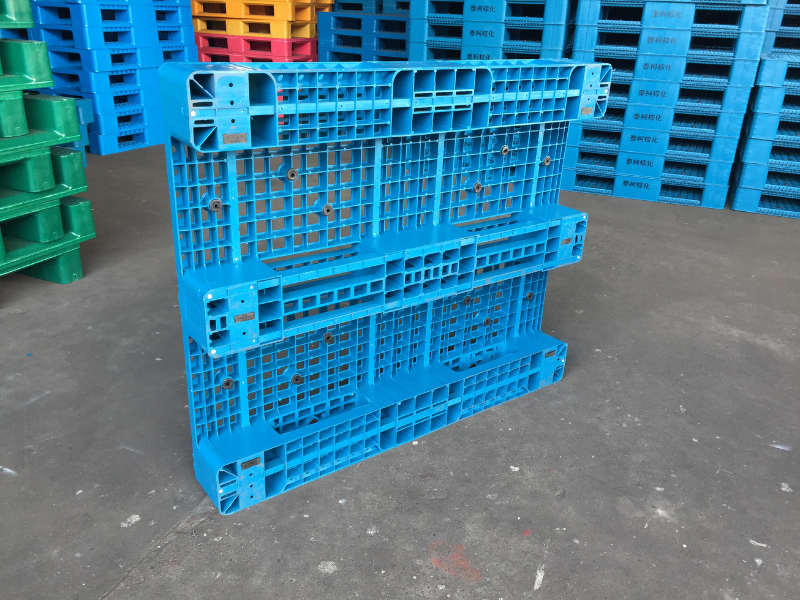
Wood works very differently. Once a wood pallet breaks, it cannot be turned back into a new wood pallet. It may be chipped, burned, or used in lower-value applications, but its value as pallet material ends there. Plastic pallet material keeps its value longer. When it still meets pallet performance requirements, it can return to pallet production. When it no longer does, it can still be used in other plastic products. That gives you a more practical recovery path and a much lower chance of ending up with pure waste.
The Advantages of Reusable Plastic Pallets
Beyond recyclability, reusable plastic pallets deliver operational advantages that compound across every leg of your supply chain.
Built for Automation
Plastic pallets are injection-molded to precise tolerances and engineered to resist creep — the slow, permanent deformation that occurs when a material is held under sustained load. Wood pallets creep faster and more unpredictably, which is why they introduce dimensional variability the longer they stay in service. With plastic, deformation is minimal and far slower, so your conveyor systems, AGVs, robotic pick stations, and high-bay racking run with fewer jams, fewer misreads, and fewer unplanned stoppages.
Uniform self-weight is another advantage that automation exposes quickly. Wood pallets vary in weight batch to batch — even within the same order — because moisture content, wood species, and repair history all affect the final number. Plastic pallets come off the same mold every time, so your equipment is always working with a consistent load input, not compensating for variance.
Low deflection under load also means plastic pallets last significantly longer on racking systems before they need replacing — and fewer replacements means less raw material consumed over the life of your fleet.
No Debris, No Nails
Wood pallets shed something every time they move through your facility — fibers, splinters, protruding nails, fragments of broken boards — damaging your packaging, creating liability exposure, and putting your team at risk. High-density plastic generates almost none of this: no fasteners to work loose, no grain to splinter, nothing shedding onto your products or your floor.
For operations where even microscopic contamination isn’t acceptable, we manufacture metal detectable plastic pallets with detection additives built directly into the resin. If wear ever produces a sub-millimeter fragment after years of use, your existing inline metal detector will catch it — no additional equipment, no process changes, no blind spots.
Consistent Performance, Hundreds of Cycles
Every time you use a wood pallet, it gets a little weaker. Moisture warps it, heavy loads crack it, and repeated handling loosens the joints. Before long, you’re not managing a pallet — you’re managing a repair schedule.
Our Reusable Plastic Pallets don’t work that way. They carry the same load on trip 200 as they did on trip one, so you always know exactly what you’re working with — and you can plan your stacking, storage, and handling routes around that.
To put it in numbers: a wood pallet at $18 lasts around 20 trips, which works out to $0.90 per use. A plastic pallet at $50 lasts 200 trips — that’s $0.25 per use. You pay more upfront, and spend significantly less every single time after that.
Over a fleet of any real size, that difference adds up fast. Switching to reusable plastic pallets isn’t just a sustainability decision — it’s a straightforward financial one.
30% Lighter, Every Single Trip
Plastic pallets run approximately 30% lighter than equivalent wood pallets. Per shipment, that’s a modest difference. Across thousands of ocean freight containers or LTL movements, it compounds into measurable reductions in fuel consumption, freight cost, and carbon emissions.
Lower pallet weight also means lower total vehicle weight on every single trip — which is one of the most direct levers you have for bringing down transport-stage carbon output without changing your routes, your carriers, or your products. And with more of your weight allowance going to actual cargo rather than the pallet carrying it, you get more revenue-generating product on every truck.
Hygienic by Design
A hygienic plastic pallet gives you a cleaner, more controllable handling surface from the start. Its non-porous structure does not absorb water, spills, oils, or residues, so it is easier to wash, sanitize, and return to service between cycles. That matters in food, beverage, pharma, and other hygiene-sensitive operations, where standing moisture, trapped contamination, and hard-to-clean surfaces create risk. Compared with wood, plastic does not soak liquids into the material, grow mold inside the grain, or release splinters and dust during use. Compared with metal, it is less prone to corrosion in wet processing or washdown areas. When you need pallets that support FDA, HACCP, or similar sanitation programs, plastic gives you a more reliable base for routine cleaning, inspection, and contamination control.
Lower Cost to Manage
Minimal repair requirements and no unexpected replacement demand make reusable plastic pallets a natural fit for pooling, shared-use programs, and reverse logistics — and when you shift to a pooled model, you eliminate not just purchase cost but inventory, labor, storage footprint, and the periodic write-offs that come with running a wood fleet. The pallet becomes an operational input, not a capital burden.
What Kinds of Companies Are Using Reusable Plastic Pallets — and Why?
Food and beverage, pharmaceutical, and automotive companies were among the first to move to reusable plastic pallets — for good reason. These operations need pallets that stay clean, wash easily, do not absorb moisture, and do not shed debris across processing, cold chain, warehousing, and distribution. Plastic pallets have already become a practical standard in many hygiene-sensitive and repeat-use supply chains.
For pharmaceutical and medical customers, we typically supply solid-deck nine-leg pallets and 3-runner pallets. These formats are easier to clean, support batch-controlled operations, and hold up more consistently in the kind of controlled, repetitive handling these environments require.
Our customers also include fresh produce growers, food processors, manufacturers, logistics managers, pallet distributors, and retailers serving major supermarket chains. If you move product at volume and you are still replacing wood pallets on a regular basis, reusable plastic pallets are worth a serious look.
Is Now a Good Time to Switch from Wood Pallets to Reusable Plastic Pallets?
Yes. If you are still replacing broken wood pallets, dealing with moisture, or spending time on pallet quality issues, now is a good time to switch.
The reason is simple. A wood pallet may cost less to buy, but it often costs more to keep using. If a reusable plastic pallet costs $50 and stays in service for years, while a $20 wood pallet needs to be replaced again and again, the real cost is no longer the purchase price. It is the cost of replacement, damage, labour, and disruption.
The switch is also easier than many teams expect. In most cases, you do not need to change your whole operation. You only need to change the pallet used inside it. Forklifts, warehouse flows, and daily handling can usually stay the same.
A better way to start is not to replace everything at once. Start with one warehouse, one cold room, one export lane, or one product line where wood pallets already cause the most trouble. That gives you a clear way to compare cost, hygiene, and handling performance before you expand.
Make the Switch from Wood Pallets to Longer-Lasting Reusable Plastic Pallets
Once you begin considering reusable plastic pallets, the next step is choosing a manufacturer that can help you make the switch from wood pallets with confidence. At EnlighteningPallet, we focus on durable and environmentally responsible plastic handling products built for longer service life and repeated use. Our factory produces plastic pallets, plastic pallet boxes, and bottled water racks that help you reduce pallet waste, improve handling consistency, and move toward a cleaner, more sustainable supply chain. If you are planning to replace wood pallets with a solution that lasts longer and supports repeated circulation, our products such as Reusable Double-Side Heavy Duty Plastic Pallet can give you a practical starting point for a smoother and more reliable transition.