Many businesses choose the wrong pallet because an unusually low price or an overstated performance claim looks convincing at first. The problem often appears only after delivery: the pallet may not work with the forklift, pallet jack, rack, or conveyor, leaving the business with unusable stock and a wasted investment.
In 26 years of running our pallet manufacturing business, we have heard just about every pallet selection rumor imaginable. In this article, we will clear up the 11 most common ones and explain what these claims leave out. This will help you make a clearer decision and choose a pallet that works in your actual operation.
The Lower The Pallet Price, The Better The Pallet.
Not necessarily. The lowest purchase price is better only when the pallet completes the job at an acceptable total cost. A more expensive pallet may cost less over time because it reduces product damage, needs fewer replacements, is easier to clean, or completes more trips. The reverse can also be true. If most pallets never come back, paying for a long service life may not make financial sense.
We recommend comparing every pallet using the same cost factors. For example, comparing only the purchase price of a one-way wood pallet with the expected lifespan of a reusable plastic pallet will not give you a fair result. Instead, you can add up the costs you will actually pay, including freight, return transport, cleaning, repairs, lost pallets, product damage, disposal, and downtime. Then divide the total by the number of completed trips. This will show you which pallet really costs less to use, not just which one has the lowest purchase price.
A Food-Grade Pallet Is Automatically Easy To Clean.
That is inaccurate. “Food-grade” and “easy to clean” are two separate requirements. Food-grade pallets refer to whether the material and additives are suitable for a defined food-related use, usually with requirements for source control and traceability. Cleanability depends on the pallet’s shape and whether wash water, cleaning chemicals, and visual inspection can reach the relevant surfaces.
A pallet made from suitable material can still have deep ribs, open cavities, joints, or water traps that are difficult to clean. A smooth pallet made from undocumented material creates the opposite problem: it may wash easily, but you still cannot confirm whether the material is suitable for the intended food application.
For a hygiene-sensitive operation, check both material and design. Confirm the material declaration, the actual contact scenario, top and bottom geometry, drainage, cleaning chemicals, wash temperature, and inspection method before approval.
Plastic Pallets Are Always The Safest Choice.
Only in some applications. Plastic pallets avoid splinters, loose nails, rot, and water absorption. Their consistent dimensions can also make handling more predictable in hygienic facilities and automated systems. Those are real advantages, but they do not make every plastic pallet safe for every job.
Heat, long periods under load, low-temperature impacts, inadequate surface friction, or placing a non-rackable pallet in beam racking can introduce different hazards. Metal may be more suitable for extreme loads or temperatures. Well-maintained wood can also be safe and practical on many general transport routes.
Choose for the complete working condition. The pallet must suit the load, packaging, handling equipment, rack, and environment. Material alone cannot settle the safety question.
Every Pallet Material Has A Guaranteed Number Of Trips.
The exact number of trips cannot be guaranteed, but every pallet type has an expected service-life range. The actual number depends on its material, structure, load, and working conditions. Corrugated paper pallets are generally designed for one complete shipment. Presswood and lightweight wooden pallets may complete one or a few trips, while repairable wooden pallets can normally be used for several to dozens of trips.
For plastic pallets, the raw material and design make a major difference. Recycled-material plastic pallets are suitable for one-way export or fewer than 10 light-duty cycles. Heavy-duty plastic pallets can complete around 200 cycles in a controlled return loop. This is why you should not judge service life from the term “plastic pallet” alone.
Forklift impacts, overloading, racking, temperature, cleaning, repair quality, and pallet loss can still reduce the actual number of completed trips. We recommend using the expected cycle range as a starting point, then calculating the cost of each completed trip based on your own operating conditions:
Cost per completed trip = (purchase + freight + return + cleaning + repair + loss + product damage + disposal + downtime – recovery value) / completed trips
This calculation helps you compare pallets by the work they actually complete, rather than choosing one based only on its purchase price or an unsupported service-life claim.
A Durable Pallet Is Less Likely To Be Lost Or Stolen.
Usually not. Durability alone does nothing to keep a pallet inside the return loop. Metal pallets may attract theft because of their scrap value, while common wood and plastic sizes are easy to reuse elsewhere. Paper and low-cost presswood usually have less resale value, but they are designed for one-way or limited use rather than long-term asset recovery.
In most operations, no. A pallet does not become harder to lose or steal simply because it is more durable. Metal pallets may be stolen for their scrap value, while standard wood and plastic pallets often disappear because they can be reused almost anywhere. Paper and low-cost presswood pallets have less resale value, but they are built for one-way or limited use. They are not a solution for protecting a returnable pallet fleet.
If you invest in durable pallets without building a recovery process, you may lose them before their longer service life creates any savings. We recommend using distinctive colors, permanent molded ownership marks, serial numbers, barcodes, or RFID tags so each pallet can be identified immediately. Plastic pallets can hold an RFID chip inside the molded structure, making it less likely to loosen or fall off than an RFID tag attached to a wooden pallet.
You also need to record every handoff and assign clear return responsibility to each receiving location. Deposits, check-in records, return deadlines, and regular inventory reconciliation make that responsibility enforceable. A barcode or RFID tag tells you which pallet is missing, but accountability and follow-up are what bring it back.
Wooden Pallets Always Have A Higher Load Capacity.
In many cases, yes, but not always. A plastic pallet without steel reinforcement can reach a dynamic load of 2,200 pounds (about 1,000 kg) and a static load of 4,400 pounds (about 2,000 kg). A wooden pallet can reach a dynamic load of 4,600 pounds (about 2,000 kg) and a static load of 8,000 pounds (about 3,600 kg).
Those figures show that material alone does not decide capacity. Pallet structure, dimensions, load distribution, support conditions, and manufacturing quality all affect the final rating. A poorly designed wooden pallet will not outperform a properly engineered plastic pallet simply because it is made from wood.
You can absolutely choose a wooden pallet for frequent dynamic loads. If the goods themselves are heavy and the main task is storage, however, a plastic pallet can deliver better value. The correct comparison is the rated load under your actual support condition, not the assumption that wood must always carry more.
Every Pallet Can Be Used In Warehouse Racking.
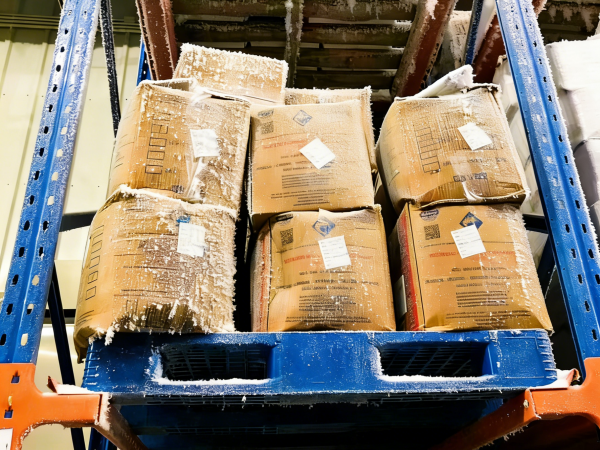
Absolutely not. A pallet that cannot support the full unit-load weight under your exact rack configuration must never be placed in warehouse racking. Pallet dimensions, beam span, orientation, support position, load distribution, storage time, and temperature all affect whether the pallet can bridge the rack safely.
We do not recommend any pallet made from recycled plastic for rack use, even when a supplier claims it is rackable. Recycled resin can vary in stiffness and long-term creep performance. If that pallet deflects or collapses in the rack, the loss will be far greater than the amount saved on the purchase price.
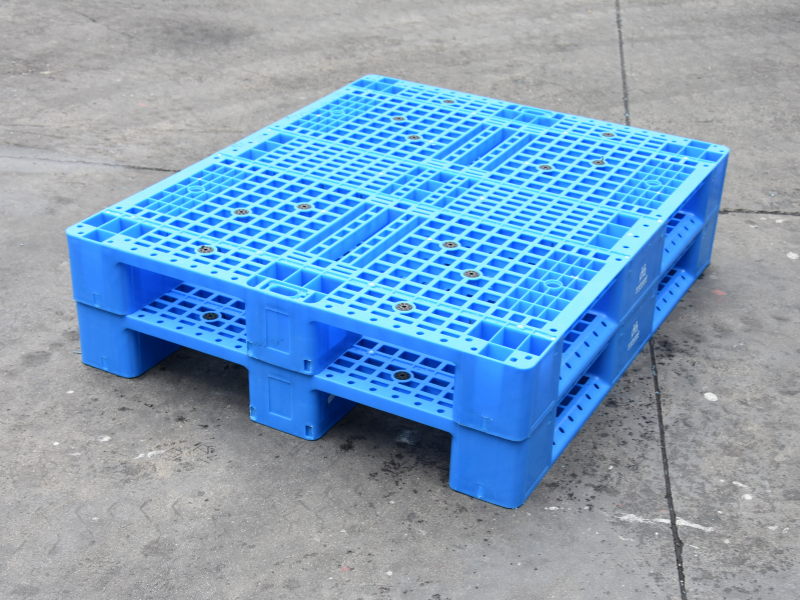
At Enlightening Pallet, we add at least four steel reinforcement bars to our rackable plastic pallets. This is not decorative reinforcement. The steel must follow the load path and control deflection across the actual beam span before the pallet can be approved for racking.
A Good-Looking Pallet Guarantees The Inside Is Intact.
Not from appearance alone. When a wooden pallet is infected by decay fungi, deterioration often begins inside the wood before obvious signs appear on the surface. A pallet may still look acceptable while its internal strength has already started to decline.
Plastic pallets behave differently. Even after long use, a one-piece injection-molded pallet does not normally begin deteriorating from hidden fungal decay. Molded production makes its dimensions, load-bearing structure, and quality more controllable, so visible damage and internal deformation usually appear together.
This makes visual inspection more dependable for plastic pallets. When two used pallets both look clean and undamaged, the plastic pallet carries a much lower risk of hidden rot or internal fungal damage than the wooden pallet.
You can see how this consistency is created in our guide to the plastic pallet manufacturing process.
Plastic Pallets Are Always More Expensive.
Not always. Most people expect every plastic pallet to cost more than a wooden pallet, but our customers repeatedly tell us otherwise. Plastic pallets purchased from our factory have sometimes cost the same as the new wooden pallets they previously used.
The price difference can move even further in plastic’s favor. Our heavy-duty recycled-material pallets can cost less than wooden pallets while still meeting demanding floor-storage or transport requirements. The material, structure, production route, order quantity, and required load all affect the actual purchase price.
When you are considering an extreme heavy-load application or a one-way shipment, plastic can beat wood in long-term operating cost and in the initial purchase price. Assuming that plastic must cost more can remove the better option before the quotations are even compared.
Only Wooden Pallets Can Be Repaired.
Traditionally, yes. Today, no. Most wooden pallets can be repaired, while a conventional one-piece injection-molded plastic pallet cannot. But wood repair normally means pulling out nails, removing the damaged board or block, and fastening a replacement into a new position rather than driving another nail into the original hole.
After a repair, the old nail holes remain and keep enlarging under repeated impact and vibration, reducing the pallet’s overall stability. This is why many businesses with closed-loop logistics grade repaired wooden pallets instead of treating every repaired unit as equal to a new one.
At Enlightening Pallet, we have developed plastic pallet with assembled skids that allows a damaged plastic pallet base to be removed and replaced directly. We also offer modular plastic pallets that allow damaged sections in other positions to be replaced. These designs have broken the old rule that plastic pallets cannot be repaired.
Plastic Pallets Are Always The Best Option For International Shipping.
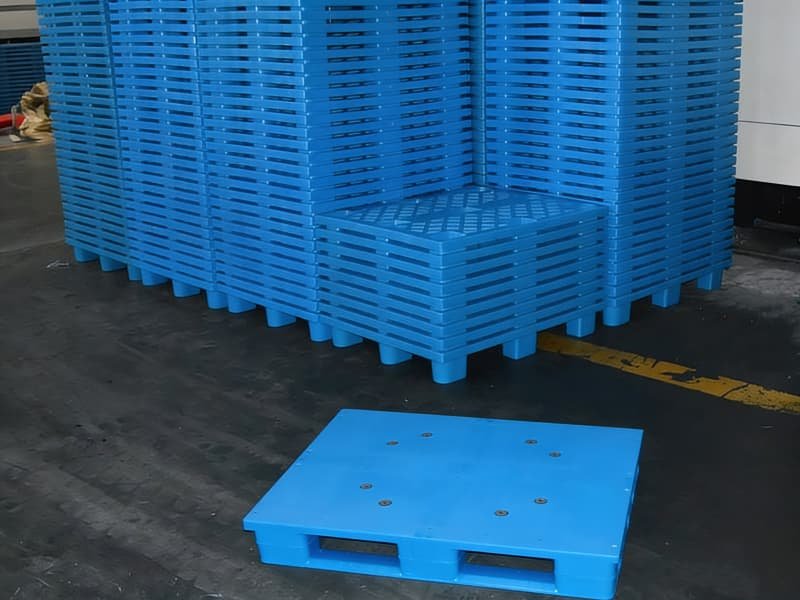
For most export routes, yes, but not all. Lightweight plastic export pallets are convenient for many international shipments. Because they are not solid-wood packaging, they do not require the treatment process associated with ISPM 15. They also resist moisture and have consistent dimensions and tare weight.
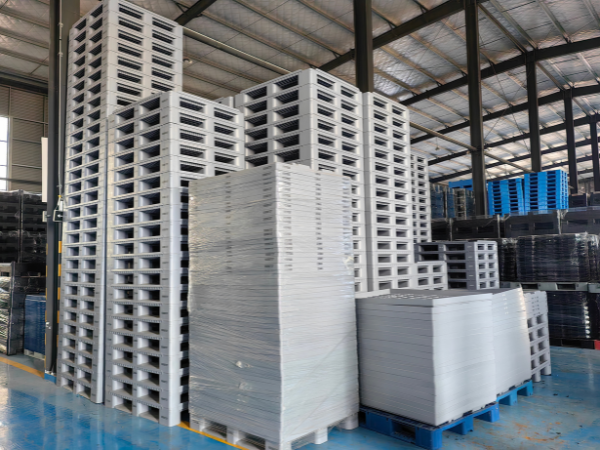
Compliant solid-wood pallets can still be the more practical choice when purchase cost and local availability matter, provided the treatment and mark are valid. Presswood, plywood, and paper pallets may also suit selected one-way loads if they meet the strength requirements and the receiver accepts them.
An ISPM 15 exemption does not guarantee acceptance at every destination or facility. Confirm the requirements of the origin country, destination country, carrier, customs process, and receiving customer. Then verify dynamic load, entry configuration, pallet height, and container utilization. The best export pallet is the one that satisfies the entire route, not simply the one that crosses a border without wood treatment.
So How Do You Choose The Right Pallet For Your Supply Chain?
Now that we have cleared up the most common misconceptions, you do not need to restart the selection process from zero. If you are still comparing pallet sizes, deck structures, bottom designs, or entry types, our guide on how to choose a plastic pallet covers those basic decisions. Here, we will help you turn the misconceptions above into five final checks before you approve an order.
1. Check The Load Rating Under Your Actual Support Condition
If you plan to place the pallet on warehouse racking, do not use its static load rating as proof that it is rackable. Ask for the racking load tested with your beam span, pallet orientation, load distribution, temperature, and storage time. We recommend rejecting the pallet for rack use if the supplier cannot provide test data from a comparable configuration. A confident sales claim cannot support your goods when the pallet is suspended between two beams.
2. Approve Food-Grade Material And Cleanability Separately
If you handle food, pharmaceuticals, or other hygiene-sensitive products, we recommend checking the material declaration first and the pallet structure second. Turn the sample over and inspect the ribs, joints, reinforcement openings, drainage paths, and any area where residue or wash water can collect. Then run the pallet through your normal cleaning process. A food-grade certificate confirms the material; it does not make a difficult structure easier for you to wash and inspect.
3. Match The Pallet Life To Your Real Return Rate
You should pay for durability only when your operation can use it. If the pallet leaves once or frequently goes missing, a 200-cycle design will not recover its higher investment. Recycled-material plastic pallets are suitable for one-way export or fewer than 10 light-duty cycles, while heavy-duty plastic pallets can complete around 200 cycles in a controlled return loop.
We recommend calculating how many pallets actually return and complete another trip. That number tells you far more than the maximum lifespan printed in a brochure. If you recover only half of the fleet, you cannot calculate savings as though every pallet will complete its full service life.
4. Check The Damage And Repair Route Before You Reuse A Pallet
When you inspect a used wooden pallet, a clean surface is not enough. Internal fungal decay, weakened joints, and enlarged nail holes can reduce its strength before the damage becomes obvious. For a used plastic pallet, we recommend checking the fork-entry areas, deck, runners, welds, and visible deformation.
You also need a real repair route, not a vague promise that the pallet is repairable. Ask which parts you can replace, how the repair is completed, and whether replacement skids or modules will remain available. If the parts and repair method do not exist, you will have to discard the pallet when it breaks.
5. Approve The Exact Pallet You Tested
Before you place a volume order, we recommend testing a fully loaded sample with your actual forklift, pallet jack, rack, conveyor, AGV, and packaging. Do not test an empty pallet and assume the loaded result will be the same. Let the sample complete the same lifting, turning, racking, conveying, and storage movements it will face in daily use.
Once the pallet passes, record its material, weight, dimensions, reinforcement, and load-test conditions in your purchase specification. Your bulk order must match the approved sample. If the material, pallet weight, or reinforcement changes, the original load claim no longer applies.
Final Thoughts
The right pallet is not simply the cheapest, strongest, or longest-lasting model. It is the one that fits your load, equipment, storage method, environment, destination, and return plan at the same time. Turning those conditions into a clear specification protects the order from the assumptions behind many pallet selection mistakes.
Before approving volume production, compare drawings and test data against the actual application, then run a loaded sample through the equipment it will use. This step is especially important for racking, automated handling, hygiene-sensitive operations, and returnable loops, where a small design mismatch can create repeated costs.
Enlightening Pallet as a plastic pallet manufacturer, we can review your application, recommend a suitable plastic pallet specification, and optimize the design around your performance needs and budget. We also support plastic pallet OEM and ODM projects, sample validation, and stable long-term supply, helping you avoid costly trial and error before the full order enters production.