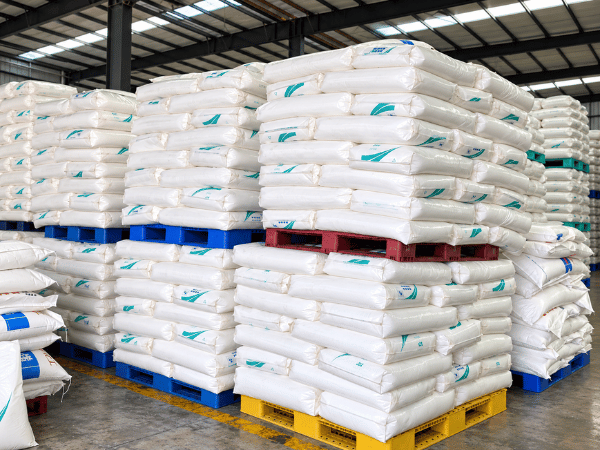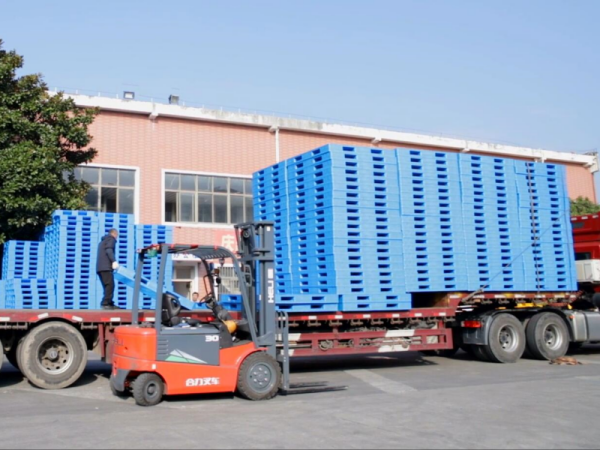
Plastic pallet collars look easy to use: fit the first collar onto the pallet, add the height you need, close the top, and move the unit. In practice, the result depends on how well the pallet, collars, load, and stacking method work together.
Our plastic pallet collars are designed to help you build a secure, stackable packaging system quickly and efficiently. In this guide, we’ll show you how the system works and how to install, load, stack, move, unload, fold, and reuse it correctly.
How Does a Plastic Pallet Collar System Work?
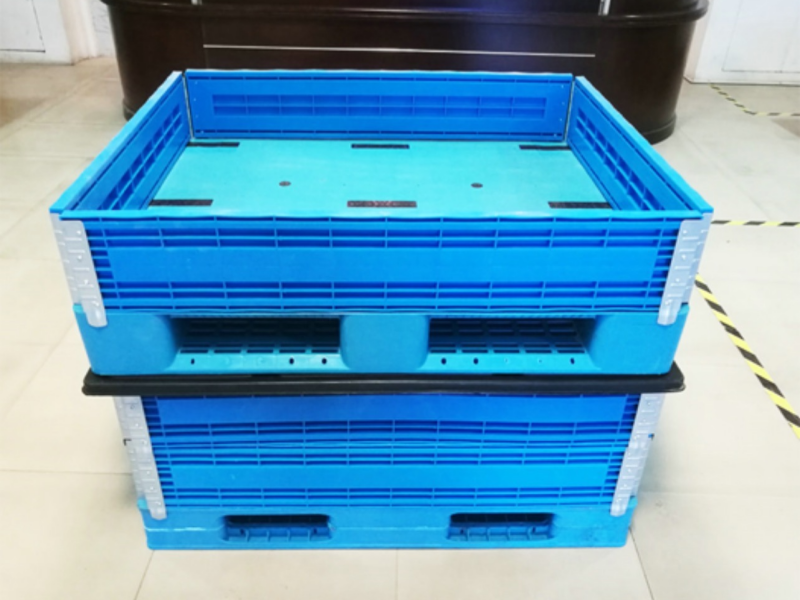
A plastic pallet collar is a separate sidewall frame that must be used with a matching pallet to form a complete container system. In this structure, the pallet supports the vertical load, while the collars contain and stabilize the goods from the sides.
Compared with a plastic pallet container, pallet collars can be added or removed to change the height, so the plastic collars are more suitable for loads of different sizes without changing the pallet size.
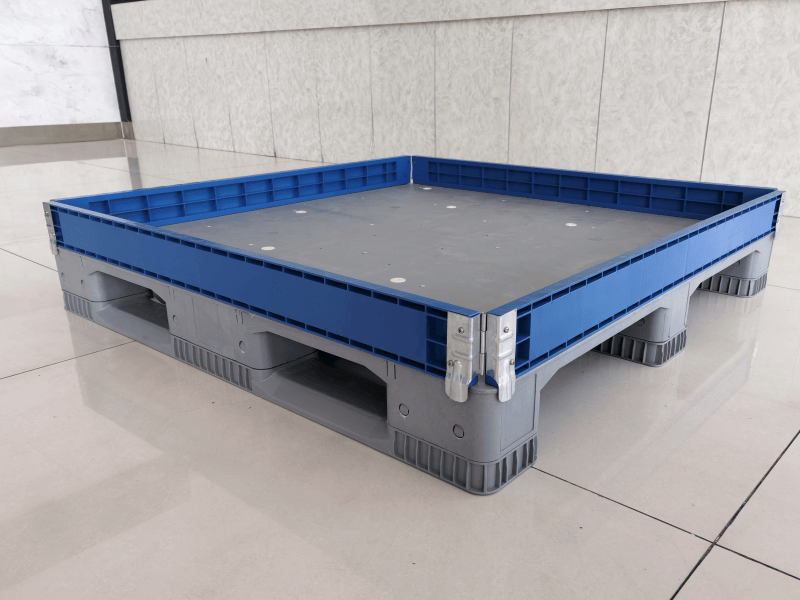
What Are the Main Parts of a Pallet Collar?
A plastic pallet collar itself mainly consists of four side panels and four galvanized steel hinges. To build a complete pallet collar system, it can also be used with corner joints, a matching pallet, and a lid.
Side panels: Each collar has four side panels. Good-quality panels stay straight and vertical when the collar is fully opened.
Galvanized steel hinges
Each collar has four galvanized steel hinges. They allow the side panels to fold and also help secure the collar in position on the pallet.
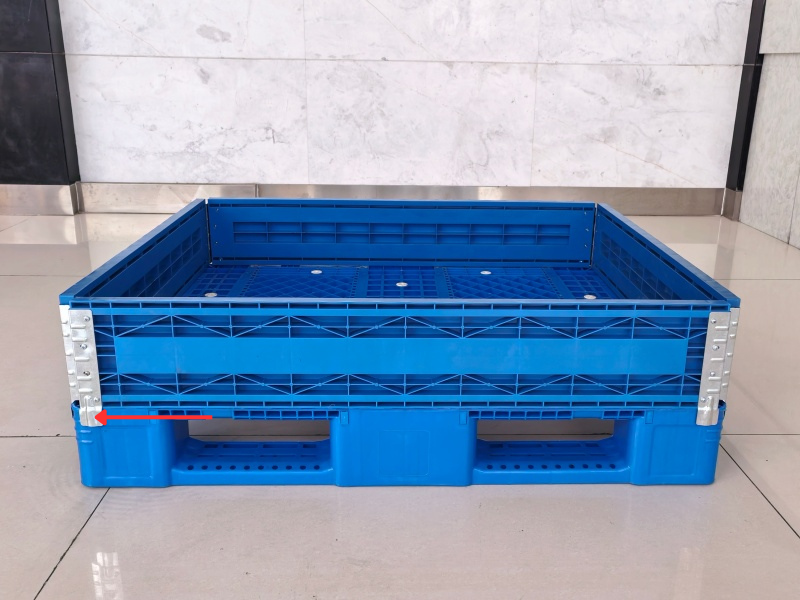
Corner joints
These are optional parts used between collar layers to keep them securely connected. We normally use PP corner joints, especially when several collars are stacked.
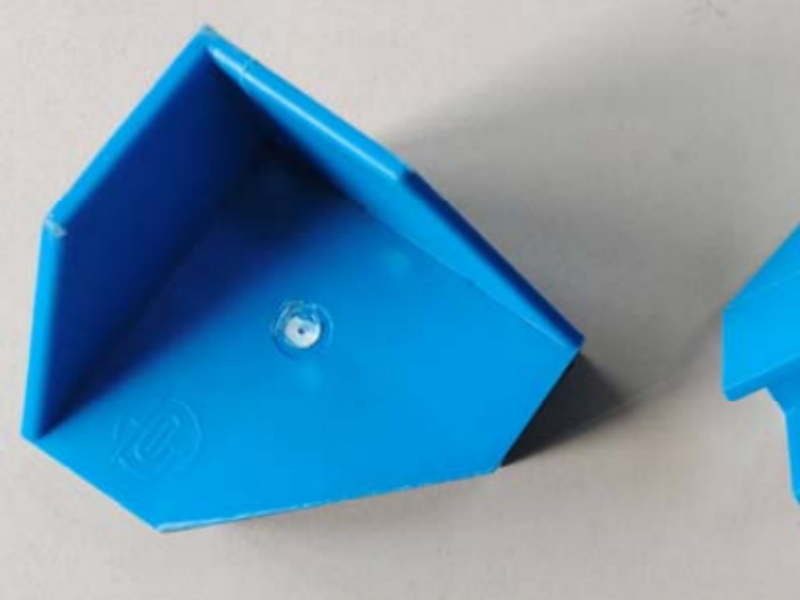
Pallet
The pallet is not included in the price of each collar. We can recommend a suitable pallet model based on the collar size and your loading requirements.
Matching lid
The lid covers the top collar after the system is assembled. It also creates a stable top surface when another complete pallet collar unit needs to be stacked above it.
For dust-sensitive or fragile goods, add a pallet lid before loading. The lid presses gently on the collar’s top edges, locking the system into one rigid unit and protecting the contents from external dust or moisture.
Typical plastic lids are made of PP and available in two standard sizes—1200 × 800 mm (for 1208 collars) and 1200 × 1000 mm (for 1210 collars). At Enlightening Pallet, these lids are designed exclusively for three-runner (chuan-type) pallets, as their underside structure provides a stable interface for stacking and prevents lid deformation under load.
Corner Joints
For multi-layer collar stacking, we strongly recommend using corner joints to keep the layers aligned and improve stacking stability.
Internal dividers
Internal dividers, made from PP, EVA, or EPE, can be customized to any grid pattern. They keep components separated, prevent abrasion during transit, and are particularly useful for delicate or multi-component assemblies.
How to Install a Plastic Pallet Collar?
Installing our plastic pallet collar system follows five simple steps: fit the first collar, add the required layers, place the lid, stack complete units if needed, and move the load by forklift. For a new setup, we recommend assembling one complete unit first to check the fit before regular loading begins.
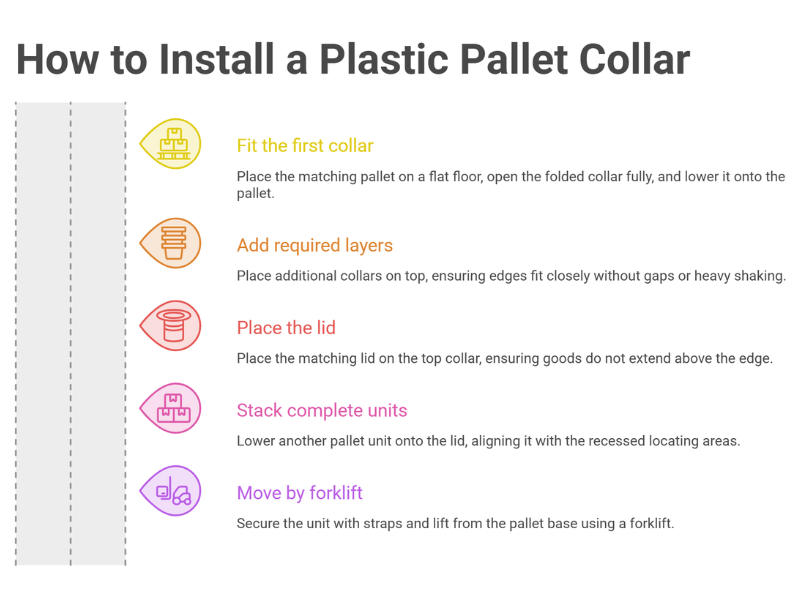
Step 1: Fit the First Collar onto the Pallet
Place the matching pallet on a flat floor, then open the folded collar fully and lower it onto the pallet.
Align one side first, then guide the remaining sides into position. Make sure all four corners sit firmly on the pallet and the collar does not tilt, lift, or slide freely.
Step 2: Add More Collar Layers
Place the next collar directly on top of the first one. The lower edge of the upper collar should fit closely against the top edge of the collar below, with no obvious gaps or offset.
Then give the upper collar a light push by hand. A correctly installed layer may have slight movement, but it should not shake heavily or shift out of position.
Continue adding collar layers in the same way until the required height is reached. For multi-layer setups, we recommend using corner joints to keep the collars connected and improve overall stacking stability.
Step 3: Place the Matching Lid
Once loading is complete, place the matching lid on the top collar.
Before closing the unit, make sure the goods do not extend above the top edge or push the lid upward. The lid should sit evenly on all sides without being forced into position.
This completes the enclosed pallet collar unit and prepares it for storage, transport, or further stacking.
Step 4: Stack Another Complete Unit on Top
If complete pallet collar units need to be stacked, first make sure the lower unit is level and the lid is fully seated.
The matching lids from Enlightening Pallet are designed with recessed locating areas that support the pallet above and help keep the next complete unit in position. If a lid is completely flat and has no locating groove or support area, it is usually not designed for this type of loaded-unit stacking.
Slowly lower the next pallet unit onto the lid and align the pallet with the designed support area. The upper pallet must sit flat and stable, with all support points correctly located and no corner hanging outside or pressing unevenly on the unit below.
This is different from adding another collar layer. Collar layers increase the height of one container, while complete-unit stacking places another loaded pallet on top.
Step 5: Move the Complete Unit by Forklift
After the system is fully assembled, the complete unit can be moved directly by forklift. Before handling, we recommend securing the stacked collar system with industrial cable ties or pallet strapping, especially when several collar layers or complete units are stacked. The straps should run vertically around the load, as shown in the example, to help keep the pallet, collars, and lid together during movement.
Insert the forks through the pallet openings and lift the load from the pallet base. Never lift or pull the unit from the collar panels, hinges, or lid.
During handling, keep the pallet level and avoid sudden turns or hard braking. Before entering a truck, doorway, or rack area, check both the strapping and the total height of the complete stacked unit to make sure the load is secure and there is enough clearance.
Recommended Plastic Pallets for Different Uses of Plastic Pallet Collars
Selecting the right pallet structure determines how stable and durable your plastic pallet collar system performs in daily operations. Below is a professional reference for pairing four common pallet designs—solid or grid decks in 3-runner and 9-leg structures—with suitable industries and applications.
| Pallet Type | Typical Industries | Best Application Scenario | Key Advantages When Used with Plastic Pallet Collars |
| Solid 3-Runner Pallet | Heavy manufacturing, machinery, automotive components | Long-term warehouse storage and high-rack stacking of heavy goods | High strength and rigidity distribute weight evenly; smooth surface ensures full collar contact and long service life. |
| Grid 3-Runner Pallet | Automated warehousing, logistics centers, cold-chain distribution | Conveyor systems and automated handling where airflow and lighter weight are required | Reduced weight with strong beam support; vented top prevents condensation under collars. |
| Solid 9-Leg Pallet | Food processing, pharmaceuticals, clean packaging plants | Hygienic transport of sealed or contamination-sensitive products | Fully closed top easy to sanitize; nestable base reduces return cost while maintaining clean operation. |
| Grid 9-Leg Pallet | Textile, electronics, consumer goods, short-haul logistics | Frequent manual or short-distance handling of lightweight goods | Lightweight and economical; mesh deck provides grip and quick drying after wash-down. |
How to Unload Pallet Collars Correctly
For multi-layer systems, the most practical approach is to work from the top down and remove each collar when that level becomes empty.
Begin with the upper products while keeping the remaining load reasonably balanced. Once the top section is clear, remove the upper collar and continue with the level below.
This gradually lowers the wall height and gives easier access to the remaining goods. It also avoids reaching over several unnecessary collar layers.
With dense or uneven products, avoid unloading all the weight from one side first if that would leave the remaining goods badly unbalanced. Keeping the load centered during unloading makes the final stages easier to control.
How to Fold and Prepare Empty Collars for Return
After unloading, inspect the collar while it is still open, then fold it through the normal hinge direction. This is the best time to spot damage because the panels and corners are still visible in their working position.
Remove labels, film, or loose material around the hinges before folding. Guide the sections inward naturally rather than twisting the complete frame to collapse it faster.
If one hinge suddenly feels much tighter than the others, stop and inspect it. Dirt, deformation, or a bent joint may be blocking its normal movement.
Once folded, stack the collars neatly for return. Keeping the empty stack aligned reduces unnecessary contact between hinges and panel edges during truck or container transport.
What Should You Check Before Reusing a Pallet Collar?
Before the next cycle, the main question is whether the collar can still open square, sit flat, stack correctly, and fold normally.
A practical reuse check covers five areas:
- Hinges: Move smoothly without obvious looseness or distortion.
- Corners: Remain square without cracks or permanent twisting.
- Panels: Stay straight without deep bends or broken edges.
- Pallet contact area: Sits flat on the base without rocking.
- Stacking surfaces: Allow the next collar to locate evenly.
The pallet needs the same attention. Even a good collar can sit poorly on a pallet with a raised corner, damaged rim, or distorted deck.
We recommend opening the collar fully before approving it for reuse. Some alignment problems are difficult to see when the unit is still folded.
How Should Plastic Pallet Collars Be Cleaned Between Uses?
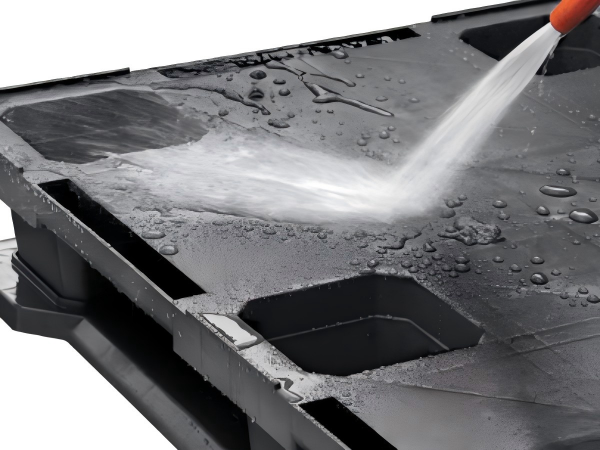
Plastic pallet collars can be washed between uses, but the galvanized steel hinges need more careful cleaning than the plastic panels. Remove labels, film, dust, and product residue first, then wash the panels with water and a mild cleaning agent.
Around the hinges, avoid long soaking and strong acidic or alkaline cleaners, as they may damage the galvanized coating over time. Do not leave water or cleaning chemicals sitting inside the hinge gaps after washing. Rinse the hinge area with clean water and let it dry fully before folding or storing the collar.
Also check the hinge movement after cleaning. If residue remains inside the joint or a hinge becomes stiff, clean the area again before the next loading cycle.
FAQ
Do plastic pallet collars always need a lid?
No. A lid is most useful when the load needs top protection, better enclosure, or a defined upper interface for the planned handling setup.
Can plastic pallet collars be used with a pallet truck?
Yes, provided the pallet base has suitable entry and the total load remains within its working limits. The collar itself should never be used as the lifting point.
Can pallet collars from different systems be mixed?
Only after checking the actual pallet fit and stacking interface. Matching outer dimensions alone does not guarantee that the locating edges or connection points will fit correctly.
Is some free space inside the collar acceptable?
Yes, as long as the goods cannot move far enough to create strong impacts during handling. Dense or fragile products usually need tighter movement control than lightweight packaged goods.
Is stretch wrap still needed with pallet collars?
It depends on the load. If goods can still move vertically or internally after the collar is installed, additional restraint may still be useful.
Can a pallet collar with a damaged hinge still be used?
Remove it from normal use until the hinge and frame alignment have been checked. A damaged hinge may still open while no longer keeping the collar square under load.
Final Thoughts
The right setup depends on more than collar height. The pallet base, collar layers, lid, cargo weight, stacking method, forklift handling, and return cycle all need to match the actual working conditions.
For a new project, we recommend testing one representative loaded unit first. This makes it easier to confirm the collar height, internal layout, lid fit, and stacking stability before regular use.
At Enlightening Pallet, we can recommend the right plastic pallet collar based on your cargo size, weight, loading method, and return process. We also support OEM/ODM configurations with matching pallets, lids, and accessories to reduce trial-and-error and support stable long-term supply. Contact Us about your needs!