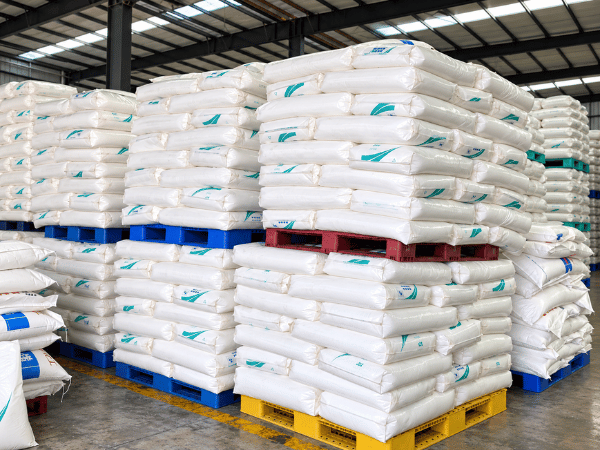
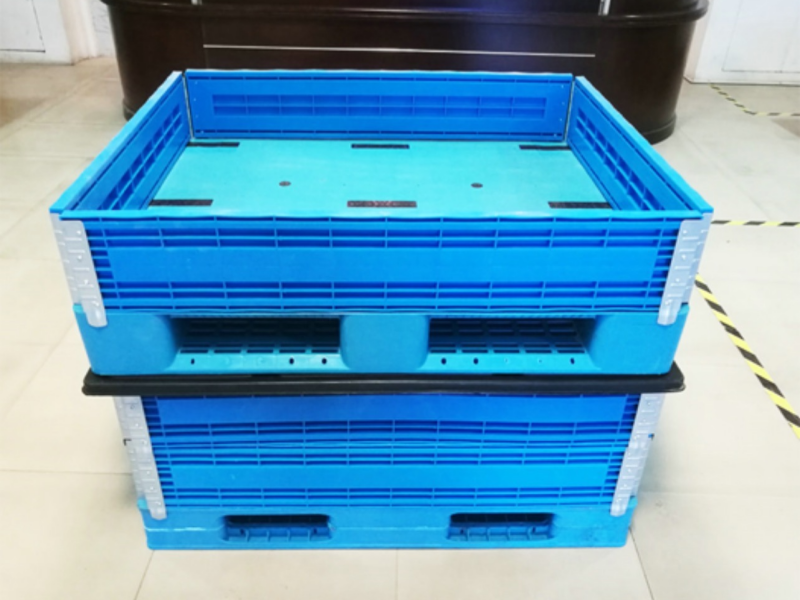
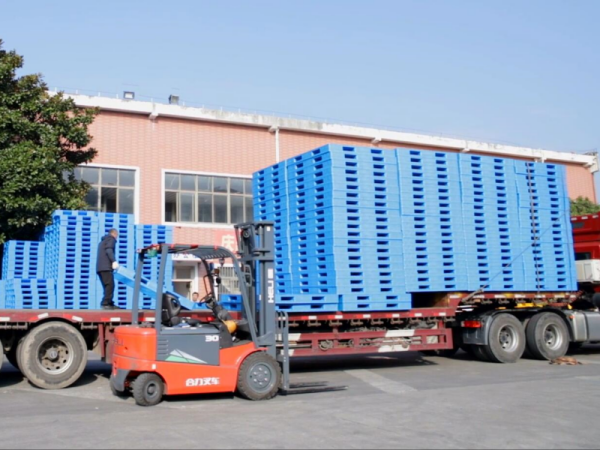
Plastic pallets are cleaner than wooden pallets by design. Their smooth, non-porous surface does not absorb moisture, mold, or attract insects easily. But in daily use, dust, grease, food residue, and water can still build up on the deck, runners, and pallet feet. If you do not clean them regularly, hygiene risks, handling problems, and shorter pallet life may follow.
In this guide, we’ll show you the cleaning tools, preparation steps, cleaning process, disinfection methods, and industry-specific tips to keep your pallets clean, safe, and ready for reuse.
- Why Do You Have to Clean Plastic Pallets?
- What Do You Need to Do Before Cleaning
- 3 Steps to Clean Your Plastic Pallets
- 5 Steps to Disinfect Plastic Pallets
- Key Pallet Cleaning Considerations for Your Industry
- FAQ About Plastic Pallets Cleaning
- How to Monitor the Hygiene of Your Pallets?
- What Is the Difference Between Cleaning and Disinfecting Plastic Pallets?
- What Regulations Should I Consider When Cleaning Plastic Pallets?
- Should I Use a Professional Pallet Cleaning Service?
- How Should I Maintain My Plastic Pallets in Daily Use?
- Should I Clean New Plastic Pallets Before First Use?
- Do Plastic Pallets Need Fumigation After Cleaning?
- Final Thought
Why Do You Have to Clean Plastic Pallets?
According to the Grand View Research 2022 Plastic Pallets Market Report, the food and beverage industry accounted for 23.4% of plastic pallet market revenue. In this sector, plastic pallets are widely used by farms to move fresh produce and by bakeries, dairy, beverage, and meat. This shows how much these high-hygiene industries trust plastic pallets in real handling environments.
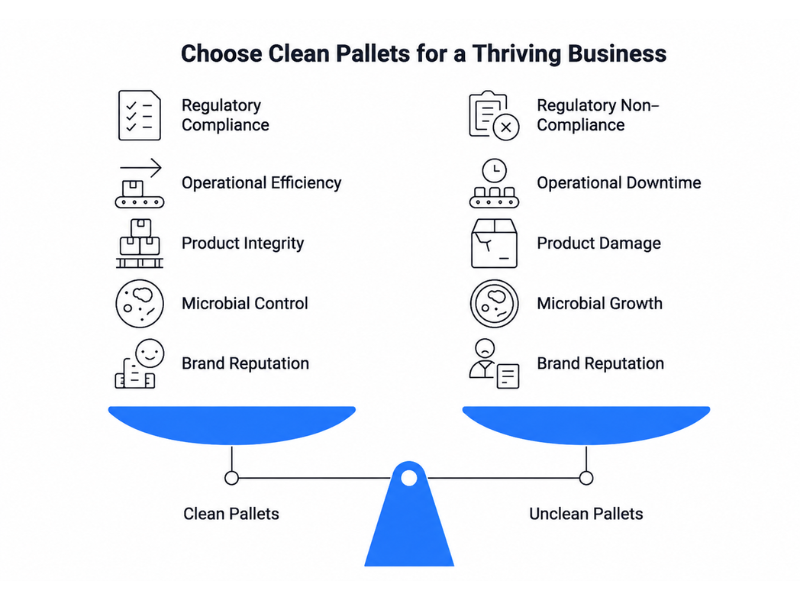
But even though plastic pallets are durable and easy to clean, you still need to maintain them regularly. If pallets are left uncleaned, you may face:
- Food safety risks: Cross-contamination can occur, increasing the risk of pathogens such as Salmonella in food handling areas.
- Shortened pallet lifespan: Dirt buildup may cause sticking or jamming, leading to equipment issues and reduced service life.
- Economic loss: Your pallets may not reach their expected service life, which means higher replacement costs over time.
What Do You Need to Do Before Cleaning
1. Pallet Status Check
Before cleaning, you must take a close look at each pallet. Use an LED flashlight to check for cracks, especially on the reinforcement ribs and pallet feet—these are the parts that carry the weight. Mark stubborn stains, so you know where to focus—yellow for oil, red for mold. This step ensures you don’t miss any problem areas and that your cleaning will be effective.
2. Tools and Materials
For most daily pallet cleaning, simple soap water or a mild detergent is enough. If your pallets have heavier contamination, use the table below to choose the right cleaning method:
| Contamination Type | Recommended Cleaning Method |
| Dust / light debris | Brush + low-pressure rinse |
| Mud / soil | Plastic scraper + pressure rinse |
| Food grease | Enzyme cleaner + warm water |
| Mold spots | Clean first, then disinfect if needed |
| Chemical residue | Neutral or weak alkaline cleaner |
| Labels / adhesive | Plastic scraper + mild cleaner |
We also do not recommend cleaners containing strong acids, strong alkalis, or harsh organic solvents such as toluene and xylene for routine pallet cleaning, as they may damage the pallet surface over time.
3. Pre-Cleaning Preparation
Before deep cleaning, remove loose dirt first. This makes the main cleaning faster and avoids spreading dust, food residue, or mud across the pallet surface.
Use these tools:
- Soft broom or brush: Remove dry dust, paper scraps, film pieces, and loose debris.
- Plastic scraper: Remove dried mud, labels, tape, or thick residue. Avoid sharp metal tools if they may scratch the pallet surface.
- Low-pressure rinse: Wash away loose dirt before using detergent. If you are using recycled plastic pallets, keep the pressure below 500 PSI.
- Foam cleaner or mild detergent: Cover oily or sticky areas and let them sit for a few minutes. This softens grease and makes scrubbing easier.
Focus on the deck, corners, reinforcement ribs, runners, and support feet. These areas collect dirt faster than flat surfaces.
3 Steps to Clean Your Plastic Pallets
Clean Your Pallets
You do not need to use every cleaning method. Choose one method based on your pallet quantity, stain level, and hygiene needs.
1. Manual Cleaning
Manual cleaning is the most cost-effective option if you only have a small number of pallets.
How to do it:
- Place the pallet on a clean floor or washing area.
- Rinse off loose dust and dirt.
- Apply mild detergent, foam cleaner, or biological enzyme cleaner on stained areas.
- Scrub the deck, corners, reinforcement ribs, runners, and support feet with a hand brush or nylon brush.
- Turn the pallet over and clean the bottom side carefully. We recommend washing the pallet with the bottom side facing up, because dirt often stays around the runners and feet.
- Rinse with clean water until no detergent remains.
Best for: small batches, light dirt, food-grade pallets, and daily warehouse cleaning.
2. High-Pressure Washing
High-pressure washing is better when you have more pallets or stubborn dirt.
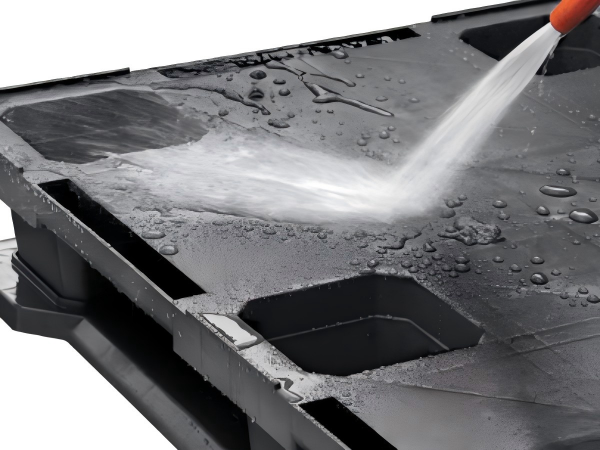
How to do it:
- Place the pallet in a washing zone with drainage.
- Start with a lower pressure and test one area first.
- For normal dirt, use 50–80 Bar.
- For solidified grease, use up to 120 Bar with about 60°C hot water.
- Clean the top side first, then turn the pallet over and clean the bottom side.
- Keep the spray moving. Do not hold the nozzle too close to one spot for too long.
Best for: medium or large batches, outdoor pallets, warehouse pallets, and pallets with mud, oil, or sticky residue.
Important: If you are using recycled plastic pallets, please avoid high-pressure washing. A low-pressure rinse (<500 PSI) is safer to prevent surface damage.
3. Tunnel Steam Washer
A tunnel steam washer is the best choice for food factories, beverage plants, and other high-hygiene facilities with large pallet volumes.
How it works:
- Pallets enter the tunnel washer through a conveyor.
- Pre-rinse removes loose dirt.
- Hot water or steam cleans the pallet surface.
- The system rinses the pallet again.
- Hot air or airflow helps remove water after cleaning.
For most HDPE plastic pallets or PP plastic pallets, we suggest using 80–90°C hot water or steam. Avoid long exposure above 90°C unless your pallet supplier confirms the pallet is suitable for higher temperatures.
Best for: food processing plants, beverage factories, dairy plants, meat processing, and large returnable pallet systems.
Main advantage: it can clean 60–200 pallets per hour, reduces manual labor, and can clean without leaving chemical residue when running a steam-only process.
Dry Your Pallets
Drying is not a small detail. If water stays inside the pallet structure or under the runners, bacteria and mold may grow again.
Simple drying method:
- After washing, stand the pallet upright or lean it against a wall at about 45°.
- Let water drain from the deck, runners, and support feet.
- Use an industrial fan or air gun to blow away trapped water.
- Check the bottom side before stacking.
Store Cleaned Pallets
If your pallets feel dry to the touch, store them in a separate clean area. If your pallets are used in food, pharmaceutical, or cold chain applications, do not place them directly on dirty floors. If long-term storage is needed, make sure the pallets are covered.
If cleaned pallets are used for loaded stacking and the goods will stay in storage for a long time, we suggest no more than 3 loaded pallet layers. Long-term static load may cause plastic pallets to develop creep over time. You can continue reading our top recommendations for pallet stacking.
5 Steps to Disinfect Plastic Pallets
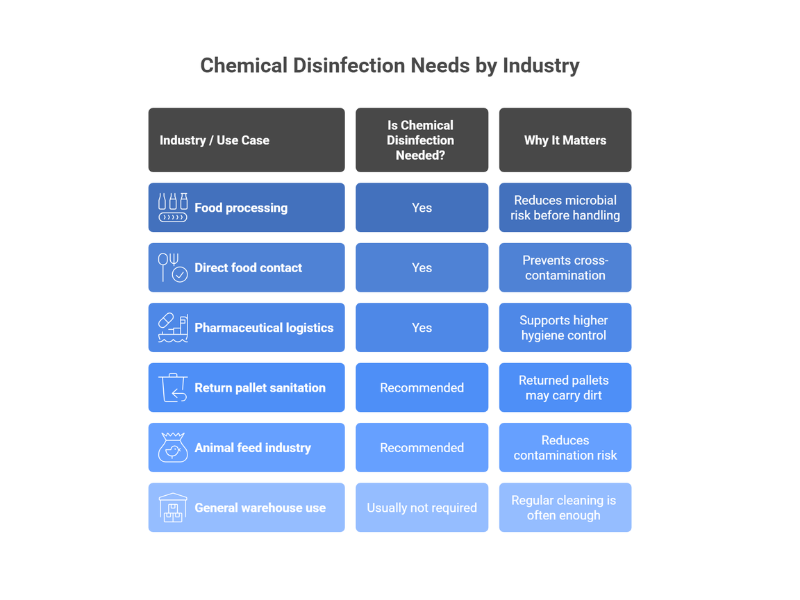
Not every plastic pallet needs chemical disinfection. But if your pallets directly contact food, or move in a high-hygiene area, chemical disinfection is strongly recommended after cleaning.
The table below summarizes the industries that require pallet disinfection; you can check to see if your industry is included.
When disinfecting plastic pallets, we recommend choosing one of the following three types of disinfectants:
- Isopropyl alcohol
- Hydrogen peroxide
- Quaternary ammonium compounds
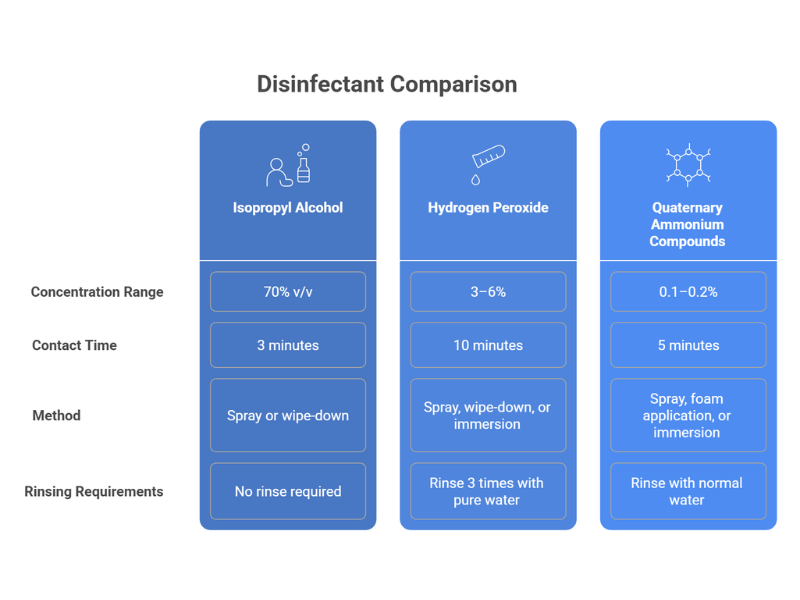
Before disinfection, wear proper PPE, including chemical-resistant gloves, safety goggles, and a waterproof apron. Also confirm the disinfectant type and concentration. Always dilute the disinfectant according to the product label you purchased.
Step 1: Apply the Disinfectant
Dilute the disinfectant to the correct concentration. You can apply it in one of three ways:
- Spray application: Spray all pallet surfaces evenly with a spray bottle or sprayer.
- Immersion: Place the whole pallet into a disinfectant tank.
- Foam application: Use a foam gun to cover the pallet surface with disinfectant foam.
Make sure every side, corner, runner, foot, and gap touches the disinfectant.
Step 2: Keep the Right Contact Time
Leave the disinfectant on the pallet surface for enough time. This is usually 3–10 minutes, but some disinfectants may need longer. Follow your disinfectant label. Do not wipe the pallet during this stage.
Step 3: Rinse Thoroughly
Rinse the pallet with plenty of clean water until all disinfectant is removed. For food and pharmaceutical use, we suggest a final pressure rinse to help avoid chemical residue.
Step 4: Dry the Pallet
Use a compressed air gun to blow away trapped water, especially inside the pallet feet and grid gaps. As mentioned in the cleaning step above, you should still stand the pallet upright or lean it at about 45° in a well-ventilated area. You can also use industrial blowers to speed up drying. If you use grid pallets, pay extra attention to the grid gaps; you can learn more about the cleaning differences in our guide to flat and grid plastic pallets. Only stack and store the pallets after they are fully dry.
Step 5: Final Check and Record
Finally, check your pallet surface for any remaining dirt or white disinfectant crystals. If you find any, make sure you rinse the pallet again.
If you use plastic pallets in the food or pharmaceutical industry, we suggest you keep a simple record for each disinfection batch, including the disinfection time, disinfectant type, concentration, operator, and pallet batch.
Safety notes:
- Always have an eyewash station within 15 meters when working with chemicals.
- When using sodium hypochlorite for disinfection, make sure the area is well ventilated, with air circulation ≥0.3 m/s, to protect your staff.
- Do not mix chlorine-based disinfectants with acids or ammonia-based cleaners.
- We do not recommend cleaners containing strong acids, strong alkalis, toluene, or xylene for routine pallet cleaning.
Key Pallet Cleaning Considerations for Your Industry
Food Grade Pallet
For food grade pallets, we suggest disinfecting them before they enter food production or cold chain areas, especially when they are used near raw materials or finished food. Use a pressure washer for deep cleaning, and make sure the deck, bottom runners, corners, and feet are fully cleaned to support your FDA, HACCP, or other hygiene control requirements. We suggest keeping cleaning records for at least 2 years — especially if they’re part of your food safety or audit system. For food plants, we also recommend weekly microbial testing to ensure E. coli is not detected on pallet surfaces.
Hygienic Plastic Pallet
For hygienic plastic pallets, clean and disinfect them after each shift. If your pallets move in or out of a clean area, disinfect them before each reuse, and mark them as “Disinfected” and “To Be Disinfected” to avoid mix-ups. For pharmaceutical use, your final rinse may need WFI water, and your cleaning validation should include API residue checks.
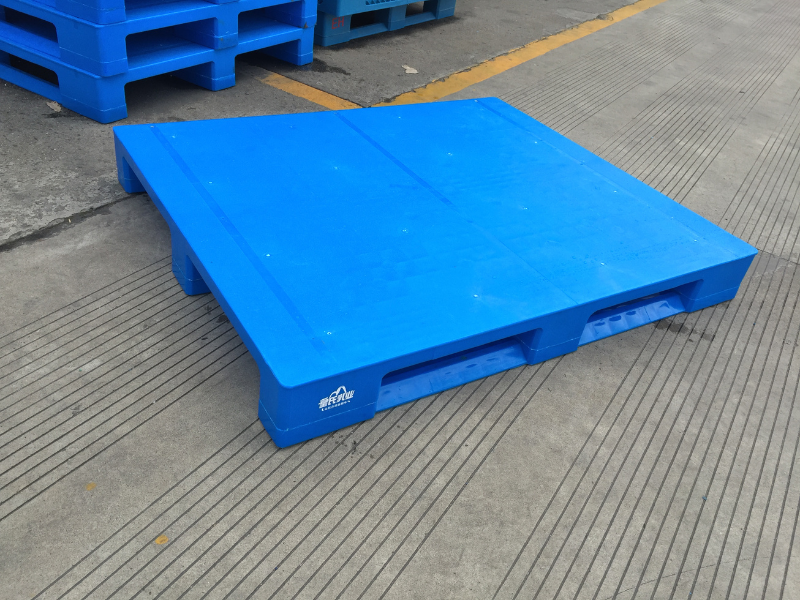
You can also read more about the key roles of plastic pallets in pharmaceutical logistics if your pallets are used in GMP-controlled handling areas.
Spill Pallet
For spill pallets, clean them immediately after every leakage event. The key cleaning area is the sump, not just the surface. Remove leaked liquid with absorbent pads first, then clean the sump with a neutral cleaner and a medium-pressure rinse. If your spill pallets handle chemical drums, choose HDPE pallets tested for chemicals in the pH 2–12 range, and make sure the impact strength retention after cleaning remains ≥95%.
Warehouse Plastic Pallet
Warehouse plastic pallets are usually used for internal stacking, forklift handling, and short-distance transfer, so weekly cleaning is enough for most indoor warehouses. Focus more on pallets returned from outside areas, trucks, or customer sites. Before moving them back into your pallet pool, make sure they are clean, dry, and free from visible damage.
For other plastic pallet types that also need regular cleaning, you can follow these general cleaning cycles:
- Rackable plastic pallet: Clean monthly, or sooner if used in dusty warehouses or rack storage with food packaging.
- 5 gallon water bottle rack: Clean and disinfect after each return cycle, especially before refilling or redistribution.
- Cold chain plastic pallet: Clean after each batch or cold-room transfer to prevent moisture, odor, and mold buildup.
- Returned pallets: Clean and inspect before they re-enter your warehouse, production area, or pallet pool.
FAQ About Plastic Pallets Cleaning
How to Monitor the Hygiene of Your Pallets?
You can embed RFID chips or use barcode labels to track each pallet’s cleaning time, reuse cycle, and inspection status. This is useful for food and pharmaceutical pallet management. If your pallet does not have a reserved RFID slot, we suggest you to purchasing custom RFID plastic pallets from the plastic pallet manufacturer.
What Is the Difference Between Cleaning and Disinfecting Plastic Pallets?
Cleaning removes visible dirt, grease, dust, and residue from the pallet surface. Disinfecting goes one step further by reducing bacteria and other microorganisms, although some tunnel washers can handle both in one process.
What Regulations Should I Consider When Cleaning Plastic Pallets?
Use biodegradable detergents where possible, and dispose of wastewater, chemical residue, and cleaning waste according to local rules. For food handling, your cleaning process should also support HACCP hygiene control requirements.
Should I Use a Professional Pallet Cleaning Service?
If you manage a large pallet pool, a professional cleaning team is usually more efficient and consistent. This is especially useful for food, pharmaceutical, cold chain, or returnable pallet systems.
How Should I Maintain My Plastic Pallets in Daily Use?
Avoid long-term UV exposure, forklift impact, unsafe stacking, and overloading. Check your pallets regularly, and contact your pallet manufacturer if you find deep dents, cracks, broken feet, or serious deformation.
Should I Clean New Plastic Pallets Before First Use?
Yes, we suggest cleaning new plastic pallets before they enter food, pharmaceutical, or clean storage areas. For general warehouse use, a simple dust removal and visual check is usually enough.
Do Plastic Pallets Need Fumigation After Cleaning?
No. Plastic pallets do not need fumigation like wooden pallets. But if your pallets are used for production or export handling, make sure they stay clean and free from any visible contamination.
Final Thought
Now you know how to clean plastic pallets properly. The next step is choosing plastic pallets that are hygienic, recyclable, durable, and built for long service life.
That is where Enlightening Pallet can support you. With 25+ years of manufacturing experience, we offer 600+ plastic pallet specifications for food, pharmaceutical, warehouse, cold chain, and export use. Our hygienic plastic pallets are designed to reduce cleaning difficulty, support pressure washing, and help your team spend less time on daily pallet cleaning.
After you receive our pallets, we can also provide a cleaning guide for your specific pallet model and support your team with a standard cleaning training plan. This helps you use the right cleaning method from the beginning and keep your pallet system cleaner, safer, and easier to manage.