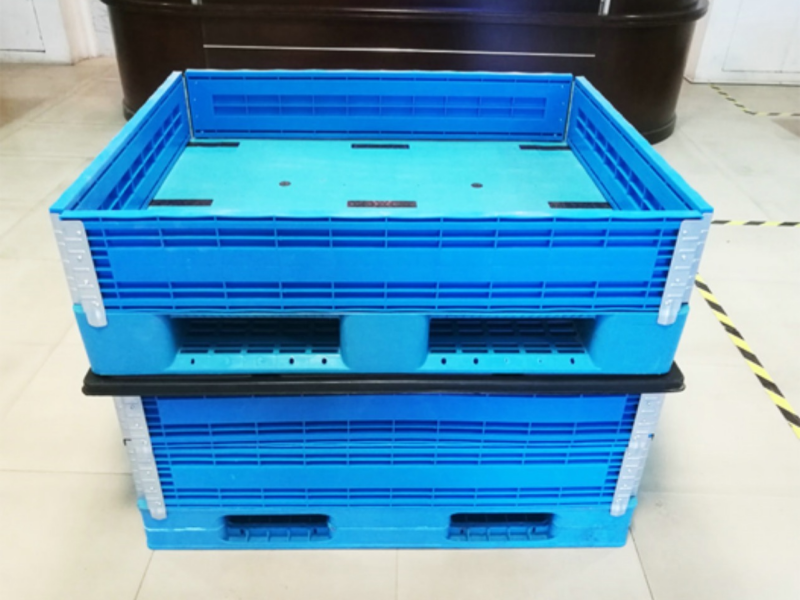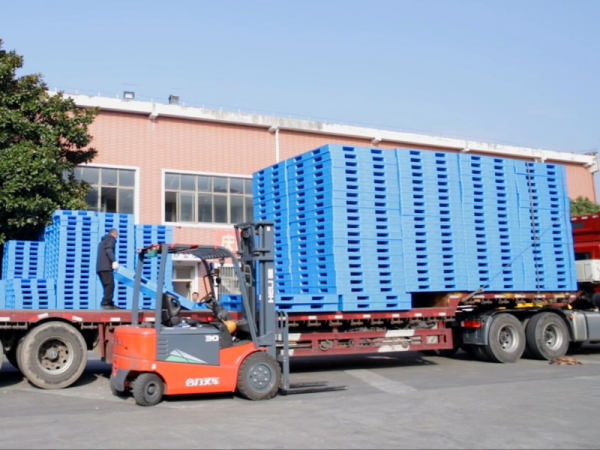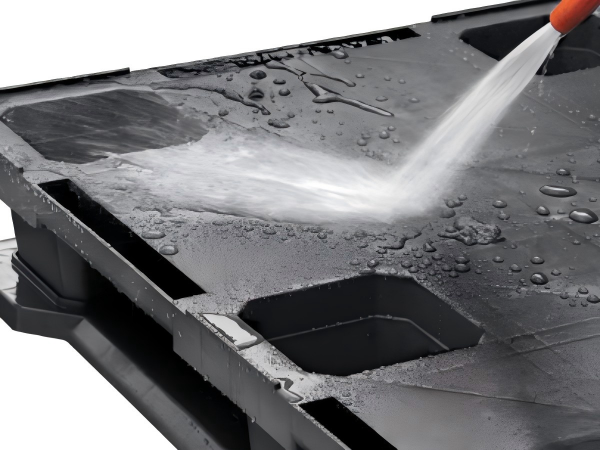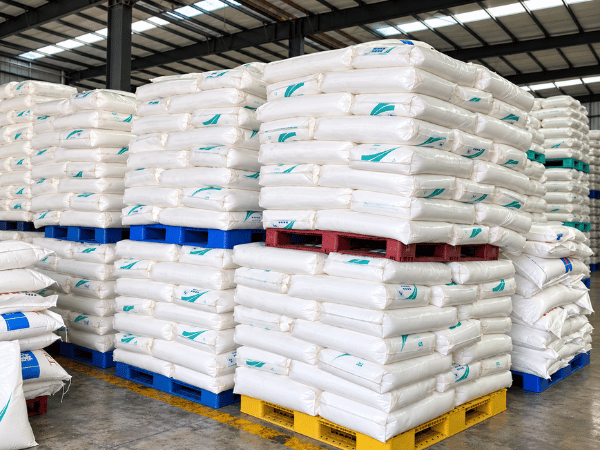
In the U.S. market, a pallet commonly holds 42 bags of 80 lb concrete mix, 56 bags of 60 lb mix, 64 bags of 50 lb mix, or 80 bags of 40 lb mix. These configurations carry either 3,200 lb or 3,360 lb of concrete, so the bag count alone does not tell you whether a pallet is suitable.
This guide shows you how to calculate the complete shipping weight, match the pallet to your bags and handling equipment, and avoid problems such as deck bending, torn bags, and unstable transfers. It is written for concrete producers, packaging businesses, and distributors considering plastic pallets for shipping, storage, or repeated use.
Concrete Bags Per Pallet By Bag Size
The following figures give you a practical starting point for load planning. Before ordering pallets, compare them with the approved packaging specification used by your own plant.
| Bag size | Bags per pallet | Net concrete weight |
| 80 lb | 42 | 3,360 lb |
| 60 lb | 56 | 3,360 lb |
| 50 lb | 64 | 3,200 lb |
| 40 lb | 80 | 3,200 lb |
The difference between these configurations is not limited to weight. A pallet carrying 42 large bags and one carrying 80 smaller bags may need different layer patterns, deck support, and loaded heights. Use the count above for initial calculations, then approve the pallet with your actual filled bags.
How Many 80 Lb Bags Of Concrete Are On A Pallet?
A pallet commonly carries 42 bags of 80 lb concrete mix, giving a net product weight of 3,360 lb, or about 1,524 kg. This is already higher than the dynamic rating of many general-purpose plastic pallets, even before you add the weight of the pallet, stretch wrap, and straps.
If your plant packs 80 lb bags, begin with the complete gross weight rather than asking only for a heavy-duty plastic pallet. This quickly removes models that may look strong but cannot safely carry the load during forklift movement.
How Many 60 Lb Bags Of Concrete Are On A Pallet?
A pallet commonly carries 56 bags of 60 lb concrete mix, which also totals 3,360 lb. The weight matches the 80 lb configuration, but the smaller bags create a different footprint and more contact points across the deck.
For your factory, this means a pallet approved for 42 larger bags should not be accepted automatically for 56 smaller ones. Check the layer pattern and bottom-bag support because the pressure may fall on different ribs and openings.
How Many 50 Lb Bags Of Concrete Are On A Pallet?
A pallet commonly carries 64 bags of 50 lb concrete mix, for a net product weight of 3,200 lb, or about 1,451 kg. The lower total weight does not automatically make pallet selection easy because 64 bags can produce a tall stack or place more seams and corners over deck openings.
Lay out the full bottom layer before approving the pallet size. A good fit helps your business reduce bag overhang, unstable stacking, and repalletizing at the warehouse or receiving point.
How Many 40 Lb Bags Of Concrete Are On A Pallet?
A pallet commonly carries 80 bags of 40 lb concrete mix, also totaling 3,200 lb. Since this configuration uses more individual bags, the stack arrangement and final height deserve as much attention as the load rating.
If the pallet will pass through a wrapper, palletizer, rack, truck, or container, confirm the complete loaded height and footprint. This avoids discovering after production that the weight is acceptable but the unit load does not fit the next stage of handling.
How Much Does A Pallet Of Concrete Weigh?
A full pallet in the configurations above carries 3,200 to 3,360 lb of concrete, but this is not the final shipping weight. The pallet, stretch wrap, corner protection, and straps must also be included.
Start with the nominal product weight:
Nominal net product weight = labeled bag weight x bags per pallet
For a safer purchasing figure, use the highest filled-bag weight allowed by your packaging specification rather than assuming every bag weighs exactly what the label states. Then calculate the complete load:
Estimated maximum shipping weight = maximum permitted product weight + pallet weight + packaging allowance
For example, 42 bags of 80 lb mix weigh about 1,524 kg before packaging. A plastic pallet rated for a 1,500 kg dynamic load is already too light for this configuration. Choosing it because the static rating looks high could lead to excessive bending or unsafe forklift handling.
Use the calculation to shortlist pallets, then weigh one complete production load for final approval. The measured gross weight gives your purchasing team and pallet manufacturer a much firmer basis for model selection.
Why Can The Same Concrete Load Behave Differently On A Pallet?
Two concrete loads can weigh exactly the same and still need different pallets. The reason is simple: different bag sizes and stacking patterns place pressure on different parts of the pallet deck.
For example, 42 bags of 80 lb concrete and 56 bags of 60 lb concrete both weigh 3,360 lb. However, the larger 80 lb bags cover the deck differently from the smaller 60 lb bags. If a bag edge rests over a large deck opening or directly against a raised rib, the bottom bags may sag, rub, or tear under the weight of the full stack.
Before approving a pallet, load it with your actual filled bags in the planned stacking pattern. Check that the entire bottom layer is supported, no bag hangs too far over the pallet edge, and no sharp rib or large opening presses into the packaging. Repeat this test whenever you change the bag size, bag material, concrete formula, or stacking pattern.
What Size Pallet Is Used For Concrete Bags?
For most U.S. concrete bag projects, choose a 48 x 40 inch plastic pallet as your first option. This size is widely used in U.S. warehouses and usually works more easily with existing forklifts, racks, trucks, and receiving facilities.
Do not approve the size from the pallet dimensions alone. Arrange one full bottom layer using your actual filled bags and the planned 42, 56, 64, or 80-bag pattern. The bottom bags should sit fully on the deck without unsupported edges or excessive overhang. Then run the pallet through your palletizer, conveyor, forklift, wrapper, rack, and truck-loading process to confirm that it fits every stage.
| What you find during the check | What you should do |
| All bottom bags fit securely within the 48 x 40 inch deck | Keep this size and continue with a full-load trial |
| Bags overhang the edge or sit across large unsupported openings | Choose a larger or custom deck size |
| The pallet does not fit the palletizer, conveyor, rack, or forklift | Choose a pallet size and base structure that match the equipment |
| The finished stack exceeds rack, truck, or receiving height limits | Reduce the number of layers or revise the pallet footprint |
If the bags do not fit securely on a 48 x 40 inch deck, or the pallet does not match your existing equipment, do not change the stacking pattern just to force the load onto a standard pallet. Provide the filled bag dimensions, bags per layer, loaded height, and equipment clearances, then order a pallet size that matches the load and line. This is usually less costly than dealing with torn bags, unstable stacks, production stops, or repalletizing later.
How Should You Choose A Plastic Pallet For Concrete Bags?
Choose the pallet according to where the concrete will be stored and how it will be moved. Do not approve a pallet from its highest load figure alone. Use the static rating for floor storage, the dynamic rating for forklift movement, and the racking rating for rack storage.
| Main Use | What Matters Most | Main Purchasing Risk |
| Concrete bagging line | Pallet dimensions and equipment contact points | Line stops or unstable transfer |
| Floor storage | Static capacity and deck support | Pallet deformation or torn bottom bags |
| Forklift transport | Dynamic capacity and fork entry | Bending or unsafe lifting |
| Rack storage | Racking capacity, beam spacing, and deflection | Excessive bending between beams |
Match The Load Rating To The Way You Use The Pallet
The three load ratings cannot replace one another. For example, this 1200 x 1000 mm three-runner mesh pallet is rated for 6,000 kg static, 1,500 kg dynamic, and 1,000 kg racking. A load of 42 bags at 80 lb weighs about 1,524 kg before the pallet and wrapping are added. It therefore exceeds the published dynamic and racking ratings, even though it is well below the static rating.
For this 80 lb bag configuration, choose a pallet with a dynamic rating above the complete shipping weight if forklifts will move it. If it will be stored on racks, provide the beam spacing, pallet direction, storage time, and total weight, then request a written racking rating and allowable deflection for that setup.
Check How The Deck Supports Flexible Bags
For flexible concrete bags, start with a closed deck or a fine-grid deck that supports the full bottom layer. Avoid large openings, sharp rib edges, or raised points directly under bag seams because they can cause sagging, abrasion, and punctures.
Load the pallet with the actual bags and approved stacking pattern. After the trial, inspect the bottom bags. Do not approve the deck if you find deep marks, stretched packaging, torn areas, or unsupported bag edges.
Match The Pallet Base To Your Handling Equipment
For forklift use, confirm the entry height, fork spacing, and entry direction. For pallet jacks, check the wheel path and bottom clearance. For conveyors, make sure the runners maintain contact with the rollers or chains, including at transfer points.
Plastic pallets for automation also need consistent dimensions for palletizers and wrappers. Run one loaded sample through the complete line before placing a bulk order. If it catches, stops, or shifts at any stage, change the base structure or pallet model before approval.
Compare Wood And Plastic By Cost Per Successful Trip
Choose wood for one-way shipments when the pallet will not return. Choose plastic when your business can recover and reuse the pallet across factory, warehouse, and distribution routes.
Cost per successful trip = total pallet ownership and operating cost / completed usable trips
Include the purchase price, repairs, pallet losses, return freight, replacement pallets, torn bags, cleanup, and repalletizing. Do not choose plastic only because it lasts longer. Approve it when your expected return rate gives it a lower cost per completed trip.
How Can You Spot Pallet Failure Before It Causes A Major Loss?
A pallet does not need to split apart before it becomes unsuitable. Excessive bending, damaged bottom bags, repeated conveyor stops, and unstable forklift pickup are all early signs that the pallet and working condition do not match.
| Visible problem | What to examine | Practical decision |
| Pallet deflection | Gross weight, support span, storage time, and measured bending | Reduce the approved condition or select a stiffer structure |
| Bag damage | Deck openings, edges, anti-slip points, overhang, and wear location | Change the deck contact or repeat the trial with another design |
| Handling problems | Fork entry, base design, conveyor contact, and transfer points | Choose a different base or equipment interface |
If bending appears during rack storage, compare the actual load and beam spacing with the published racking condition. When the bottom bags show marks or tears, trace the damage back to the corresponding deck area. If transfers become unstable, inspect the runner contact before blaming the load.
Record bending, bag condition, equipment interference, and load movement during the trial. A pallet that stays intact has passed only the most basic check. Your business needs it to protect the bags and move reliably through every approved stage.
How Many Plastic Pallets Do You Need?
For one-way shipments, divide the total number of bags by the approved bag count per pallet:
Required pallets = total bags / approved bags per pallet
Round the answer up to the next whole pallet. If your factory ships several bag weights, calculate the 42-bag, 56-bag, 64-bag, and 80-bag configurations separately.
Reusable pallet planning must also account for the return cycle:
Base pallet quantity = peak daily pallet demand x average return cycle in days
Then add enough reserve stock to cover inspection, cleaning, delayed returns, damage, and replacement. There is no useful universal reserve percentage. Your actual return records provide a better figure and help prevent both pallet shortages and unnecessary inventory.
Concrete Pallet Calculator
Estimate bag quantities, pallet loads, shipping weight, and pallet requirements.
1. Bag & pallet details
Advanced: pallet rating check
Enter the rating for your intended handling condition (dynamic, static, or racking). The result is only a preliminary weight screen.Planning estimate only. Published pack counts are product-specific. Gross weight includes pallet tare once per pallet position, but excludes any additional wraps or straps unless you account for them separately. Verify actual bag weight, packaging, rating conditions, and stack pattern before approving a pallet.
Frequently Asked Questions
How Many Bags Of Concrete Are On A Pallet At Lowe’s?
The count depends on the exact concrete mix and packaging sold at that location. For planning in this guide, use 42 bags at 80 lb, 56 bags at 60 lb, 64 bags at 50 lb, or 80 bags at 40 lb, then confirm the product listing before arranging collection, freight, or warehouse space.
How Many Bags Of Concrete Are On A Pallet At Home Depot?
The exact retail quantity can vary by product and location. Use the same planning figures of 42, 56, 64, and 80 bags for the corresponding bag weights, but check the product SKU before using the count for a purchase or shipping calculation.
Can Plastic Pallets Hold A Full Pallet Of Concrete?
Yes, if the model is rated for the complete gross weight under the way you plan to support and move it. Check static, dynamic, or racking capacity as applicable, then confirm deck support with a full load of your actual bags.
Can Concrete Bags Be Stored On Rackable Plastic Pallets?
Yes, but only when the pallet has enough racking capacity for the actual load and rack layout. When comparing rackable plastic pallets, provide the beam spacing, pallet direction, storage duration, and allowable deflection before approving the model.
Can Plastic Pallets Replace Wooden Pallets On Concrete Bagging Lines?
Yes, and consistent molded dimensions can improve positioning on automated equipment. Before switching, check palletizer stops, runner contact, fork entry, conveyor spacing, wrapper clearance, and the support provided to the bottom bags.
What Information Is Needed For A Concrete Bag Pallet Quotation?
Provide the bag weight, approved bags per pallet, filled bag dimensions, layer pattern, required pallet size, gross load, handling equipment, and storage conditions. Photos, drawings, or a sample of the existing loaded pallet can make the recommendation more accurate.
Final Thoughts
The standard planning figures are straightforward: 42 bags of 80 lb concrete, 56 bags of 60 lb concrete, 64 bags of 50 lb concrete, or 80 bags of 40 lb concrete per pallet. The harder part is choosing a pallet that carries the resulting load without damaging bags or interrupting your handling line.
For concrete businesses with internal handling, closed-loop distribution, or recoverable export pallets, recycled plastic pallets can remove exposed nails and wood splinters while providing more consistent dimensions for repeated use. A suitable deck and raised-edge design can also help protect the bottom bags and reduce movement during transport.
Share your bag weight, loading pattern, handling method, and required quantity with Enlightening Pallet. We can compare the load with a standard model or develop a custom plastic pallet around your production and distribution conditions.