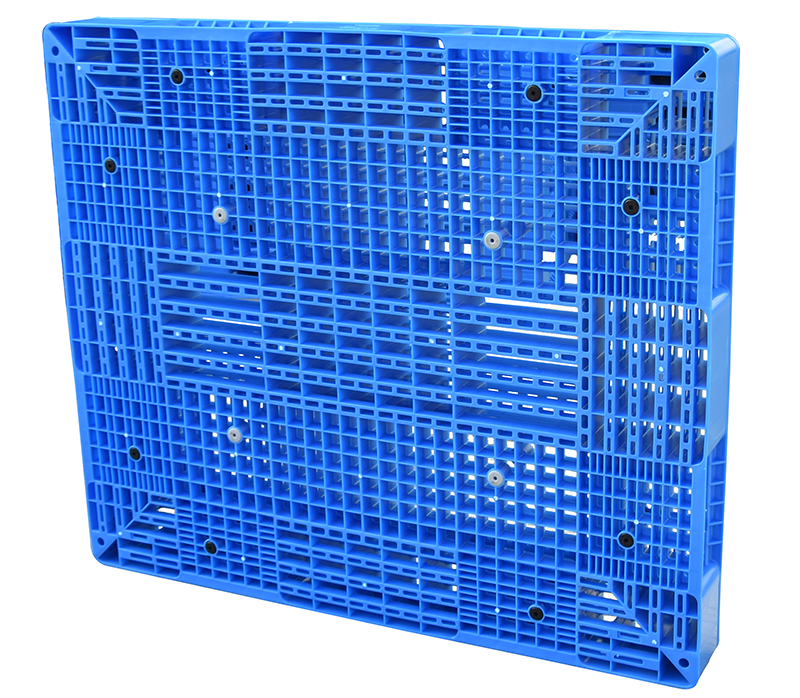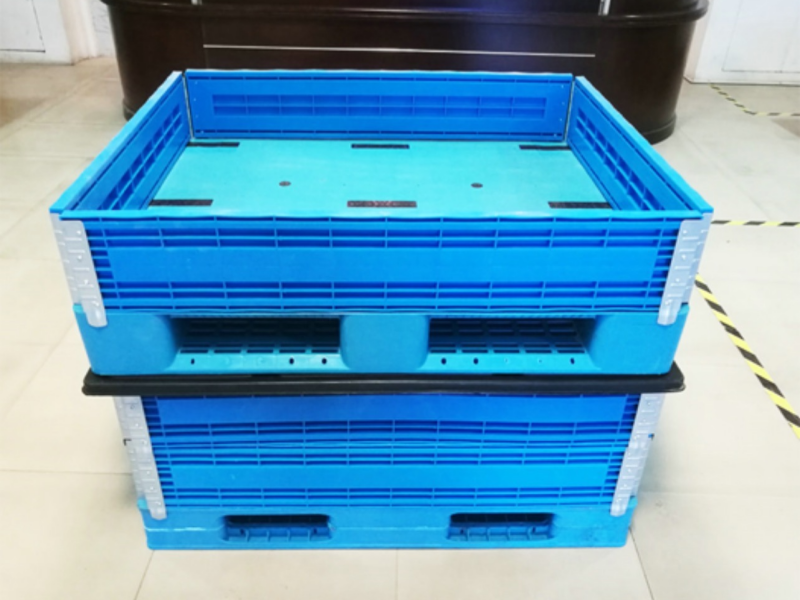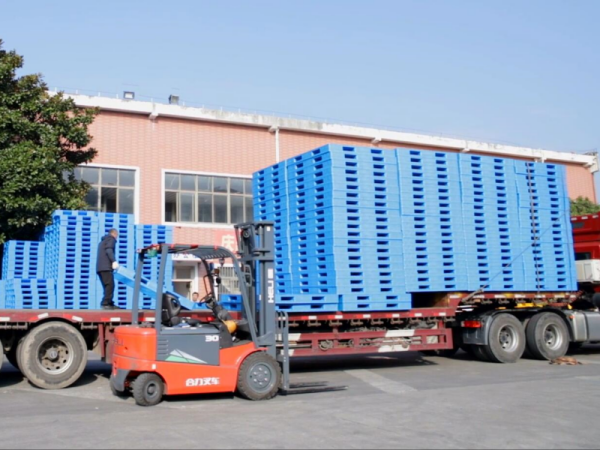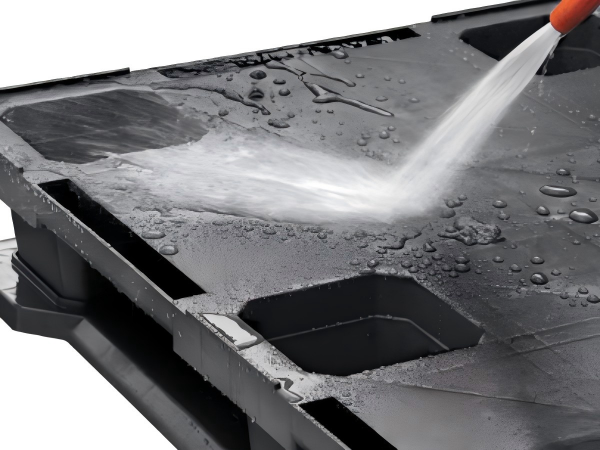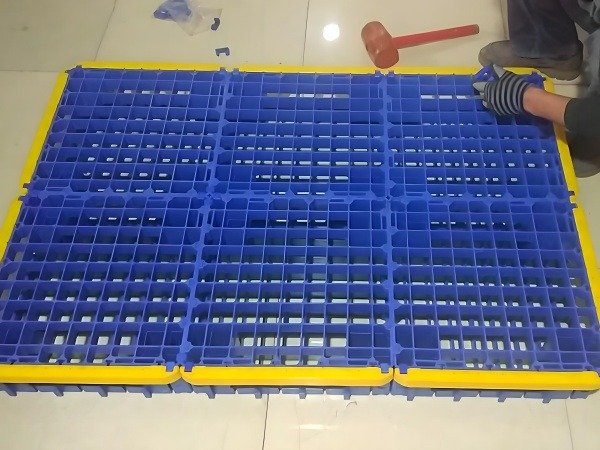
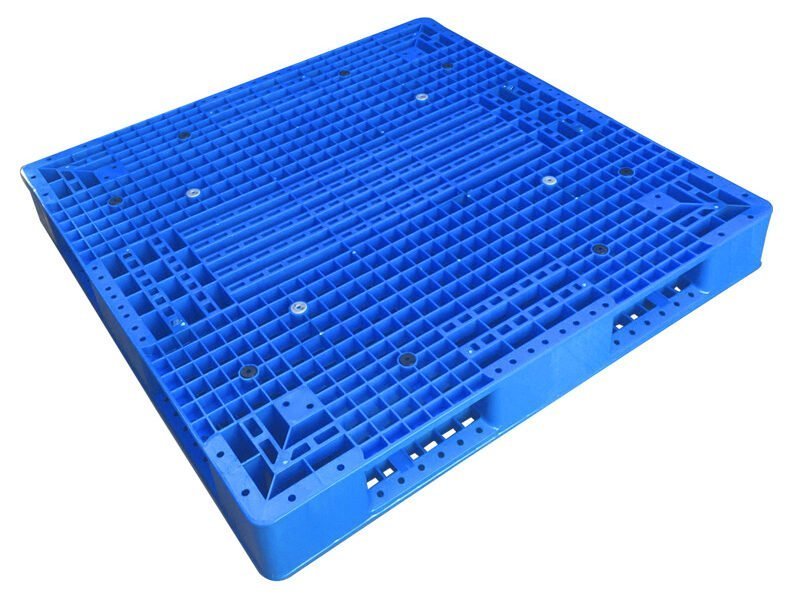
Plastic pallets are indispensable in diverse industries due to their robustness, lightweight properties, and ease of use. Sometimes, there’s a need to connect these pallets to expand the surface area or stabilize loads for safer operations. Enlightening Pallet, a leader in plastic pallet manufacturing and a reputable plastic pallet supplier provides insights into effective techniques for connecting plastic pallets.
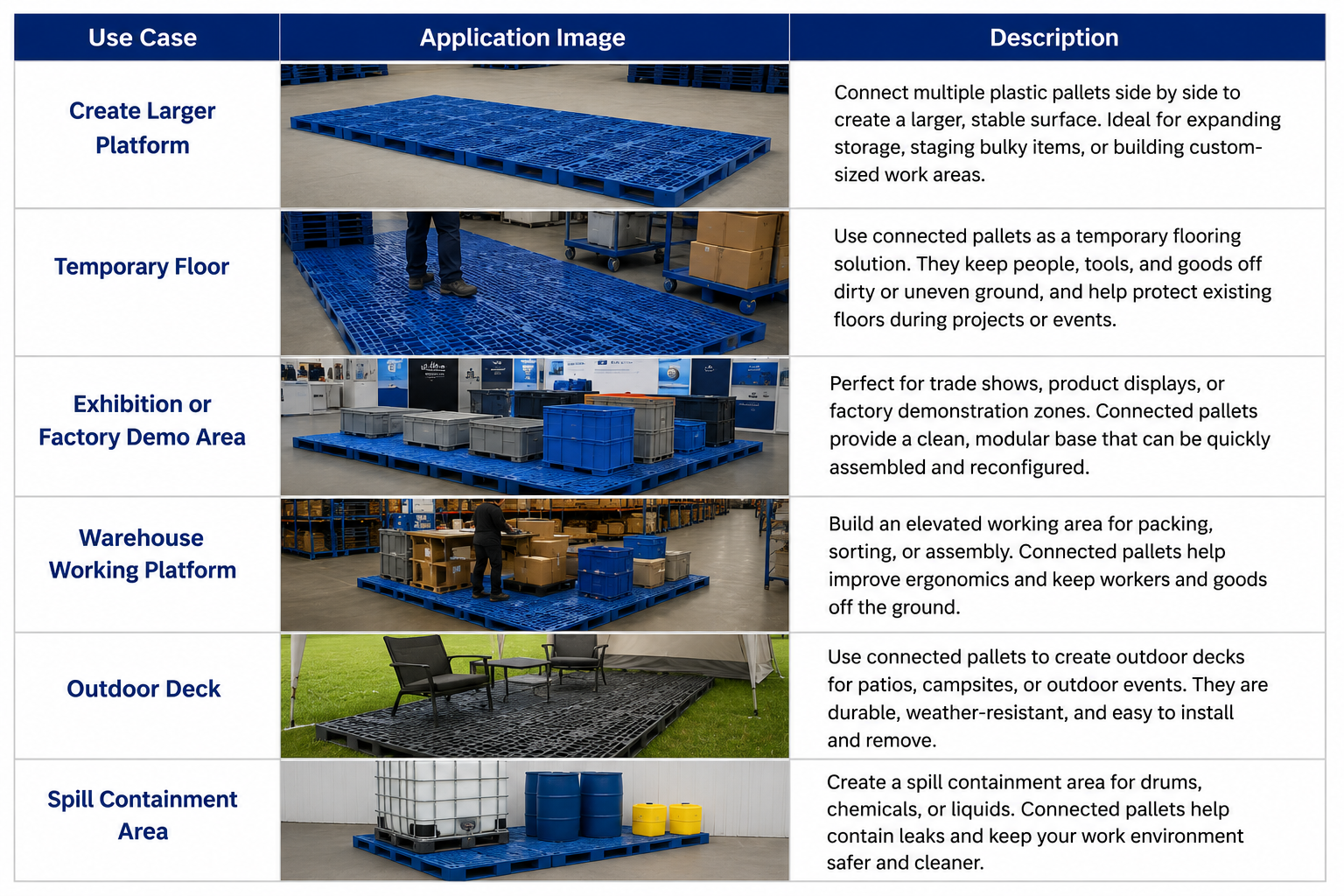
Where to Use Connected Plastic Pallets
See the main ways you can link pallets to create larger, stable, and practical work surfaces.
Methods of Connecting Plastic Pallets
We’ve gathered simple, effective ways to connect pallets quickly and safely.
Utilizing Pallet Connectors
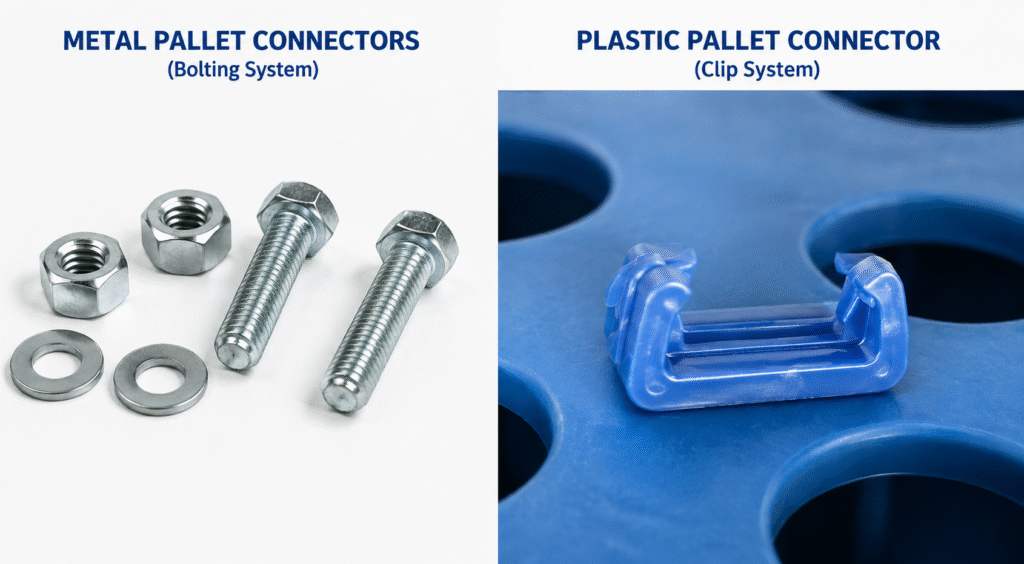
Pallet connectors are specifically designed for linking durable full perimeter plastic pallets securely. Available in metal for durability and plastic for ease of handling, these connectors fit into the openings on the sides of the pallets. To use them, align the pallets, insert the connectors, and ensure they are securely tightened with appropriate tools like pliers or a wrench, providing a firm hold.
Straps and Ropes Method
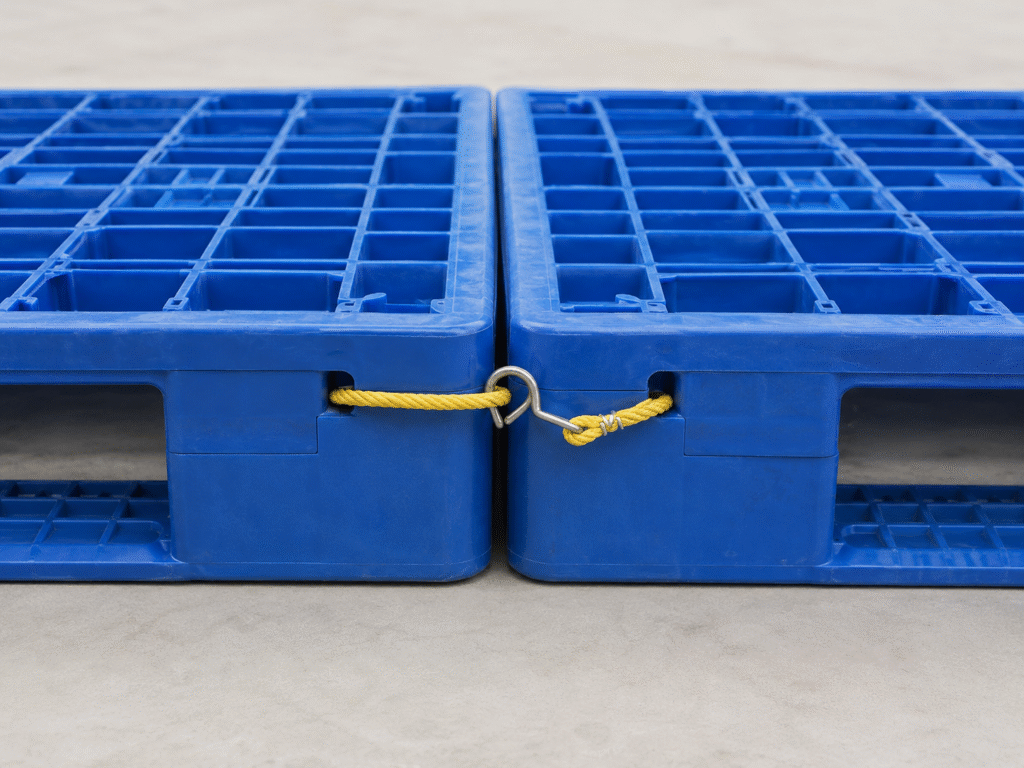
For scenarios where pallets are not directly adjacent or when securing a top load, straps and ropes are ideal. Materials like nylon, polyester, and polypropylene are commonly used. Wrap the strap or rope in a crisscross pattern around the plastic floor pallets, tighten adequately to secure yet not damage the pallets, and use buckles, hooks, or knots to fasten.
Heavy-Duty Zip Ties
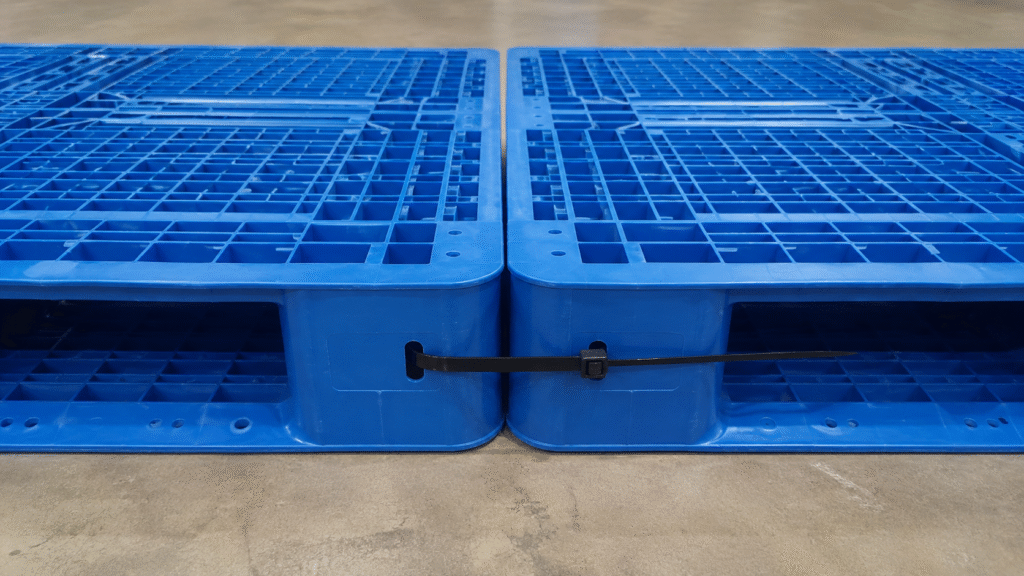
You can use heavy-duty zip ties to connect pallets without damaging the surface. This method needs no extra tools and is faster and simpler than the first two. Choose 7.6–12 mm wide, 300–500 mm long zip ties. Place two pallets side by side, thread the tie through the holes or grid slots at the edges, pull tight, and trim the extra. This lets you create a larger work surface for temporary floors, moisture barriers, light display platforms, warehouse partitions, or low-frequency handling. Avoid using zip ties for heavy industrial work, like frequent forklift traffic or racking load.
Exploring Alternative Methods
While glue or adhesives offer a bonding solution, they are less favoured due to their permanent nature and potential for damage upon removal. Alternatively, screws or bolts provide a more durable connection but require careful handling to avoid impairing the pallet integrity. For those interested in DIY plastic pallet deck projects, simple methods like heavy-duty zip ties or straps can add versatility without specialized parts.
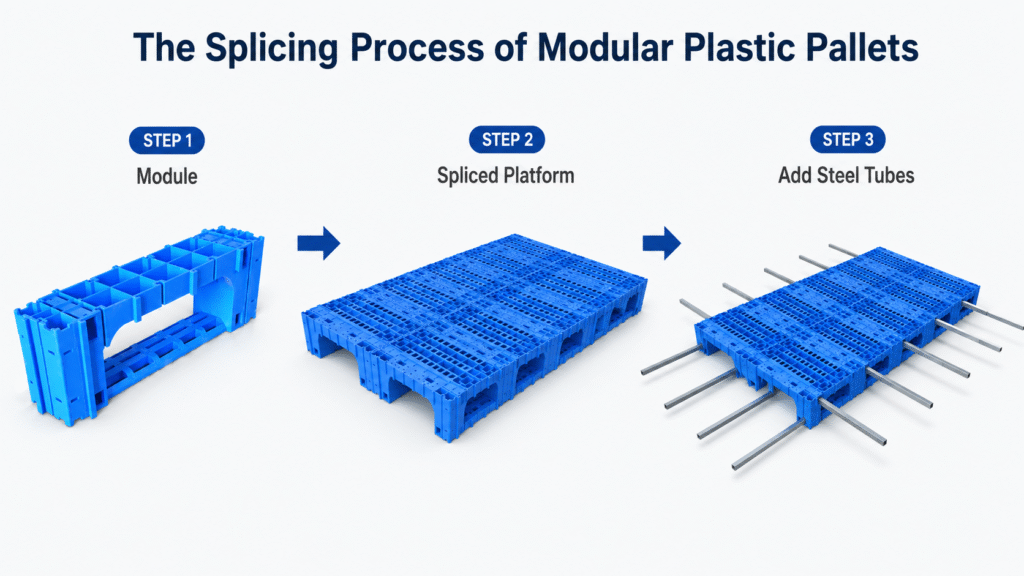
However, if you need connected pallets that maintain full performance—compatible with high-frequency forklift handling or racking—Enlightening Pallet highly recommends our Modular Plastic Pallet series. Each pallet is built from individual modules that lock together without any metal connectors, allowing you to assemble a larger platform like building blocks. Once assembled, we can further reinforce the pallets with built-in steel tubes and provide plastic connectors, creating a stable platform rated for 2T dynamic load, 6–8T static load, and 1T racking load.
If you need a large moisture-proof flooring area, take a look at our Plastic Floor Pallets. They feature a built-in interlocking design, allowing quick installation without any additional connectors or accessories.
Safety Tips When Connecting Plastic Pallets
When connecting pallets, consider the load’s weight and size. The chosen method should robustly support the load and ensure stability and security, especially when dealing with China Heavy Duty Plastic Pallet that are designed to handle significant weights.
Please also check the ground condition, connection points, and working environment.
- The ground must be level: Always connect pallets on a flat surface. Do not install or use connected pallets on sloped ground.
- Reinforce the connection points: After using connectors, zip ties, or bolts, make sure every connection point is firmly secured. Adding more connectors can improve overall stability.
- Inspect connectors regularly: If the pallets are used outdoors or in damp areas, check all connectors, zip ties, and fastening parts regularly. Replace any damaged, loose, or worn parts immediately.
- Not recommended for elevated work areas: Connected plastic pallets are only suitable for ground-level use. Do not use them as elevated work platforms, scaffolding, access platforms, or fall-protection structures.
- Not suitable as a permanent structure: Except for modular plastic pallets, most pallet connection methods are designed for temporary or semi-temporary use. For long-term facilities, we recommend modular pallets or our plastic floor pallets.
FAQ About Connect Plastic Pallets
Can all plastic pallets be connected together?
Yes, most plastic pallets can be connected. However, we do not recommend using second-hand pallets for high-load applications, as wear or surface damage may affect connection stability and load capacity.
Will the load capacity decrease after connecting pallets?
If the connected pallets are placed on an uneven surface, the load capacity may drop, because the connection points may not be perfectly level, which can affect the stability of the entire pallet platform.
Can connected pallets be moved by forklift?
Yes, but it’s best to use modular plastic pallets with forklifts. Other temporary connection methods, like zip ties or adhesives, are not recommended for forklift handling, as the weak connection points cannot handle high dynamic loads.
Which connection method is the most stable?
The most stable method is using plastic clip connectors, which we use for industrial pallet connections. Next is metal plates with bolts, suitable for medium to high-intensity applications. Adhesives or zip ties are the least stable, only suitable for temporary, low-load scenarios.
How many pallets can be connected together?
For ground-level use, there is no theoretical limit on the number of pallets. For forklift handling, modular pallets can be connected up to 3000mm or more in length and width.
Conclusion on Pallet Connectivity
Connecting plastic pallets efficiently is vital for maximizing their utility in industrial settings. Whether through pallet connectors, straps, or more permanent methods like screws, the approach depends on the specific operational requirements. Enlightening Pallet remains dedicated to providing top-tier products and expert guidance in plastic pallet solutions.
For long-term stability and heavy-duty use, we can provide modular plastic pallets with built-in interlocking design. These pallets lock together securely, forming a robust platform suitable for forklift handling and racking. With proper care, their service life can reach 7–10 years, giving you a reliable solution for repeated use in warehouses, production areas, or temporary platforms. Need help choosing the right connected pallet solution? Send us your required pallet size after connection, cargo weight, forklift handling needs, racking use, and working environment. Enlightening Pallet will help you choose the right pallet structure, connector method, and reinforcement plan for your project.