A pallet is a flat, portable platform that brings separate packages together into one manageable load. Once the goods are secured, forklifts or pallet jacks can move the unit, while racks and conveyors support it through storage and handling.
Not every load travels or is stored the same way, so pallets come in many forms.
They can be grouped by material, construction, fork entry, and use. In this guide, we will explain how each type works, what it does well, and where its limits are, making it easier to see which options fit your operation.
Types of Pallets Classified by Material
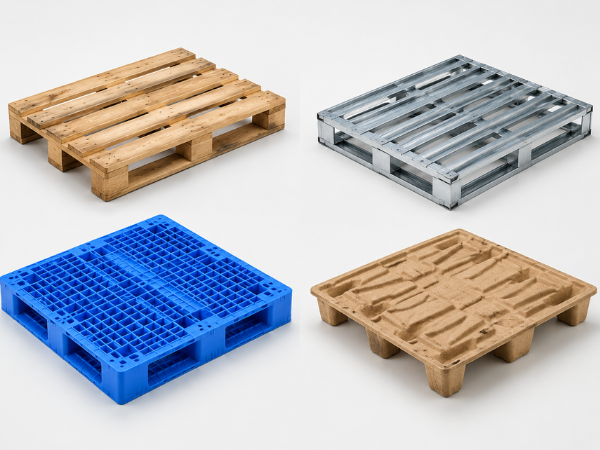
Pallet materials can be divided into 8 main types: wood, plastic, steel, aluminum, corrugated paper, presswood, plywood, and wood-plastic composite. Material it shapes how a pallet performs in everyday use, including weight, moisture resistance, cleanability, repair options, and dimensional consistency.
No single material suits every operation, so the comparison below focuses on where each type works well and where its limitations begin to matter.
| Pallet Material | Best Fit | Practical Advantage | Trade-Off to Check |
| Wood | General shipping and open loops | Low entry cost and easy field repair | Moisture, fasteners, variation, ISPM 15 |
| Plastic | Wash-down, reuse, cold chain, export, automation | Repeatable dimensions and no water absorption | Upfront cost, limited repair, heat or fire additives |
| Steel | Concentrated loads and demanding industrial use | High stiffness and repairable welded construction | Tare weight, noise, corrosion, rack capacity |
| Aluminum | Airfreight and clean closed loops | Low metal weight and corrosion resistance | Price and lower stiffness than steel |
| Corrugated Paper | Dry, lightweight one-way freight | Very low tare weight | Moisture and point-load damage |
| Presswood | Nestable one-way export | Consistent shape and compact empty stacks | Limited repair after cracking |
| Plywood | Custom export platforms | Smooth deck and flexible sizing | Construction quality controls performance |
| Wood-Plastic Composite | Specialized reusable systems | Useful rigidity with moisture resistance | Formulation, repair, and recycling vary |
Wooden Pallets
Wood still holds the largest market share, and the reasons are practical: it is inexpensive, widely available, and usually repairable one board at a time. Wooden pallets are commonly made from:
- Pine
- Hardwoods
- mixed recycled lumber
That makes wood a familiar choice for general freight and open loops where the pallet may not return. The trade-off is greater variation. Wood absorbs moisture, is difficult to wash thoroughly, and can split or shed loose fasteners. Solid-wood export pallets also need the required ISPM 15 treatment and mark.
Plastic Pallets
Plastic pallets are gaining market share as businesses look for washable, reusable, and recyclable pallets with consistent dimensions. Most are made from HDPE, PP, or LLDPE material, with the resin selected to match the required stiffness, impact resistance, temperature range, and molding process. Their molded bodies do not absorb water and contain no nails or splinters, which suits clean operations, closed loops, and automation. The trade-offs are higher initial cost and limited repair. Plastic can burn just as wood can. At hot or fire-sensitive sites, heat stabilizers improve heat tolerance, while flame retardants help reduce ignition and flame spread.
Steel Pallets
Steel is the most common metal pallet material when the load is unusually heavy, highly concentrated, or stored in racks for long periods. Its stiffness and heat resistance are difficult for lighter materials to match. That strength comes with substantial dead weight, however. Steel pallets are noisy to handle, coatings can fail and expose the metal to corrosion, and every extra kilogram uses part of the capacity available on a forklift, truck, or rack.
Aluminum Pallets
Aluminum keeps the clean surface and corrosion resistance associated with metal, but at a much lower weight than steel. That combination is useful in airfreight, wet areas, clean production, and high-value closed loops. Price is the main barrier. Aluminum also has less stiffness than steel, so a pallet built for the same heavy load may need larger sections or a different frame. Dents and cracked welds require specialist repair rather than a quick board replacement.
Corrugated Paper Pallets
Corrugated paper pallets are the lightest option in this group, so they can save useful weight on dry, one-way airfreight. They contain no nails or splinters and do not need solid-wood export treatment. Moisture is the clear weakness. A wet deck loses strength quickly, and drums, machine feet, or other small contact points can crush it. Paper also has much less tolerance for fork impacts, repeated trips, and unsupported rack storage.
Presswood Pallets
Presswood pallets are molded in one piece, giving them a consistent shape, a nail-free surface, and strong nesting efficiency. They are especially useful for one-way exports where empty-stack space matters, and processed wood falls outside the ISPM 15 rules for raw solid wood. Once a foot or deck section cracks, though, there is little to repair. Repeated impacts and wet service also shorten their useful life faster than they would for plastic or metal.
Plywood Pallets
Plywood works well when a shipment needs a smooth, lightweight platform in a custom size. It is often used beneath machinery, electronics, and other export loads, and processed plywood is not covered by the ISPM 15 rules for raw solid wood. Performance still depends on the panel grade, thickness, joints, blocks, and runners. Poorly protected panels may swell or delaminate, and repairs are less straightforward than replacing a board on a conventional wood pallet.
Wood-Plastic Composite Pallets
Wood-plastic composite pallets are made by blending wood flour or fibers with thermoplastic resin and additives, then molding the mixture into a pallet or pallet components. This gives them better moisture resistance than wood and often more stiffness than lightweight plastic, which can suit specialized reusable systems. Formulation matters because changes in fiber, resin, fillers, or recycled content affect weight, impact strength, and temperature response. Repairs are limited, and mixed materials are harder to recycle than a single-resin pallet.
Types of Pallets by Design and Construction
Pallet Frame Types
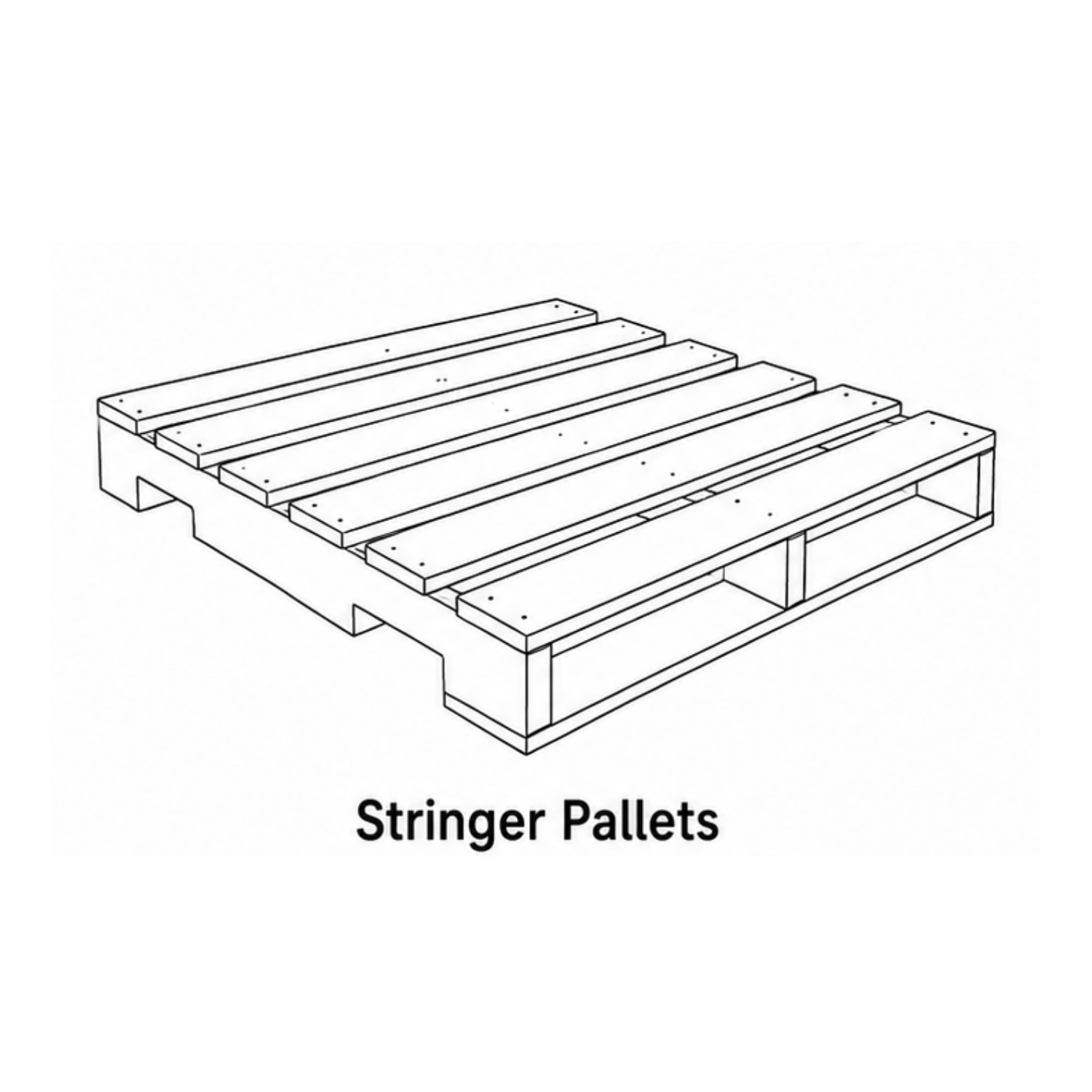
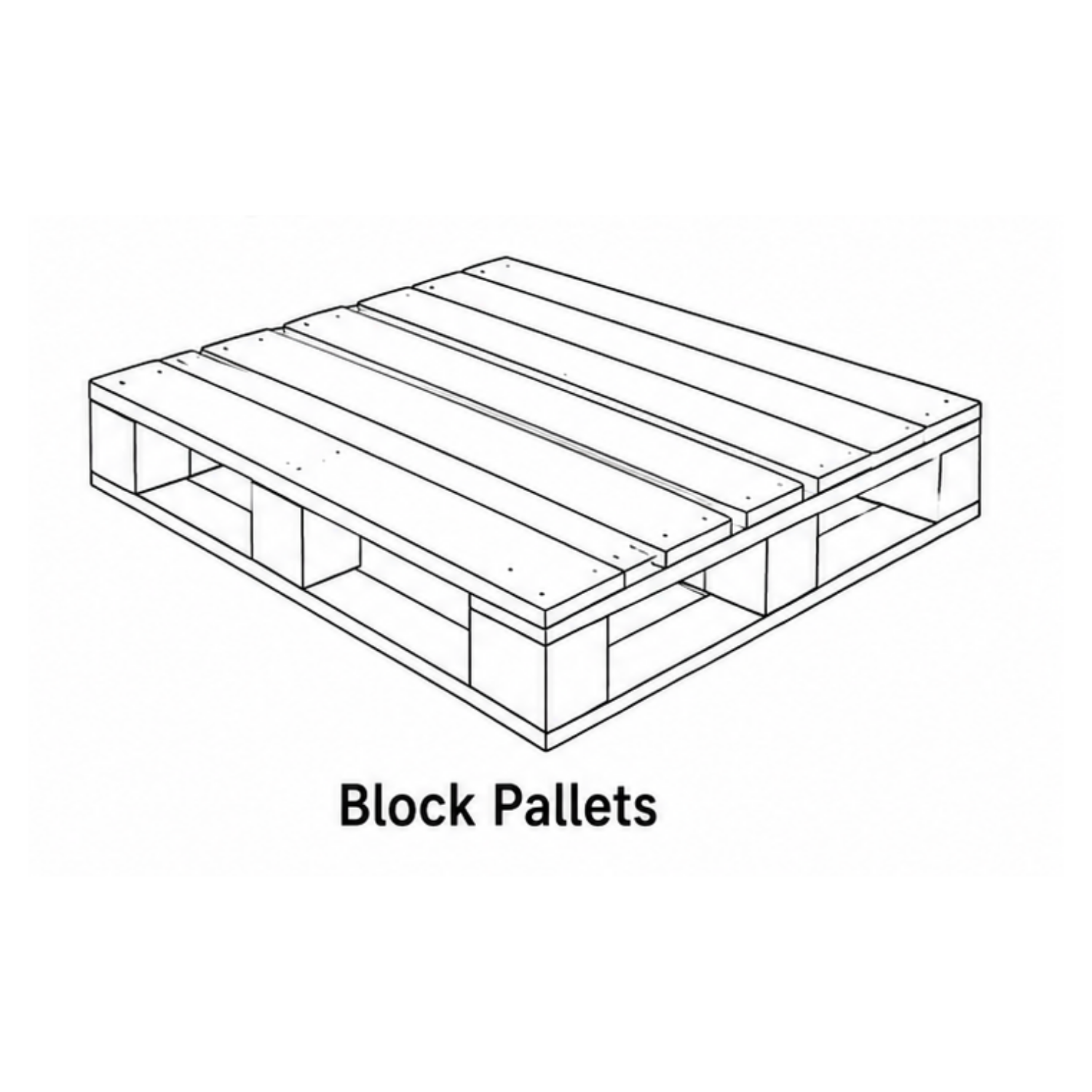
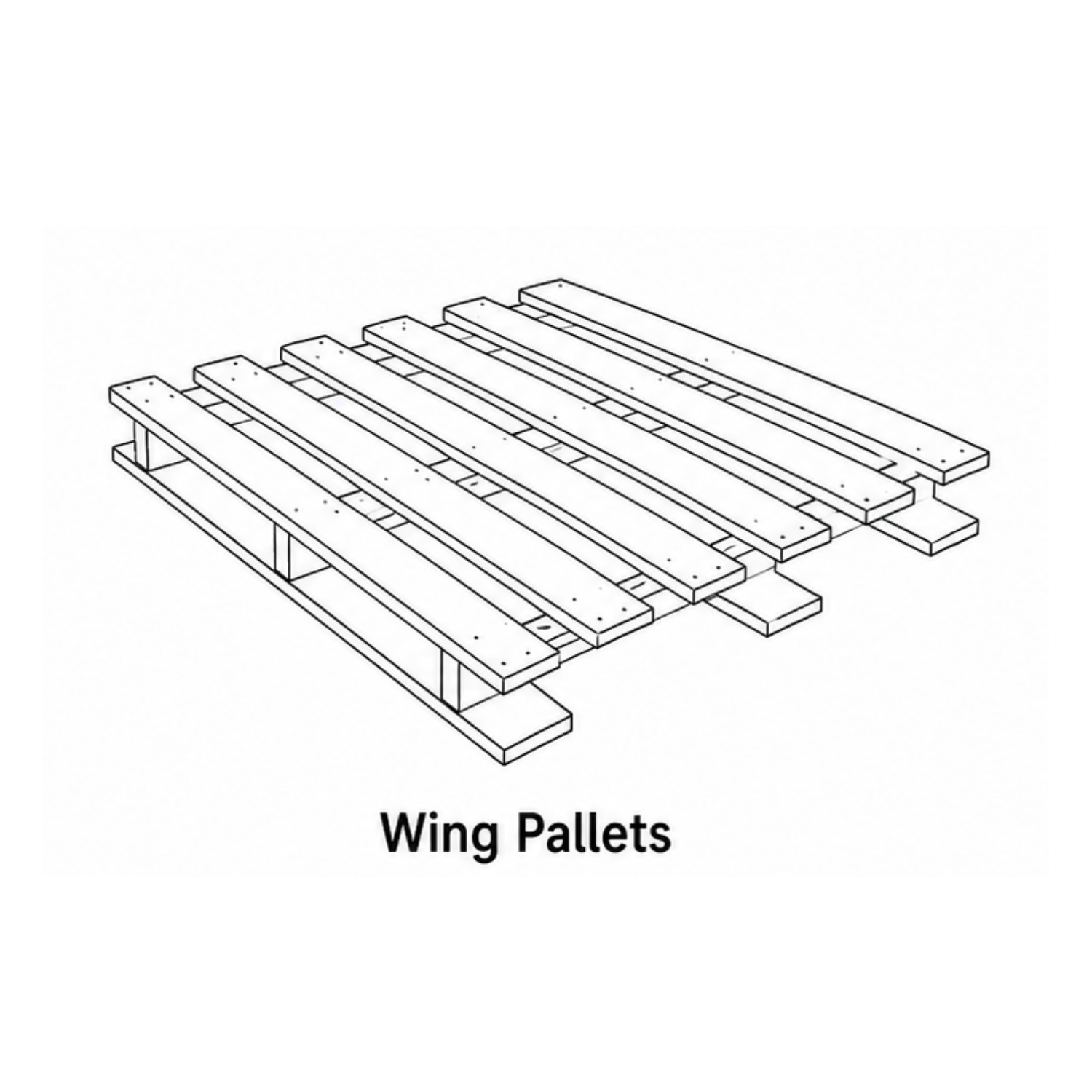
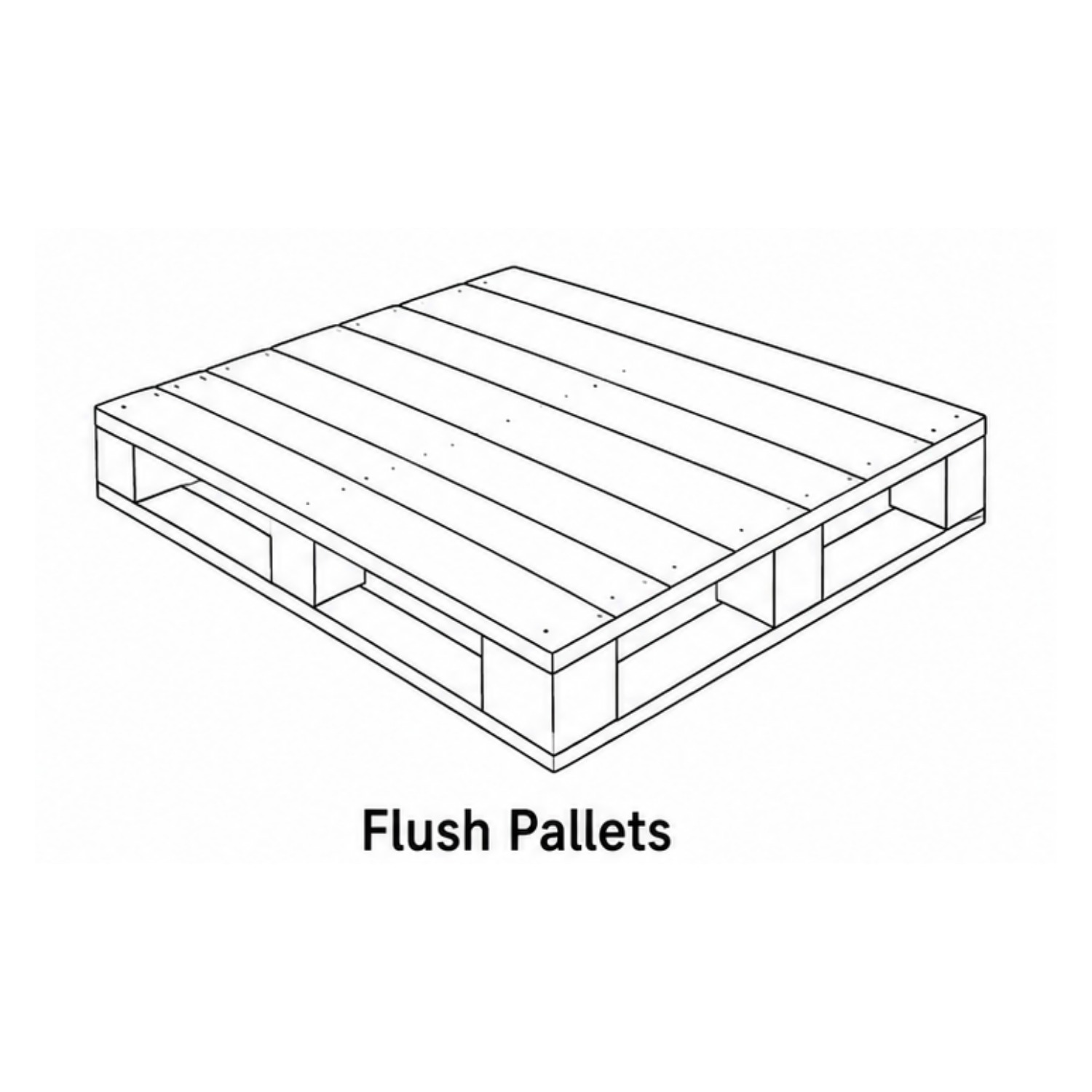
Look at a pallet from the side and its basic frame becomes easy to recognize. Stringer pallets rest on long rails, block pallets stand on separate blocks, wing pallets extend past their supports, and flush pallets end in line with them. Those shapes change how the load is supported, where forks can enter, and how easily the pallet moves around racks or conveyors.
Stringer Pallets
A stringer pallet sits on two or three long rails beneath the deck, much like a sled. That continuous support makes the frame economical, strong in the lengthwise direction, and relatively easy to repair, which explains its familiar place in North American freight. Standard stringers give two-way entry. Side notches let a forklift enter from four directions, but they remove material from the rail and may still leave an awkward path for pallet-jack wheels.
Block Pallets
Instead of long rails, a block pallet rests on individual blocks around the corners, sides, and center. The spaces provide true four-way forklift access, so the pallet is easier to approach when orientation changes in pooling, retail, or warehouse handling. When a block pallet compared with stringer pallet, its stable and accessible base is the main advantage, although it usually costs more. Wooden versions also have more joints that can loosen, and pallet-jack wheels still need a clear route through the base.
Wing Pallets
On a wing pallet, the deck projects beyond the outer stringers or blocks and leaves a narrow ledge along the edge. That extra space is useful for straps, slings, or clamp equipment, especially with wide products, paper goods, and loads that cannot be lifted from underneath in the usual way. The wing itself is not additional load support. Concentrated weight can damage the overhang, and the projecting edge needs enough clearance around rack uprights and conveyor guides.
Flush Pallets
Flush pallets keep the edge of the deck level with the supports underneath, so the pallet stays within one clean footprint. With nothing projecting beyond the frame, it fits neatly beside other loads and is less likely to catch a rack upright, conveyor guide, or neighboring pallet. The straight edge does not add strength by itself, and it gives straps or slings no ledge to grip. Repeated side impacts also land directly on the outer deck boards.
Pallet Deck Types
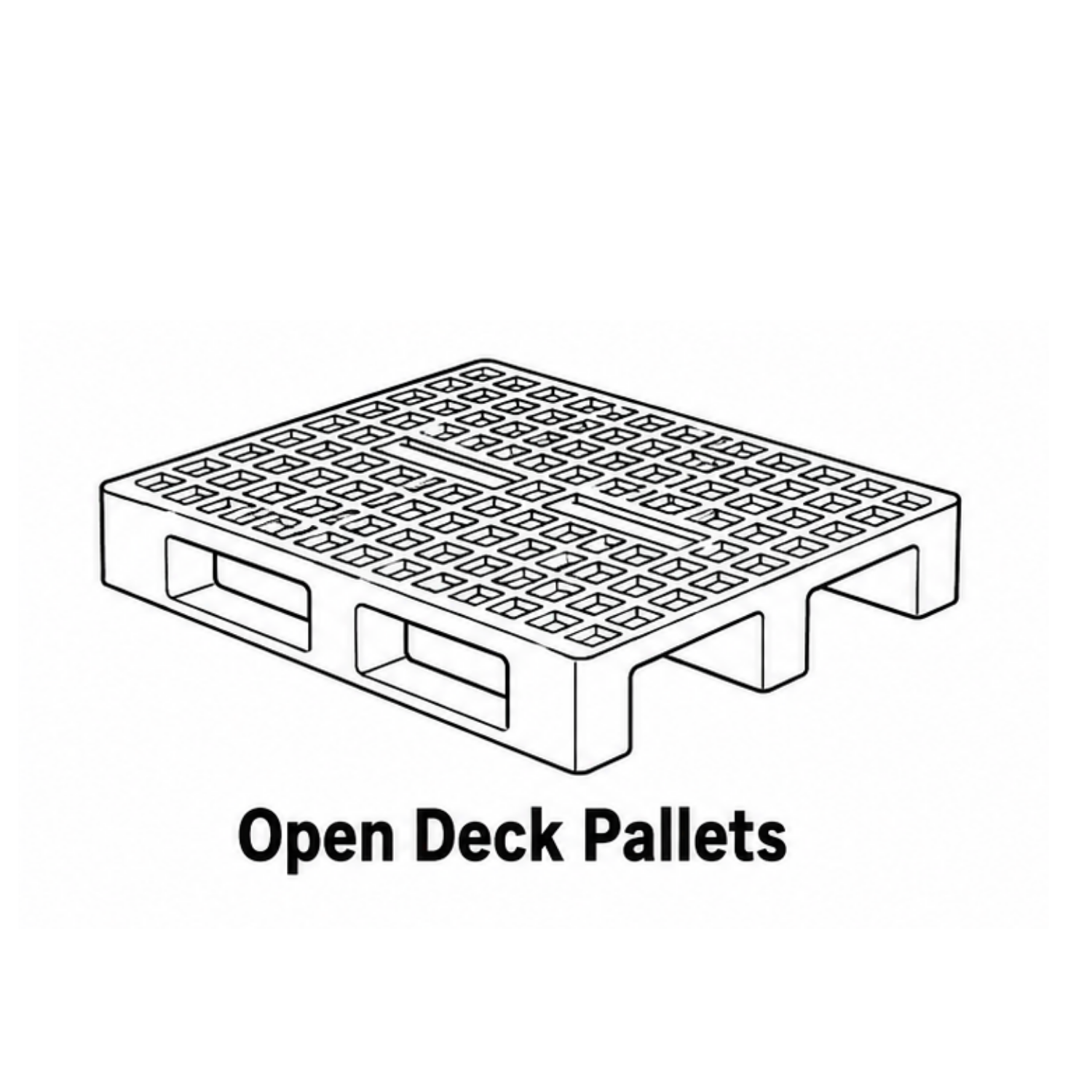
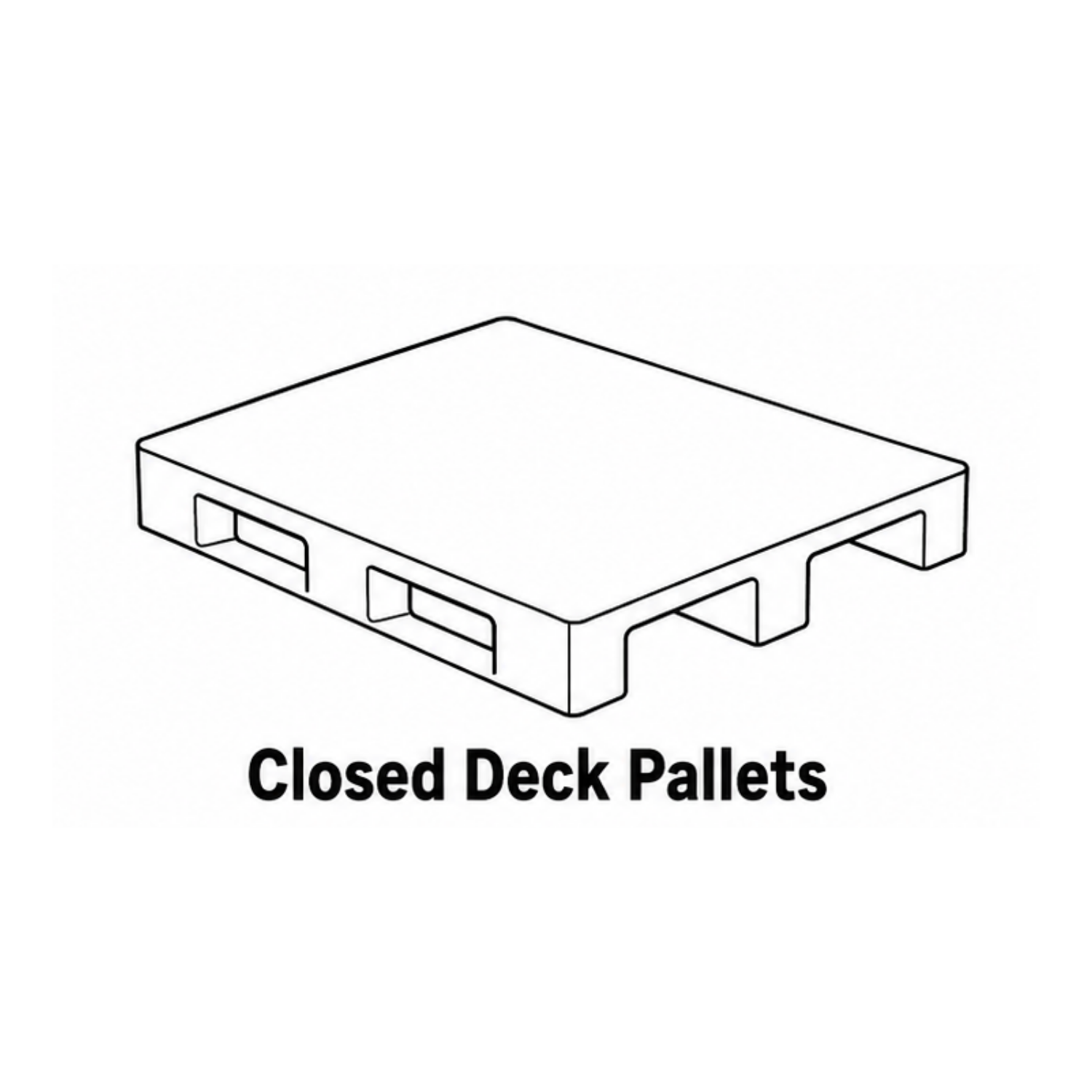
The deck is the surface your goods sit on, so its shape affects the load before anything else does. Open decks save weight and let air or water pass through. Closed decks give bags, cartons, and small packages more continuous support. These terms describe only the top surface; a pallet can still have legs, runners, or a perimeter frame underneath.
Open Deck Pallets
An open deck has a grid of supporting ribs with spaces between them. The design keeps pallet weight down and allows air, wash water, and spills to move through, which works well with crates, cartons, and produce. Those same openings can leave marks on bags, catch small packs, or place too much pressure beneath soft packaging. A heavily ribbed underside also takes more time to inspect and wash than a smooth surface.
Closed Deck Pallets
A closed deck gives the load a broad, continuous surface. Small cartons and soft bags sit more evenly, while spills or loose material are less likely to fall onto the goods below. The smooth top is also easier to wipe, but it can hold water when drainage is poorly designed and may slow airflow around chilled products. A closed top alone does not make a pallet hygienic; residue can still collect in ribs, seams, open cavities, or reinforcement channels underneath.
Single-Face Pallets
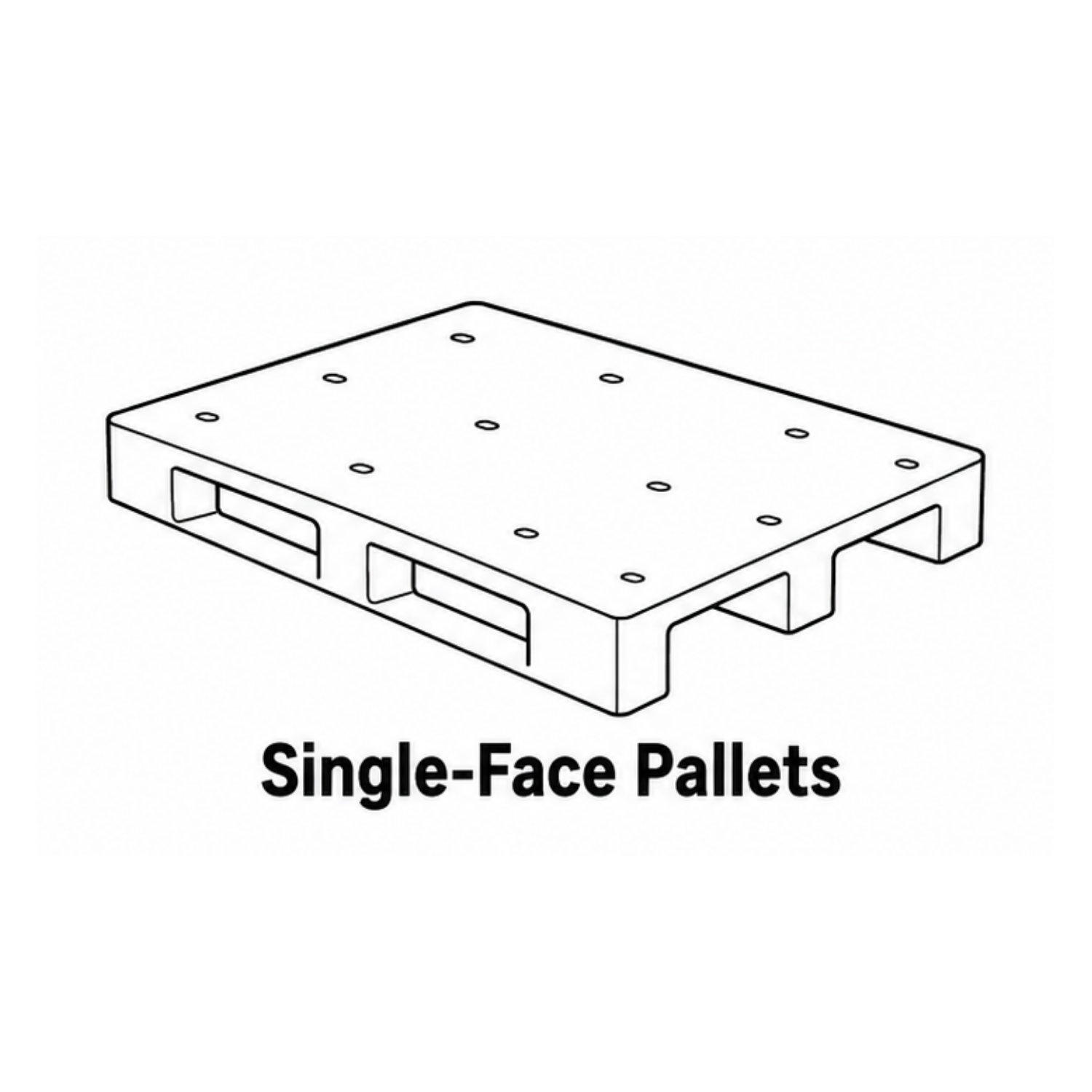
A single-face pallet has one working deck with legs or runners below it. Using less material keeps the pallet lighter, which is useful for one-way shipping, floor storage, and nestable designs. The underside is not another loading surface, so the pallet cannot simply be turned over when the top is damaged. It also gives less protection beneath the goods and may place stacking pressure on fewer contact points than a double-face pallet.
Double-Face Pallets
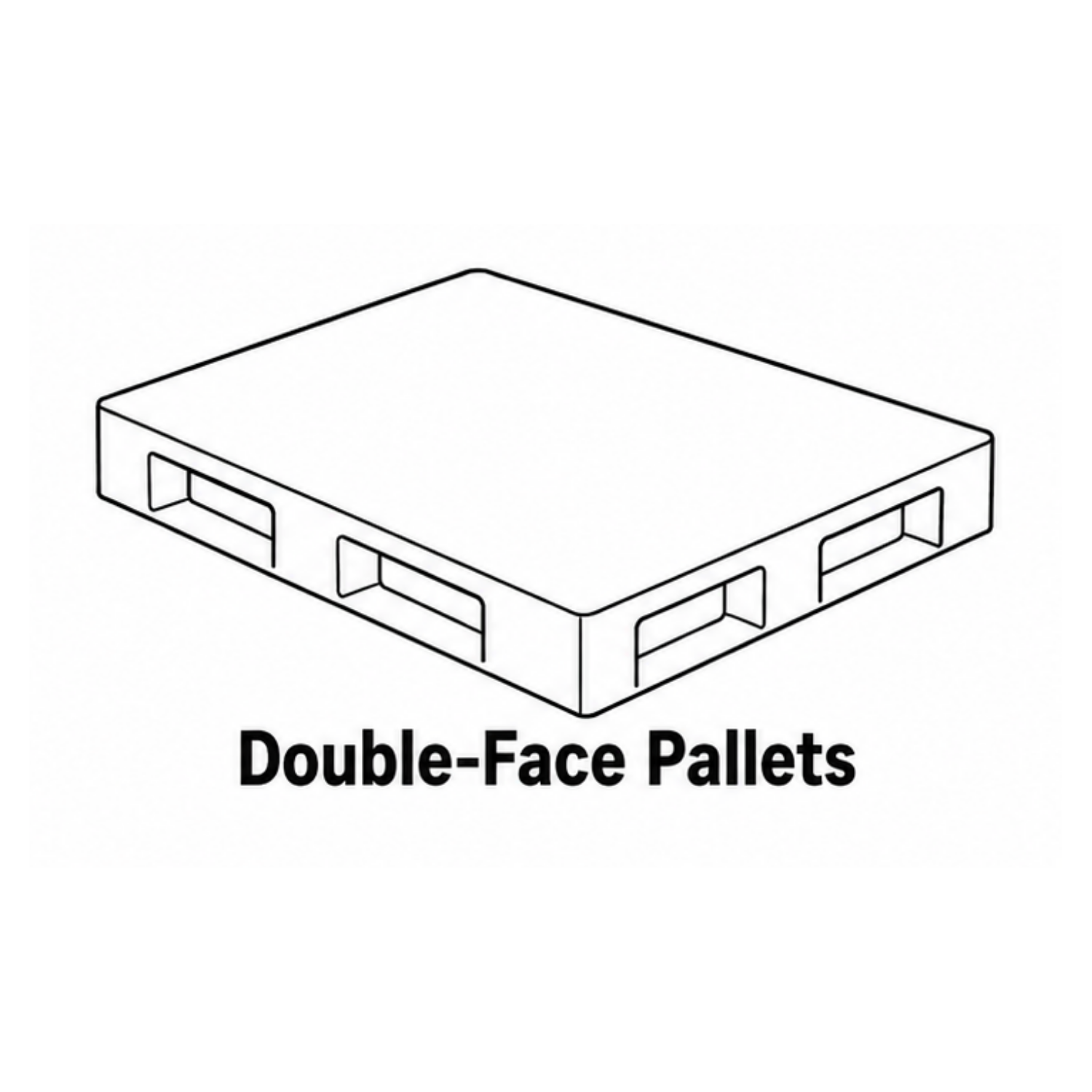
A double-face pallet has both a top and lower deck. When either face can carry the load, the design is also called a reversible pallet. The lower deck ties the supports together and spreads pressure across the unit load below, giving drums or bagged goods a steadier base during block stacking. This structure adds weight and can block pallet-jack wheels, while the lower face may press a narrow contact pattern into softer cartons or bags.
Plastic Pallet Base Types
The base is easiest to understand when the pallet is turned over. Separate feet allow empty pallets to nest, long runners give racks and conveyors a continuous surface to contact, and perimeter frames spread support around the outside edge. Two pallets can share the same top deck and dimensions yet behave very differently because the bases underneath are not the same.
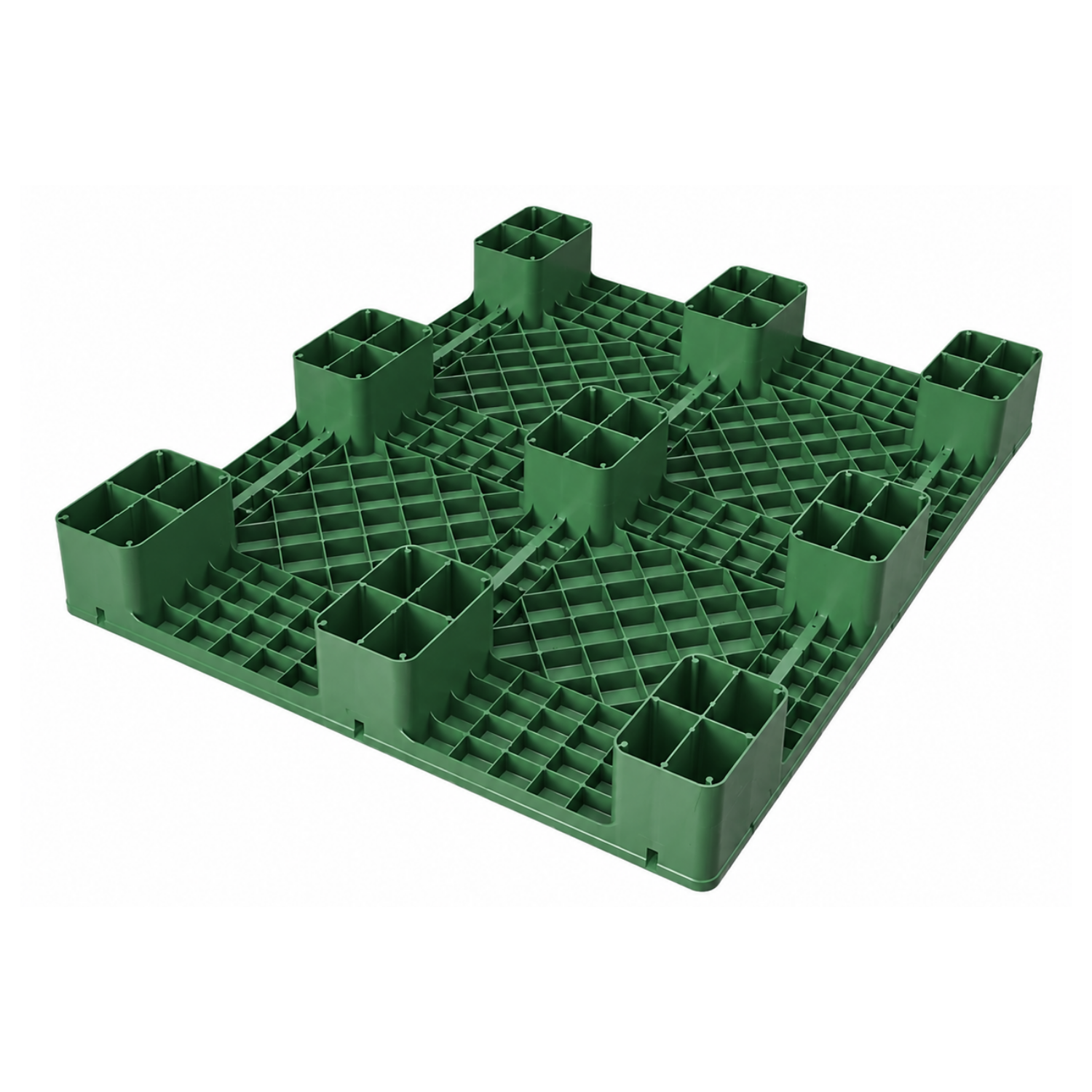
9-Leg Pallets
A 9-leg pallet stands on nine separate feet arranged in three rows. The open base keeps the pallet light and gives forklifts access from four directions, making this structure practical for export, retail replenishment, and floor storage. Some models use tapered feet for nesting, while others do not. The separated supports are less suitable for unsupported racking, and wide roller gaps may allow the feet to drop between rollers.
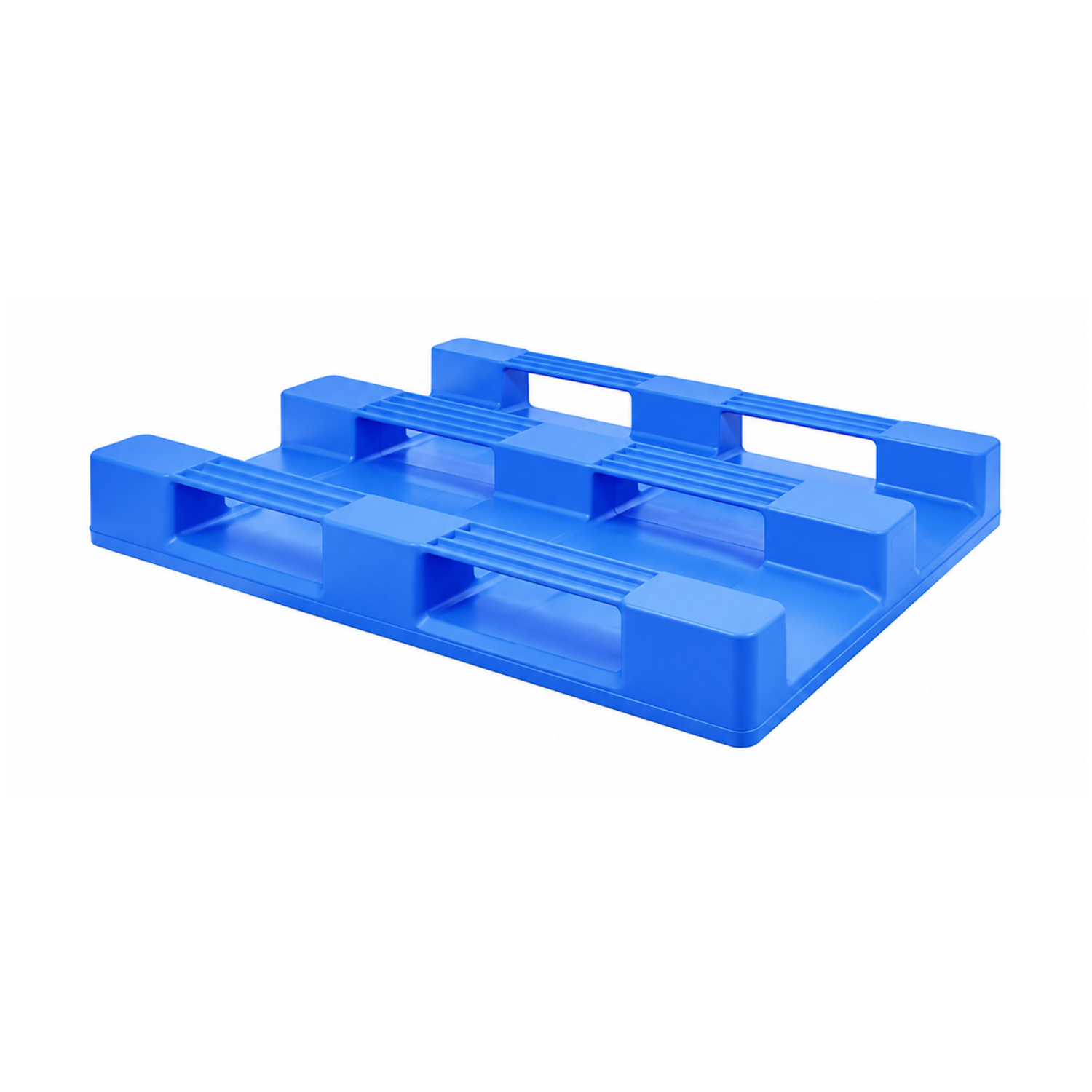
3-Runner Pallets
A 3-runner pallet joins the feet into three long rails from front to back. Those rails give rack beams, forks, and many conveyors a broad, predictable surface to support, which is useful for repeated warehouse handling. The base is heavier and takes more empty space than a 9-leg design. Direction matters as well. If rollers or chains meet the runners the wrong way, the center rail may lose support or block the travel path of pallet-jack wheels.
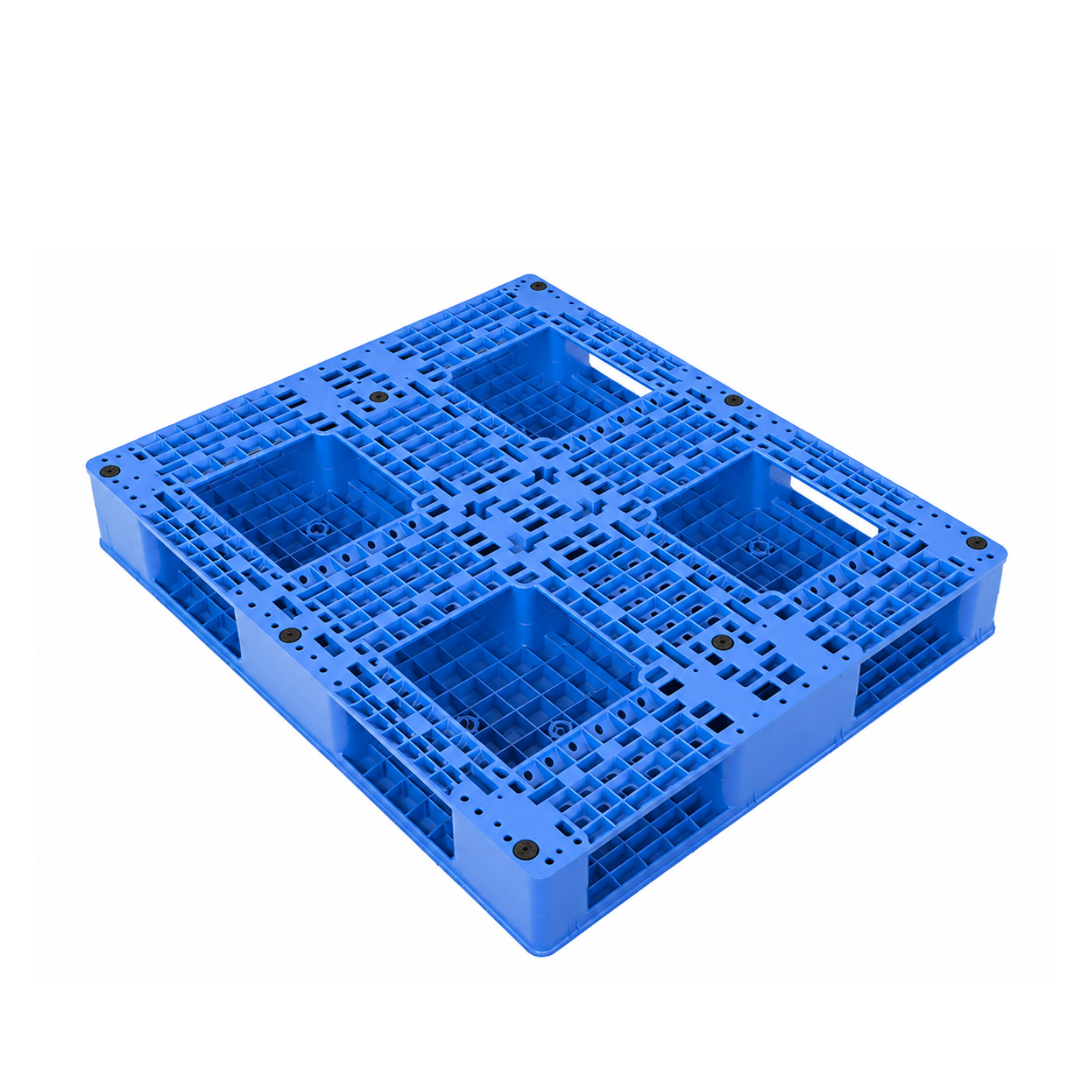
Cruciform Pallets
A cruciform base pallet also known as a full-perimeter pallet, the palletlooks like a cross beneath the deck, joining the center feet to the outer supports. It braces the middle of the pallet and spreads the load without adding a complete perimeter frame. That can be a useful compromise for floor handling and selected conveyors. The crossing runners also divide the underside into smaller openings, however, so pallet-jack wheels, conveyor chains, and rack beams need to clear the intersection.
Types of Pallets Classified by Size
Common standard pallet sizes have developed around local transport networks, warehouse equipment, packaging systems, and pallet standards. There is still no single pallet size accepted everywhere, so the best-known specification in your home market may not fit the equipment or exchange system at its destination.
ISO 6780 brings six widely recognized footprints together: 1200 × 800 mm, 1200 × 1000 mm, 1219 × 1016 mm, 1165 × 1165 mm, 1100 × 1100 mm, and 1067 × 1067 mm. They give businesses a practical starting point for international shipping, but the receiving warehouse still decides which size it can handle.
In North America, businesses rely heavily on the 48 × 40 in GMA or CBA pallet for groceries, consumer goods, manufacturing, and retail distribution.
The 1200 × 800 mm Euro pallet moves smoothly through much of Europe’s warehousing, transport, and exchange infrastructure. Businesses handling larger industrial goods or shipping within the UK often use 1200 × 1000 mm pallets instead.
Across much of Asia, businesses use 1100 × 1100 mm and 1200 × 1000 mm pallets for manufacturing, warehousing, and regional distribution. The square 1100 × 1100 mm format is especially familiar in Japan and South Korea, but businesses shipping between Asian countries should still confirm what the receiving facility accepts.
The 1165 × 1165 mm Australian pallet fits the domestic equipment and transport systems built around it.
Some products need dimensions shaped around the load rather than the country. Chemical businesses use CP1 through CP9 pallets for bags, drums, IBCs, and bulk containers, while automotive, airfreight, beverage, and retail operations often work with their own preferred footprints.
Types of Pallets Classified by Entry Direction
Entry direction tells you which sides a forklift can approach, but it does not tell the whole equipment story. Forklift tines lift from inside the openings; pallet-jack wheels must roll through and come back down on the other side. That is why a pallet described as four-way can still work comfortably with a forklift yet block a hand pallet jack from two directions.
Two-Way Entry Pallets
A two-way pallet accepts forks from two opposite ends, usually between solid stringers. The uninterrupted rails give the pallet simple, strong support along its length, so the design works well in general freight and warehouse routes where every load faces the same way. If orientation changes, the driver may need extra room to turn the pallet before pickup. Cutting side notches adds access, but it also changes the pallet into a partial four-way design.
Four-Way Entry Pallets
A four-way pallet gives forklift tines a clear opening on every side, usually through block construction or well-spaced legs and runners. Drivers spend less time turning loads when pallet orientation changes in trucks, warehouses, or retail areas. Even then, the actual fork width, opening height, and base layout still matter. A full-perimeter pallet may offer four-way forklift entry while its lower boards remain awkward for some pallet jacks.
Entry direction tells you where the forks can enter, but equipment compatibility also depends on what happens underneath the pallet. A common mistake is to treat forklift entry and pallet-jack entry as the same thing. Forklift tines can bridge a lower board, while the small load wheels on a pallet jack must roll over it and return to the floor. Reach trucks and high-bay equipment also work with the combined weight of the pallet and cargo.
The tables below help you see which pallet types commonly work with different handling equipment.
| Equipment | Check First | Commonly Compatible Pallets | Compatibility Notes |
| Forklift | Opening heightFork width and spacingEntry direction | Wood & Metal: stringer and block pallets Plastic: All pallets | Most pallet structures work with forklifts, but the fork dimensions and entry direction must match the actual pallet. |
| Hand pallet jack | Lowered fork heightLoad-wheel pathBottom-board clearance | Wood: open-end stringer and suitable block pallets Plastic: 9-leg and selected 3-runner pallets | 6-runner and reversible plastic pallets are not compatible. |
| Electric pallet truck | Entry clearanceWheel arrangementTurning and acceleration forces | Same as above. | It needs the same clear wheel path as a hand pallet jack. Six-runner and reversible plastic pallets remain unsuitable. |
| Reach truck | Fork accessRack orientationTotal unit-load weight | Wood: rackable stringer and block pallets Plastic: reinforced 3-runner, 6-runner Metal: rackable designs | Compatibility depends on both fork entry and the tested racking load. Include pallet tare weight when checking truck and rack capacity. |
Types of Pallets Based on Storage Method
Where a pallet is stored changes the way it carries the load. A floor supports almost the entire base, a lower unit load supports only the places where the two loads touch, and a rack may hold nothing more than two narrow edges. Because the support changes so much, one load number cannot describe all three conditions.
Floor-Storage and Stackable Pallets
Floor storage gives a pallet broad support underneath, so static capacity is usually its highest load figure. Loaded stacking is different because the pallet above rests on the goods below. A stable pallet base helps, but cartons, bags, drums, stretch wrap, and the stacking pattern must carry that pressure together. Soft packaging, load overhang, or uneven weight can make the stack unstable even when both pallets are structurally sound.
Rackable Pallets
A rackable pallet must bridge the open space between rack beams without bending beyond the allowed limit. Three-runner and picture-frame bases often provide the continuous support this job needs, but the base name alone is not proof. A meaningful racking rating includes the load distribution, clear beam span, pallet direction, temperature, and storage time. A high static rating measured on the floor cannot replace those conditions.
Automated Warehousing Pallets
Automation works best when every pallet reaches the machine in the same shape and position. Flat runners, consistent dimensions, controlled deflection, and clear sensor areas are therefore more useful than a familiar product name. The base must match the roller pitch, chain spacing, and lift points, while barcodes or RFID tags need a readable location. A damaged runner or distorted deck should be removed before one pallet stops the entire line.
Below, we have compiled a comparison of the suitability of different pallet types for automated handling equipment.
| Equipment | Check First | Commonly Compatible Pallets | Compatibility Notes |
| AGV/AMR | Pickup position Dimensional tolerance Sensor clearance Bottom geometry | Wood: standardized block pallets in controlled condition Plastic: 3-runner, 6-runner Metal: designs built around the pickup geometry | The pallet must arrive at the same height and position every time. Damaged runners or dimensional variation can cause missed pickups. |
| AS/RS | Rack support span Permitted deflection Identification position Damage detection | Wood: standardized rackable pallets Plastic: 3-runner, 6-runner, reversible pallets Metal: rackable automated-system pallets | Nestable 9-leg pallets usually need a slave pallet or continuous support. The racking rating must match the actual span, load direction, and storage temperature. |
| Chain conveyor | Chain spacing Runner direction Continuous contact | Wood: stringer or block pallets with suitable bottom boards Plastic: 3-runner, 6-runner, reversible pallets Metal: continuous-runner designs | The chains must remain under the load-bearing runners throughout travel. A suitable base can still lose support when placed in the wrong direction. |
| Roller conveyor | Roller pitch Runner direction Bottom flatness Allowable deflection | Wood: suitable block and stringer pallets Plastic: 3-runner, 6-runner, and reversible pallets Metal: flat-bottom designs | A 9-leg pallet only works when the rollers support its feet throughout travel. Wide gaps can let the legs drop between rollers. |
Types of Pallets Based on Shipping Uses
Shipping pallets become much easier to compare once you know whether they will return. For a one-way load, purchase price and freight weight often lead the decision. In a controlled loop, a more durable pallet can earn back its higher cost over many trips. Empty return volume, destination rules, and the number of pallets that disappear along the way can change the answer completely.
One-Way Pallets
A one-way pallet is expected to complete the shipment, not come back for another cycle. Lightweight plastic, compliant wood, presswood, plywood, and corrugated paper can all do that job at different load levels. Keeping cost and tare weight low makes sense, but the cheapest platform is not economical if it fails before delivery. It still has to survive every forklift entry, transfer, stack, and storage point on the route.
International Shipping Pallets
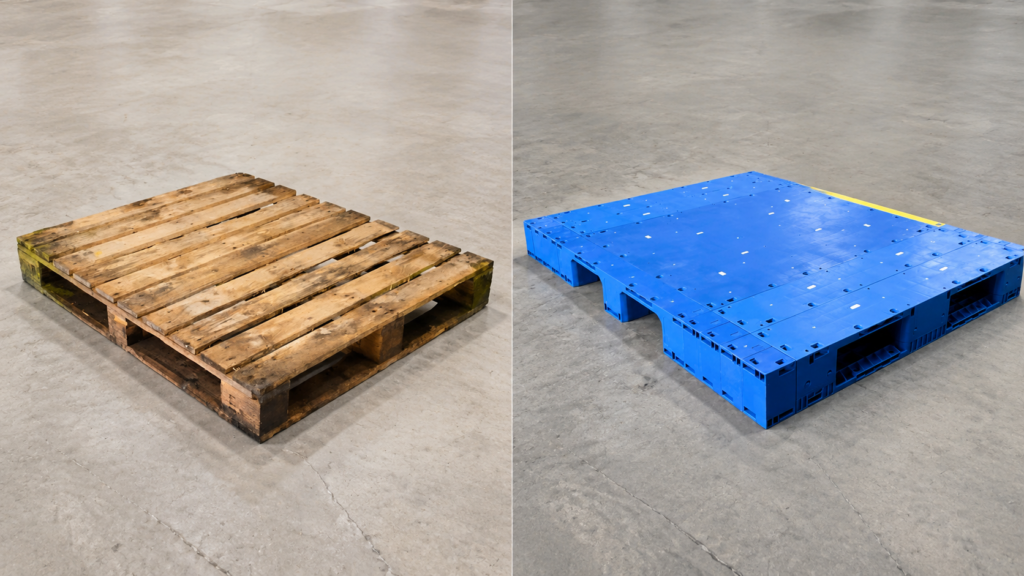
A reliable export pallet must satisfy both shipping regulations and the receiving facility’s requirements. International loads commonly travel on treated solid wood or non-wood options such as plastic, presswood, plywood, and paper. Plastic avoids the ISPM 15 treatment and marking required for regulated solid-wood packaging, while treated wood remains economical and widely available. Before shipping, confirm the pallet’s size, cleanliness, load rating, and material with the carrier or destination.
Returnable and Closed-Loop Pallets
A closed loop brings the pallet back into the same network, giving durable wood, plastic, or metal designs a chance to complete many trips. The economics depend on more than service life. Cleaning or repair cost, return speed, empty freight, and traceability all affect the result. If pallets remain at downstream locations or disappear from the system, paying more for durability will not produce the expected return.
Pooling Pallets
Pooling lets several participants share a standardized fleet rather than assigning one pallet to one shipment. It can simplify exchange and reduce empty repositioning, but every location must accept the same specification and follow the same inspection and ownership rules.
In Europe, open exchange pools mainly use 1200 x 800 mm wooden Euro pallets with valid licensed-pool and IPPC/HT markings; the dimensions, components, cleanliness, and any repairs must also meet the pool’s exchange requirements.
In North America, pools commonly use standardized 48 x 40-inch four-way wood or plastic pallets. These pallets need consistent dimensions and load performance, a clear pool-ownership mark or tracking ID, and an approved inspection and recovery process.
A pallet does not enter a pool simply because its size looks correct. Mixed models, missing marks, unauthorized repairs, and lost assets quickly erode the savings. A pooling pallet is therefore part of a managed return system, not simply a durable product.
Frequently Asked Questions
1. Which Pallet Offers the Best Value for Heavy-Duty Use?
For repeated warehouse and rack use, steel-reinforced plastic pallets offer an excellent balance of strength, lower tare weight, hygiene, and quiet handling. Treat 6-ton static, 2-ton dynamic, and 1.5-ton racking claims as valid only when the test span, direction, temperature, and load pattern match your warehouse.
2. Can Different Pallet Materials Use the Same Dimensions?
Yes. Wood, plastic, and metal pallets can share the same length and width, but their height, fork openings, and base design may differ, so compare the full drawing before assuming every 1200 x 800 mm pallet fits the same equipment.
3. Which Pallet Type Has the Best Temperature Resistance?
Metal pallets cover the widest temperature range. Plastic models may operate from around -40°C to +60°C or +70°C; HDPE suits low-temperature impact, while PP handles warmer service better, but always verify the load rating at your actual operating temperature.
4. Which Pallet Can Remain in Warehouse Racking the Longest?
Metal controls long-term deformation well, but its own weight continuously uses part of the rack’s capacity. Steel-reinforced plastic adds less dead weight, and matching the pallet model to your rack type, beam span, load distribution, orientation, and temperature can support longer, safer storage.
5. Should You Use Expensive Returnable Pallets When Loss Is High?
If pallets rarely return, a one-way plastic or presswood pallet will usually cost less per completed trip. When reuse is necessary, combine RFID or serial tracking with ownership marks, deposits, and clear return responsibility because tracking alone will not recover missing pallets.
6. How Can You Confirm Compatibility With Your Existing Forklift, Racking, and Packaging?
Compare the proposed drawing with your fork dimensions, rack-beam span, pallet orientation, package footprint, and loaded weight. Then run a loaded sample through lifting, turning, racking, conveyors, and automation before approving the order.
7. Which Pallet Type Is Most Likely to Be Accepted by Downstream Businesses?
The easiest pallet to approve is usually the specification your downstream partner already handles. Receiving rules vary, so obtain written confirmation of the size, structure, material, and load rating instead of relying on a familiar pallet name.
8. Do Plastic Pallets Have Internal Structures That Are Difficult to Clean?
Yes. Deep ribs, hollow sections, joints, and open reinforcement channels can trap residue or water, so frequent wash-down operations are better served by a smooth closed deck, sealed underside, and clear drainage paths.
9. Where Can I Buy Durable Pallets for Industrial Use?
For high-volume, heavy-duty, racking, or automation projects, buy directly from a manufacturer that controls design, tooling, production, and load testing. Distributors work well for smaller urgent orders, but always check load evidence, sample compatibility, batch consistency, and replacement availability.
Final Thought
The right pallet is not simply the strongest or least expensive option. It is the one that keeps your goods moving smoothly through forklifts, conveyors, racks, transport, cleaning, and every handoff along the route. Once these conditions match, cost per trip becomes much easier to judge.
If plastic looks suitable for your operation, explore our plastic pallet range to compare available sizes, deck styles, base structures, and load applications. You can also see how plastic pallets are manufactured and learn how injection molding, blow molding, and other processes affect their performance.
Still deciding? Share your load, pallet dimensions, handling equipment, rack layout, temperature, cleaning method, and expected number of trips with Enlightening Pallet. Our team can recommend a suitable existing model or develop an OEM or ODM solution, then provide samples and testing support before volume production.