Standard pallet sizes aren’t universal. ISO 6780 lists six globally recognized standard pallet dimensions, but adopting them isn’t mandatory in any country. That’s why pallet sizes still differ across North America, Europe, Asia, and Australia. Using a size that doesn’t match your target market can waste trailer space, trigger customs delays, or simply not fit the shelving at the destination.
This guide walks you through the most common standards—North American GMA pallets, Euro pallets, ISO-approved dimensions, and country-specific sizes—so you can plan your business with confidence. And because many industries now prefer plastic pallets, we’ll also show how they bring extra precision, hygiene, and durability compared to wood.
North American Pallet Sizes
48×40 Pallet
If your business ships across North America, including Canada, you’ll be working with the 48×40 inch (1219×1016 mm) pallet, the standard known as the GMA pallet, and since the GMA is now called the Consumer Brands Association, the 48×40 pallet is also known as the CBA pallet.
The 48×40 pallets fit 53-foot dry van trailers with almost no wasted space, which is most of why it became the industry default. At roughly 6.5 inches (165mm) high, it also matches the forklifts and pallet jacks already running in most U.S. warehouses.
Beyond the 48×40 GMA pallet, here are a few other sizes in the US you may need, depending on your cargo dimensions:
42×42 Pallet
The 42×42 inch pallet (1067×1067 mm), is a very common square pallet size in North America. It was originally designed to move mortar shells. But now, the 42″ ×42″ pallet is widely used in North America for handling, storage, and transport in the telecom, paint, and coating industries.
This is because the square pallet deck can provide better support for square or cylindrical goods than a narrow pallet. These goods can easier to place on the pallet center, and the pallet can leave a more even edge on all four sides, so the load will stay more balanced than other pallet sizes. This can make your goods less likely to tilt or lose stability during handling, stacking, and transport.
Unlike the 48×40 pallet, the 42×42 has no single fixed-height standard. Here are the common heights you’ll run into across different 42×42 pallet types:
| Material / Structure | Height |
| Wood 42×42 pallet | About 4.5 inches |
| Plastic 42×42 pallet | Usually 5.5–6 inches |
| Heavy-duty / rackable plastic pallet | May be higher, depending on the structure design |
48×48 Pallet
48×48 pallet (1219×1219 mm) is a common square pallet size in the U.S. chemical industry. This size is suitable for storing and transporting 55-gallon drums. Each pallet can usually hold 4 drums, and the drums can stay within the pallet’s edges. This helps reduce shaking risk during transport and stacking compared to other square pallets.
But 48×48 wood pallets can be mainly used for storage and transport, while for conveying systems, 48×48 plastic pallets are better.
48×42 Pallet
The 48×42 pallet is 2 inches longer than the GMA pallet (48×40). This pallet size usually can support 4-way forklift handling, and the load capacity is around 2,000 to 3,000 lbs.
In the U.S., it is often used for finished chemicals, cement, beverage cases, and raw materials. So 48×42 pallets are often made with a heavy-duty structure.
But not all 48×42 pallets are made for heavy-duty use. If they are made from recycled wood or recycled plastic, their load capacity may be reduced by around 20% compared with pallets made from 100% virgin materials. These pallets are often a better choice for one-way export pallets or lighter-duty applications.
If you need pallets for heavy loads or repeated use, ask the manufacturer for real load testing data. A product description or “heavy-duty” label alone does not always show how the pallet will perform in real working conditions.
40×40 Pallet
40×40 pallet (1016×1016 mm) is a practical small square pallet size commonly used in the US dairy industry. It is usually designed with 2-way fork entry and is suitable for daily handling of milk crates and milk cases.
This is because a US common square milk crate is about 13×13×11 inches, so one layer on a 40×40 pallet can usually hold 9 crates in a 3×3 layout. This helps the dairy factory keep the milk crates within the pallet edges and reduces the risk of product overhang.
Wood 40×40 pallets may stop or jam more easily in automated systems. If you want smoother daily handling and better operation efficiency, a plastic 40×40 pallet is a better choice. It can be designed with 4-way fork entry and higher load capacity, so it can work better for stack loading, conveyor systems, distribution, and static storage.
In addition to these, North American supply chains also rely on several other popular pallet sizes tailored to different industries:
| Dimensions (mm) W × L | Dimensions (inches) W × L | Typical Industry Applications |
| 914 × 914 | 36 × 36 | Beverage distribution, including water, soft drinks, and juices |
| 1016 × 1016 | 40 × 40 | Dairy sector, including milk crates and related products |
| 1219 × 1016 | 48 × 40 | Military goods, cement, and heavy bagged materials |
| 1219 × 1067 | 48 × 42 | Beverage, chemical products, and industrial packaging |
| 1067 × 787 | 42 × 31 | Construction, flooring, masonry materials, and building products |
| 1219 × 1143 | 48 × 45 | Automotive parts and components |
| 1219 × 914 | 48 × 36 | Narrow transport and storage spaces; also used for packaged paper, shingles, and beverages |
| 1219 × 508 | 48 × 20 | Retail display, in-store handling, and smaller distribution loads |
| 889 × 1156 | 35 × 45.5 | Military applications, including half ISO container fit |
European Pallet Sizes
EUR 1 Pallet
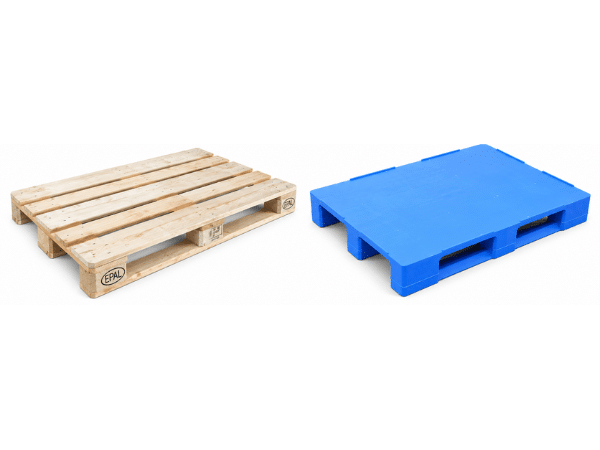
The pallet size for EUR 1 is 1200×800×144 mm. This European pallet dimension is the most typical specification in European logistics. This dimension is also used in the EPAL (Europe’s shared pallet pool), and same as the ISO1 standard.
1200×800 Euro pallets usually come in 2 materials: wood and plastic, so with the same size:
- A wood EUR1 weighs about 25kg and handles roughly 4T static load and 1.5T dynamic.
- A plastic EUR1 weighs around 18kg, handles up to 6T static and 2T dynamic.
Because plastic pallets are always built to ISO 9001 tolerances, under repeated cycling, plastic pallets tend to hold their shape and load rating longer than wood. So if your goods are heavy and you want to reduce shipping costs, or the same pallets need to survive years of reuse, a plastic euro pallet is the more cost-effective bet.
With 350 to 500 million EUR1 pallets already circulating through European warehousing, retail, and distribution networks, matching this size is what keeps your shipments moving through those systems without getting flagged or rejected at the dock.

EUR 2 Pallet
The size of EUR 2 is 1200 × 1000 × 162 mm (47.24 in × 39.37 × 6.38 in). It is more suitable than EUR 1 pallet for goods with larger sizes and heavier weight, such as metal parts, machinery parts, equipment parts, and other heavy goods. EUR 2 pallet continuous circumferential bottom is also suitable for chain and roller conveyors in automated systems.
In general,
- a wooden EUR 2 pallet weighs about 35 kg, with 1.25T dynamic load and 4T static load.
- A plastic EUR 2 pallet weighs only about half of a wood EUR 2 pallet, but it can meet 2T dynamic load and 6T static load.
So what you need to consider is simple: choose a plastic EUR 2 pallet if you need more stable load capacity and lower transport cost. Choose a wood EUR 2 pallet if your goods need to enter the wood pallet exchange system.
EUR 3 Pallet
EUR 3 pallet dimension is 1000 x 1200 x 144 mm. This size is the same as the size of EPAL 3 pallet. The length and width of EUR 3 pallet are opposite to EUR 2 pallet. The 1000 x 1200 mm size can meet common cargo sizes in the Asian market, so EPAL also calls it the “new Asian standard”.
In general, a wooden EUR 3 pallet weighs about 30 kg, and its dynamic load is about 1.5T. When fully loaded and stacked, the bottom pallet can carry about 4.5T at most. Compared with EUR 1, EUR 3 has a larger support area. It is more suitable for wider cartons, industrial packaging, machinery parts, and other goods that need stable bottom support.
If your goods need to move between European and Asian supply chains, EUR 3 pallet is closer to the common pallet size in the Asian market than EUR 1. If you care more about pallet weight, no fumigation, moisture resistance, and long-term reuse, plastic EUR 3 pallet will be more suitable.
EUR 6 Pallet
EUR 6 pallet dimension is 800 x 600 x 144 mm. It is also called EPAL 6 half pallet, half Euro pallet, or 800 x 600 pallet. This size is half of EUR 1, so you can use this half Euro pallet as a plastic floor pallet for small cargo, retail display, supermarket distribution, and mixed goods handling. It also supports 4-way fork entry, so even in narrow aisles, workers do not need to move the pallet first. Forklifts can pick it up directly from different sides.
A wooden EUR 6 pallet usually weighs about 9.5 kg. Its safe working load is about 750 kg, and when fully loaded and stacked, the bottom pallet can carry about 1.5T at most.
600 x 400 Pallet
600 x 400 pallet is also called quarter pallet or quarter-size Euro pallet. It is one quarter the size of EUR 1 pallet, so it is more suitable for small retail packs, promotional display, small cartons, and goods that need to go directly from warehouse to store shelf. A plastic 600 x 400 display pallet usually weighs about 1.9 kg. Its safe working load is often about 250 kg, and its static load depends on the pallet design and stacking method.
400 x 300 Pallet
400 x 300 pallet is also called one-eighth Euro pallet or 1/8 display pallet, because it is one-eighth the footprint of EUR 1. It is mainly used for very small goods, shelf-ready packaging, light retail display, small parts, samples, and compact warehouse picking. A plastic 400 x 300 pallet usually weighs about 1 kg, and the static load is often about 120 kg. It is not made for heavy transport, but for light goods, easy handling, and small display space.
| Pallet Type | Dimensions (mm) W × L | Dimensions (inches) W × L | Typical Industry Applications |
| EUR 1 | 800 × 1200 | 31.50 × 47.24 | General European logistics, retail distribution, FMCG, food and beverage |
| EUR 2 | 1000 × 1200 | 39.37 × 47.24 | Heavy industrial goods, chemicals, automotive parts, machinery components |
| EUR 3 | 1000 × 1200 | 39.37 × 47.24 | Asian-European supply chains, industrial packaging, machinery parts, wider cartons |
| EUR 6 | 600 × 800 | 23.62 × 31.50 | Beverage crates, retail displays, smaller loads |
| 600 × 400 Quarter Pallet | 400 × 600 | 15.75 × 23.62 | Retail promotions, shelf-ready packaging, small cartons |
| 400 × 300 Eighth Pallet | 300 × 400 | 11.81 × 15.75 | Small retail displays, samples, small parts |
UK Standard Pallet Size
UK standard pallet size is 1200 × 1000 mm (47.2 x 39.4 inches). A standard UK wooden pallet can carry 1500 kg of goods. A plastic pallet can carry 6T in static load.
UK pallet height has no fixed requirement. In general, 150 mm–172 mm can fit common warehouse racks, trailers, and forklifts used by UK companies.
“UK standard pallet” and “European standard pallet” are not the same size, because European pallets are usually 1200 × 800 mm. European pallets can also be used in the UK, especially for cross-border transport between the UK and Europe, retail distribution, and automated handling. But if you plan to use UK pallets to ship goods to other European countries, you need to check first whether the local side can accept your pallets.
If your pallets are mainly used for local distribution within the UK, pallet height can also affect your freight cost.
Local freight companies in the UK calculate freight not only by weight and destination, but also by the total height of each pallet load placed on a 1200 × 1000 mm pallet.
- If the total pallet height is up to about 2,200 mm, it is usually charged as a Full Pallet.
- If the total pallet height is up to about 1,200 mm, it is usually charged as a Half Pallet.
- If the total pallet height is up to about 800 mm, it is usually charged as a Quarter Pallet.
So, if your full pallet height is close to one charging height limit, choosing a 150 mm high UK pallet may help you reduce the total pallet height, and this can help control transport cost.
Australian Standard Pallet Size
The Australian standard pallet measures 1165 × 1165 × 150 mm (45.87″ × 45.87″). Typically Australian-made from either softwood or hardwood, it is designed to carry loads of 1–2 tons and can be safely used in racking systems.
This specific dimension was originally created to fit perfectly into RACE (Railways of Australia Container Express) containers, which were wider than international ISO containers. Over time, Australia’s entire domestic logistics system was built around this size, making it a fixed national standard.
However, because the 1165 × 1165 mm footprint does not align with 20-foot (6.1 m) and 40-foot (12 m) ISO containers, exporters often switch to 1100 × 1100 mm pallets when loading goods into ISO shipping containers.
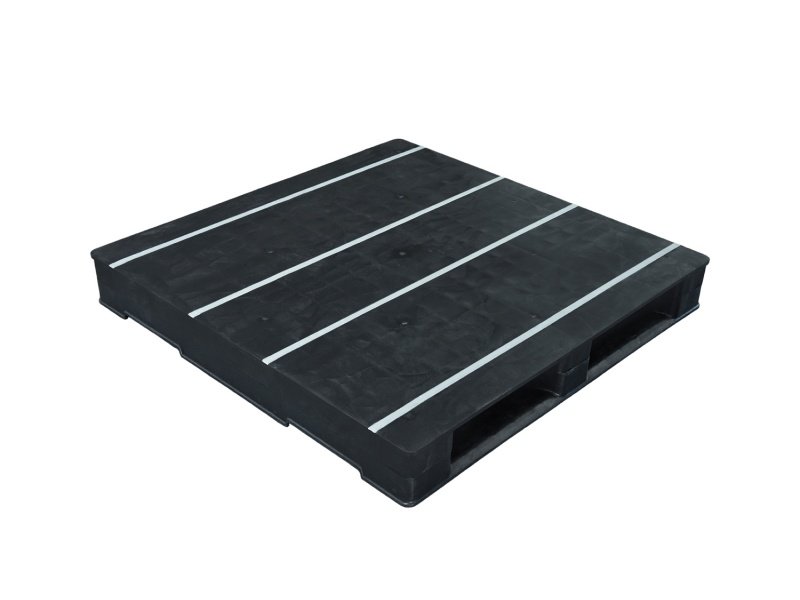
At the same time, Australian plastic pallets are gradually replacing wood pallets in industries where hygiene, durability, and consistent dimensions are more important.
For example:
- Pharmaceuticals: often rely on 1200 × 800 mm plastic pallets, easier to handle in cleanrooms and perfectly aligned with global pharma packaging.
- Chemicals: frequently use 1300 × 1100 mm plastic pallets for drums, bulk powders, and hazardous goods, where extra strength and surface area are critical.
- Automotive: typically choose 1200 × 1100 mm plastic pallets, matching parts bins and ensuring smooth return logistics.
- Food & Beverage: often turn to 1200 × 1000 mm plastic pallets, which make exports easier because they are closer to ISO and Euro standards.
Asia Pallet Sizes
Asia primarily uses pallets 1100 × 1100 mm and 1200 × 1000 mm pallet, though some individual countries have additional requirements regarding pallets.
China Pallet Sizes
In China, the most commonly used pallet sizes for domestic logistics are 1200 × 1000 mm and 1100 × 1100 mm. These sizes are widely used in manufacturing, warehousing, and local distribution. For domestic handling, many Chinese businesses mainly use nestable plastic pallets because they are easy to stack, save storage space, and work well for high-volume warehouse operations.
If you are shipping goods to China, local businesses can also accept international pallet sizes depending on their warehouse systems and supply chain needs. Common examples include the 1200 × 800 mm Euro pallet and the 1219 × 1016 mm (48 × 40 inch) pallet used in global supply chains.
Malaysia Pallet Sizes
There are two most common standard pallet sizes in Malaysia.
1100 × 1100 mm (43.3 × 43.3 in), belongs to Asian standard pallet.
1200 × 1000 mm (47.2 × 39.4 in), suitable for ECR standard.
Other common sizes are as follows:
| Pallet Size (mm) | Pallet Size (inches) | Usage Notes |
| 1200 × 1200 | 47.2 × 47.2 | Commonly used for internal factory handling of large goods |
| 1143 × 1143 | 45 × 45 | Suitable for exporting 45 x 45 inches goods |
| 1200 × 800 | 47.2 × 31.5 | Suitable for exporting goods to Europe |
Also, pallets used in Malaysia must meet the at least 90 mm fork entry height for standard pallet jacks. This is one important point you need to consider first when buying pallets for Malaysia operations.
Singapore Pallet Sizes
The most widely used pallet sizes in Singapore include 1200 × 800 mm, 1200 × 1000 mm, 1200 × 1200 mm, and 1100 × 1100 mm. Different industries choose different pallet sizes based on their cargo type, handling needs, and supply chain requirements.
Among these sizes:
- 1200 × 1000 mm pallets are commonly used for cartons, finished goods, and industrial products. They are widely found in Singapore’s manufacturing, warehousing, retail distribution, and export logistics operations.
- 1100 × 1100 mm pallets have a square footprint that works well for Asian supply chains. In Singapore, they are often used for consumer goods, chemical products, and bulk materials, especially for regional trade across Asia.
- 1200 × 800 mm Euro pallets are mainly used by Singapore businesses that connect with European supply chains. They are commonly seen in industries such as automotive parts, machinery manufacturing, and international distribution, where matching European pallet systems is important.
- 1200 × 1200 mm pallets are also used in Singapore for larger or heavier products that need more support area. They are commonly applied in industrial goods, chemical containers, raw materials, and warehouse operations where load stability is a key concern.
Japan Pallet Size
The standard pallet size in Japan is 1100 × 1100 mm (43.3″ × 43.3″), while 1200 × 1000 mm pallets are also commonly used, especially in international supply chains.
The 1100 × 1100 × 144 mm pallet follows the T11 standard. To meet this standard, the pallet should support 4-way forklift entry and be compatible with Japan’s domestic warehousing, distribution, retail, and one-way transport systems.
The 1200 × 1000 mm pallet follows the T12 standard and is widely used in industries such as automotive, pharmaceuticals, and cold chain logistics. This size is also a good choice for companies that need pallets compatible with overseas shipping and global supply chains.
If you are considering plastic pallets for the Japanese market, it is important to check whether the pallets meet the requirements of JIS Z 060 standards, especially for repeated-use applications. Pallets designed for reuse need consistent dimensions, reliable load performance, and enough durability to handle multiple handling cycles.
The pallet design should also match the handling equipment being used. For forklift-only applications, the fork opening height should generally be no less than 50 mm. If the pallet will be handled by manual pallet jacks or electric pallet trucks, the entry height usually needs to be within 89–156 mm.
When selecting plastic pallets for Japan, businesses usually pay close attention to:
- 4-way handling capability
- Load capacity ratings
- Bending strength
- Anti-slip surface design
Mexico Pallet Standard
The most commonly used pallet size in Mexico is 48″ × 40″ (1219 × 1016 mm), which is the same size as the U.S. GMA pallet. If your goods are shipped between Mexico and the U.S., or used in local manufacturing, retail, and distribution, this size is usually the safest choice.
Mexico also accepts other ISO pallet sizes for international supply chains. However, half pallets and quarter pallets are not widely used in local logistics. For most applications, choosing a pallet height of 150–165 mm will ensure good compatibility with common warehouses, forklifts, and transport equipment in Mexico.
African Pallets Sizes
Africa does not have one single pallet standard across all regions.
If you are choosing pallets for African markets, 1200 × 800 mm (47.24 × 31.50 in) pallets are commonly used in North Africa, especially for goods connected with European supply chains, such as food, beverages, pharmaceuticals, and FMCG products.
In South Africa, 1200 × 1000 mm (47.24 × 39.37 in) pallets are more common for manufacturing, automotive, mining-related industries, and retail distribution.
In West and East Africa, the right pallet size often depends on where your goods come from and where they are going. European pallets such as 1200 × 800 mm (47.24 × 31.50 in) are widely used for food, consumer goods, and pharmaceutical distribution, while 48 × 40 inch (1219 × 1016 mm) pallets may be found in supply chains linked with North America.
For Central Africa, pallet selection usually depends on the supplier, warehouse equipment, and export destination, so it is important to confirm the required size before purchasing.
Summary of Standard Pallet Dimensions
Knowing the standard pallet sizes used in different countries helps you match local logistics systems directly and avoid costly adjustments. Here is a reference to the most common dimensions worldwide.
| Dimensions (mm) W × L | Dimensions (inches) W × L | Country / Standard |
| 1200 × 1000 | 47.24 × 39.37 | Asia Pallet Standard; UK; South Africa; Europe EUR 2 |
| 1200 × 1100 | 47.24 × 43.3 | Asia Pallet Standard; Australia Automotive Industry |
| 1100 × 1100 | 43.3 × 43.3 | Asia Pallet Standard |
| 1219 × 1016 | 48 × 40 | GMA; Mexico Pallet Standard; North American; Canada |
| 1200 × 800 | 47.24 × 31.5 | Euro EUR 1 / EPAL 1 Standard; Africa(North; West; East) |
| 1000 × 1200 | 39.37 × 47.24 | Europe EUR 2 / EUR 3 / EPAL Standard |
| 1165 × 1165 | 45.87 × 45.87 | Australia National Standard |
| 1200 × 1200 | 47.2 × 47.2 | Malaysia Factory Internal, Singapore Heavy/Large Goods |
| 1143 × 1143 | 45 × 45 | Malaysia Export Special Size |
| 1300 × 1100 | 51.18 × 43.30 | Australia Chemical & Hazardous Goods |
Chemical Pallets Sizes
Chemical Pallet, or CP pallet, is the sizing system used mainly across Europe’s chemical industry. Nine standard footprints, CP1 through CP9, cover everything from bagged chemicals to full IBC drums.
One thing worth knowing before you spec a CP pallet: there’s no single load rating tied to the CP number itself. Two CP3 pallets from two different factories can carry very different weights, because capacity comes down to construction and material, not the size code. Keep that in mind as you read through the specs below, and always ask your supplier for tested numbers on the exact build you’re buying.
CP1
CP1 is the workhorse of the CP family. At 1200 × 1000 × 138 mm, it’s close enough to the standard European 1200 × 1000 mm footprint that it drops into most existing warehouse racking and handling equipment without any adjustment.
CP2
CP2 comes in at 1200 × 800 × 138 mm, the same footprint as a EUR1 pallet. If your supply chain already runs on Euro pallets, CP2 slots in without forcing a rethink of your transport or storage setup.
CP3
CP3 is square, 1140 × 1140 × 138 mm, and it’s the size most people picture when they think “chemical drum pallet.” The footprint suits standard drums well, which is why it shows up so often in European liquid chemical shipping.
CP4
CP4 measures 1300 × 1100 × 138 mm, sized for oversized chemical bags that don’t sit comfortably on a standard footprint. It’s a less common size, but the right call when your packaging runs bigger than average.
CP5
CP5 is the smallest in the lineup at 1140 × 760 × 138 mm, built for smaller batches. Where the bigger CP sizes waste space under a partial load, CP5 keeps things tight and cost-efficient.
CP6
CP6 shares the same 1200 × 1000 mm footprint as CP1, but a taller 156 mm build gives it more strength for frequent handling. If your pallets get loaded and unloaded constantly, CP6 tends to hold up better over time than CP1.
CP7
CP7 is 1300 × 1100 × 156 mm, and it’s built for weight. Reported figures put dynamic load around 2 tonnes and static load in the 4 to 6 tonne range, though as always, confirm the exact number with whoever’s building the pallet. Construction quality, not the CP7 label, is what actually decides that ceiling.
CP8
CP8 measures 1140 × 1140 × 156 mm and is shaped for FIBC bulk bags, the flexible ton-sacks used for powders and granulated chemicals. Some CP8 builds include a drain hole in the deck for IBC containers, letting you drain the container without lifting it off the pallet.
CP9
CP9 shares CP8’s 1140 × 1140 × 156 mm footprint but is the heavier-duty version of the two, built for large IBC containers and chemical drums where load stability matters more than drainage.
Full Spec Table
| CP Type | Size (mm) | Size (inch) | Height | Typical Load Range* | Main Applications |
| CP1 | 1200 × 1000 | 47.2 × 39.4 in | 138 mm | Static: ~1,000 kg<br>Dynamic: ~1,000 kg<br>Racking: depends on build | Bagged chemicals, cartons, flexible packaging, general chemical products |
| CP2 | 1200 × 800 | 47.2 × 31.5 in | 138 mm | Static: ~1,000 kg<br>Dynamic: ~1,000 kg<br>Racking: depends on build | Chemical bags, cartons, fiber drums, Euro-size supply chains |
| CP3 | 1140 × 1140 | 44.9 × 44.9 in | 138 mm | Static: ~4,000 kg<br>Dynamic: ~1,000–1,500 kg<br>Racking: depends on build | Drums, FIBC bags, octabins, container shipping |
| CP4 | 1300 × 1100 | 51.2 × 43.3 in | 138 mm | Static: ~4,000 kg<br>Dynamic: ~1,000–1,500 kg<br>Racking: depends on build | Chemical bags, bulk packaging, industrial materials |
| CP5 | 1140 × 760 | 44.9 × 29.9 in | 138 mm | Static: ~4,000 kg<br>Dynamic: ~1,000 kg | Smaller chemical loads, cartons, crates, container loading |
| CP6 | 1200 × 1000 | 47.2 × 39.4 in | 156 mm | Static: ~4,000 kg<br>Dynamic: ~1,500 kg<br>Racking: higher than CP1 | Heavy bagged chemicals, stacked loads, reusable transport |
| CP7 | 1300 × 1100 | 51.2 × 43.3 in | 156 mm | Static: ~4,000–6,000 kg<br>Dynamic: ~2,000 kg | Heavy chemical bags, bulk materials, industrial packaging |
| CP8 | 1140 × 1140 | 44.9 × 44.9 in | 156 mm | Static: up to ~6,000 kg<br>Dynamic: ~1,500 kg | Octabins, bottom discharge bags, container transport |
| CP9 | 1140 × 1140 | 44.9 × 44.9 in | 156 mm | Static: up to ~6,000 kg<br>Dynamic: ~1,500 kg | Heavy drums, FIBC, octabins, high-load chemical logistics |
Which Sizes Are Easiest to Source
In North America, CP1, CP3, CP7, and CP9 are the sizes you’ll see most often. If your supply chain ships into the US, sourcing these four usually means shorter lead times and more supplier options than CP2, CP4, CP5, CP6, or CP8.
Wood or Plastic?
Wood CP pallets can take everyday splashes and damp conditions without much trouble, but repeated exposure to strong acids or alkalis eventually breaks them down. If spill risk is a real concern in your operation, plastic CP pallets hold up better: they’re easier to clean, more resistant to chemical exposure, and more consistent across different storage conditions. That’s part of why more new chemical plants are specifying plastic CP pallets from the start instead of wood. We manufacture CP pallets in both materials, so if you’re weighing the switch, we can walk you through which build fits your load and environment.
ISO Standard Pallet Sizes
Pallet dimensions used to differ so much from one country to another that international shipments often meant switching pallets mid-journey—slow, costly, and frustrating. To solve this, ISO introduced six standard pallet sizes to make shipping smoother, reduce wasted space, and improve global logistics compatibility. That doesn’t mean ISO created a single “global size.” Instead, these six formats give exporters a reliable guide to avoid extra handling, unexpected fees, and time delays when moving goods across borders. Here are the key ISO specifications you should know:
| Dimensions (mm) W × L | Dimensions (inches) W × L | Typical Regions / Countries |
|---|---|---|
| 1016 × 1219 | 40 × 48 | North America (GMA pallet) |
| 1000 × 1200 | 39.37 × 47.24 | Europe & Asia (Industrial use) |
| 1165 × 1165 | 45.9 × 45.9 | Australia (rail transport standard) |
| 1067 × 1067 | 42 × 42 | North America, Europe, Asia (chemicals, telecom) |
| 1100 × 1100 | 43.3 × 43.3 | Asia (Japan, Korea, China) |
| 800 × 1200 | 31.5 × 47.24 | Europe (Euro pallet, EPAL/EUR 1) |
How Do Standard Pallet Sizes Affect Logistics and Warehouse Operations?
Once you know the standard pallet size for your target market, the next step is making sure it actually works with your setup. The right pallet size does three things at once:
- it maximizes warehouse space
- fits smoothly into containers and trucks
- keeps forklifts or automated systems running without interruptions.
For example, a 48×40 in pallet loads efficiently in North America, while a 1200×800 mm pallet is the safe choice in Europe. Before placing an order, always check that your pallet dimensions match local racking, container slots, and handling equipment—this simple step prevents wasted space, delays, and extra costs down the line.
How to Choose the Right Pallet Size for Your Business
Once you’ve confirmed the standard pallet size for your destination country, the real work begins: making sure the pallet also matches your product load, handling systems, and warehouse layout. Overlooking these details can still lead to inefficiency and unexpected costs.
Ask yourself these key questions:
- Product weight and stability: Is your load light and high-volume, or heavy and concentrated? Fragile goods may need a solid deck to avoid pressure points, while bulk loads often require double-faced pallets for better stability.
- Handling and storage method: Will pallets go into high racks, through automated conveyors, or be handled manually? Full-perimeter or 3-runner bases are rackable and prevent deflection, while nestable bases save space for lighter shipments.
- Hygiene and environment: Does your supply chain involve food, pharma, or cold chain logistics? Plastic pallets are washable, moisture-resistant, and consistent in dimension—making them safer for sensitive industries than wood.
Here’s a quick reference to help you decide:
| Condition / Requirement | Better Choice | Why it works |
|---|---|---|
| Heavy goods, high stacking | Rackable pallet with 3-runner or full-perimeter base | Supports high racking loads, reduces bending |
| Fragile or bagged products | Solid deck pallet | Prevents sagging and protects small packaging |
| Export with return logistics | Nestable plastic pallet | Reduces empty-return volume, lightweight |
| Cold chain / pharma | Hygienic plastic pallet, smooth deck | Easy to sanitize, no moisture absorption |
| Chemical drums / hazardous | CP pallets or reinforced plastic | Meets safety standards, withstands chemicals |
| Automated warehouses | Plastic pallet with precise molding & RFID option | Ensures seamless fit in conveyors & AS/RS |
Final check before ordering: Don’t just match the footprint to your destination. Confirm the pallet’s base design, deck type, and material against your racks, forklifts, and container loading plan. This is the step that separates a pallet that “fits” from one that truly optimizes your logistics.
Why Standard Pallet Sizes Also Matter for Plastic Pallets
Standard sizes aren’t just for wooden pallets. If you’re using plastic pallet dimensions, you’ll notice they match key sizes like 48×40 inches or 1200×800 mm. Why? Because these sizes are designed to work across the logistics chain. Before choosing a standard size, it also helps to understand the main uses of plastic pallets, because different applications may require different deck styles, base designs, materials, and load capacities.
Here’s how plastic pallets add extra value to standard sizes:
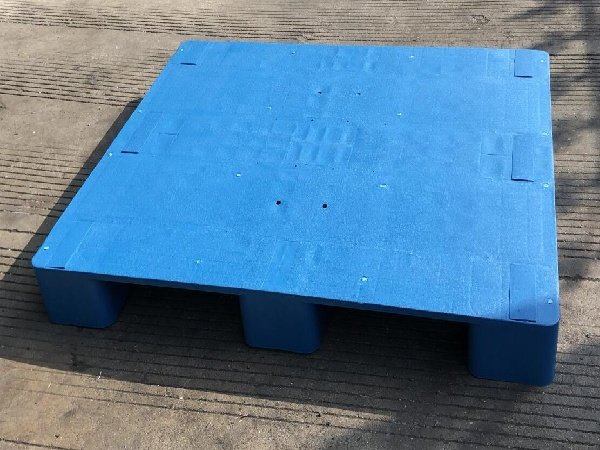
Precision: Unlike wood, plastic pallets maintain consistent pallet measurements. Whether it’s the standard pallet length or standard pallet height, the molded design ensures uniformity—ideal for racking and automated systems.

Durability and Hygiene: Plastic pallets handle moisture, chemicals, and cleaning much better than wood. That’s why industries like food, pharmaceuticals, and cleanrooms prefer them. They don’t just fit international pallet dimensions; they survive harsh environments.
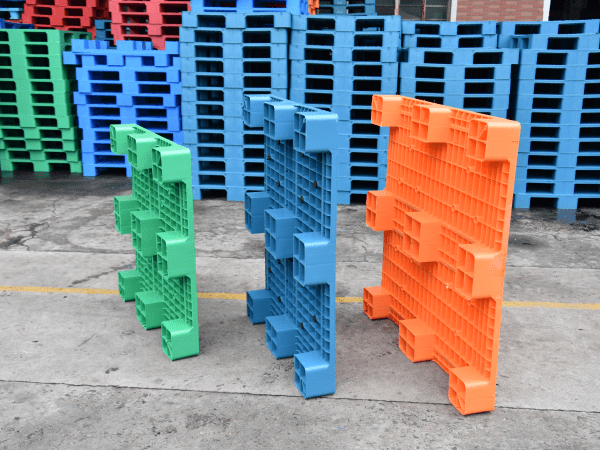
Customization Options: Need special features? Plastic pallets can include RFID tags, color coding, or drainage holes while still aligning with typical pallet size standards. No need to compromise on operational needs.
“Choosing plastic pallets with standard dimensions means you’re not just following specs—you’re optimizing your supply chain.”
If you’re aiming for precision, durability, and compliance while sticking to recognized standard pallet dimensions, plastic pallets might be your best choice. They don’t just meet the standards; they make them work smarter.
When Do You Really Need Custom Pallets?
Most shipments run smoothly on standard pallet sizes. But there are moments when “standard” just doesn’t cut it—and that’s when custom pallets step in.
Typical scenarios where custom pallets make sense:
- Oversized or irregular products: Machinery, furniture, or equipment that simply won’t sit safely on a 48×40 in or 1200×800 mm pallet.
- Pharma and food supply chains: Cleanroom and cold-chain logistics demand hygienic pallets with smooth decks, easy wash-down, and exact dimensions. Plastic designs excel here.
- Chemical and hazardous goods: Drums, resins, or powders often require CP pallets or reinforced plastic pallets that resist chemicals and keep loads stable.
- Automated warehouses: AS/RS systems and conveyors need pallets with perfect molding accuracy, RFID options, and zero deck warping—qualities that plastic pallets deliver better than wood.
How to know if it’s time to go custom?
If your pallets are wasting space, causing rework in automation, failing hygiene checks, or struggling with weight stability, standard options won’t fix it. Custom plastic pallets give you control: the right base type for your racks, the right deck design for your product, and the right material for your environment.
In short, custom pallets aren’t just bigger or smaller—they’re smarter, safer, and designed to match your exact operation.
Conclusion
Understanding standard pallet sizes is just the beginning. With us as your trusted plastic pallet manufacturer, you get tailored solutions that streamline logistics, reduce risks, and cut costs.
Our plastic pallets fit your product’s exact needs—ensuring smoother operations, less waste, and maximum efficiency. No more costly delays or repacking.
Stop settling for one-size-fits-all. Our custom plastic pallets are built from eco-friendly materials, designed for seamless use in containers, trailers, and forklifts, and fully compliant with ISO 9001 standards. Let’s create the perfect solution for your business today.
Ready to reduce costs and simplify your operations?
Talk to us now for fully customized plastic pallet solutions that fit your products, processes, and compliance needs—so you can focus on what matters.