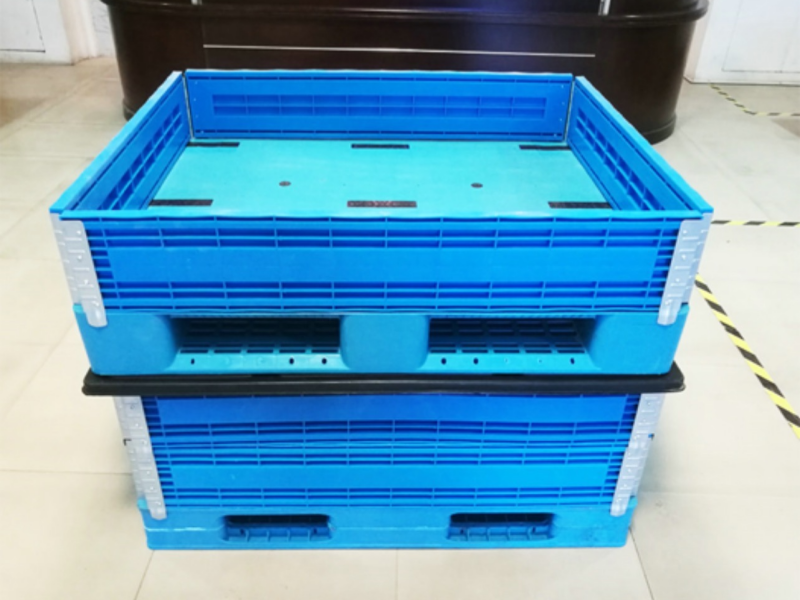
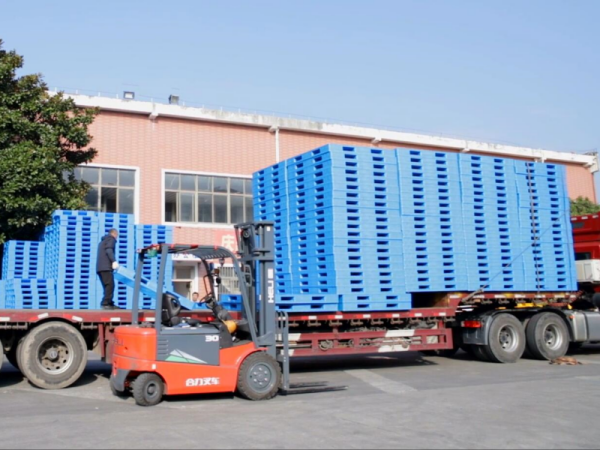
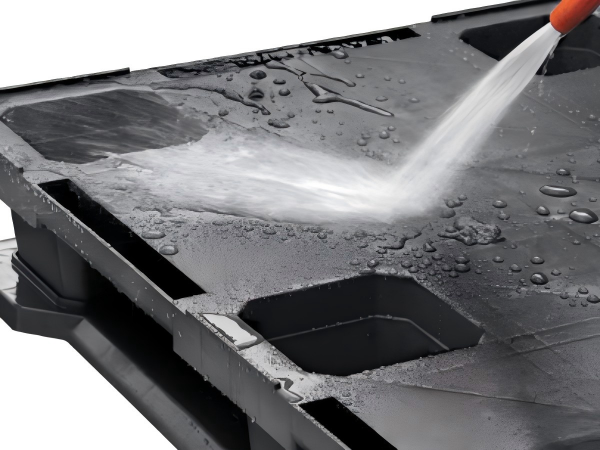
In most setups, the answer is straightforward: about 100 cases on a standard 48″×40″ beer pallet when stacked properly. But this number is not fixed. Pallet size, case dimensions, and stacking height all affect how many cases you can safely load.
Moving beer is not just about stacking boxes higher. Using the wrong pallet can lead to crushed cartons, unstable loads, or higher freight costs. In this guide, we break down common beer pallet sizes, practical case counts, and the pallet features that help keep loads stable and costs under control. Read on before assuming 100 cases always works.
What Are the Standard Beer Pallet Dimensions?
Not all beer pallets are 48″ x 40″.
48″ x 40″ (1219mm x 1016mm) is standard in North America, but it’s not the only option.
If you’re shipping internationally or using non-standard kegs, that size might not stack safely, fit export racks, or load efficiently in containers.
Beer pallet dimensions vary by country and shipping method:
- In Europe, the standard is 1200×800mm, known as the Euro pallet. If you want your beer to flow smoothly through European retailers and distributors, you need this size—it’s the format their warehouses and supply chains are built around.
- Australia relies on a 1165×1165mm pallet. This standard is tied to local storage and transport systems, so beer entering that market must follow the same size to avoid re-palletizing.
- For Asia and most global exports, 1100×1100mm is widely used. The reason is simple: two of these pallets fit side by side in a standard shipping container, which maximizes space and reduces freight costs.
If you’re using odd-shaped kegs, shrink-wrapped trays, or need automation compatibility, custom pallet sizes may be the better call. We help brewers match pallet specs to export markets, storage layouts, and loading plans—for better efficiency and fewer surprises.
How Many Cases are In a Pallet of Beer?
Most beer cases come in 24 bottles or cans, 12 oz each. A typical bottle carton is about 16″ × 10″ × 10″. Can cases are usually a bit tighter, but when people plan loads, they often use bottle dimensions just to stay on the safe side.
Now put those cases on a standard 48″ × 40″ pallet. You can usually place five cases across the 48-inch side and two cases deep on the 40-inch side. That gives you 10 cases per layer when everything lines up cleanly.
So how many cases does that turn into?
In day-to-day operations, the answer is usually somewhere between 72 and 100 cases per pallet.
Yes, 100 cases can fit—but it’s important to be clear about what that number means. At roughly 2,200 pounds, 100 cases is the upper safe limit for transport, not a number most teams should treat as their default. Once you’re near that weight, carton compression, pallet strength, and load stability start to matter a lot more.
That’s why many warehouses choose to load fewer cases, especially when pallets are moved often, handled by forklifts, or shipped long distances. Pallet size also plays a role, which is why the numbers change across regions:
- 48″ × 40″ (North America):
10 cases per layer × 8–10 layers = about 72–100 cases
(100 cases = maximum safe load) - 1200 × 800 mm (Euro pallet):
8–9 cases per layer × 8–10 layers = around 72–90 cases - 1165 × 1165 mm (Australia standard):
10–11 cases per layer × 9–10 layers = roughly 90–110 cases - 1100 × 1100 mm (Asia/export pallet):
9–10 cases per layer × 9–10 layers = about 85–100 cases
The main thing to remember is this: pallet size alone doesn’t decide the case count. Weight, stacking height, and how the pallet is handled all matter just as much. If every pallet is loaded to 100 cases without thinking about those factors, problems tend to show up fast.
What About Other Beer Case Formats?
It’s worth pointing out that the case counts above are based on standard 24-pack, 12 oz beer cases. If the pallet size stays the same—especially on a 48″ × 40″ North American pallet—using a different case format will change how many cases you can safely stack.
Larger packs, taller cartons, or specialty packaging often hit their weight or carton-strength limit first. In those cases, the pallet becomes unsafe before it looks full, even though there is still space on the pallet surface.
For reference, here’s how common beer case formats typically load on a 48″ × 40″ pallet:
| Beer Case Format (48″ × 40″ pallet) | Why the Count Changes | Practical Case Count |
|---|---|---|
| 24 × 12 oz bottles or cans | Baseline size, good stacking strength | 72–100 cases |
| 30-pack cans | Wider cases, heavier per layer | 60–90 cases |
| 18–20 pack bottles | Taller cartons, higher center of gravity | 60–80 cases |
| 12-pack bottles | Smaller footprint, weaker compression | 80–120 cases |
| Mixed or specialty packs | Irregular dimensions, uneven stacking | Varies, often below 80 |
Choosing the Right Pallet for Beer Transportation
In beer logistics, we usually recommend plastic pallets over wood—especially when you’re dealing with moisture, heavy kegs, or long-haul shipping.
Plastic beer pallets don’t absorb water, don’t warp under pressure, and offer more control over surface texture and reinforcement. This helps reduce carton movement during transit, which is critical if you’re stacking high or using shrink-wrapped trays. Compared to wood, plastic performs more consistently across all stages of the supply chain.
Here’s how plastic and wood beer pallets compare in real-world transport conditions:
- Water resistance: Plastic pallets stay dry in humid, wet, or refrigerated environments. Wood absorbs moisture and weakens.
- Load stability: Plastic decks can be molded with anti-slip ribs and lips. Wood often lacks edge control, leading to more movement.
- Weight tolerance: Reinforced plastic options handle keg weight without bending. Wood bases may sag or crack under repeated stress.
- Surface uniformity: Plastic pallets are dimensionally consistent, ideal for automation. Wood varies in size and may splinter.
- Lifespan: Plastic lasts longer, especially in reuse-heavy operations. Wood may require frequent replacement due to breakage.
If you’re running export shipments, stacking kegs, or loading in high-humidity zones, our beer plastic pallets offer the reliability wood can’t match. We help clients align pallet specs with loading plans—not just for stacking more, but for arriving with less damage.
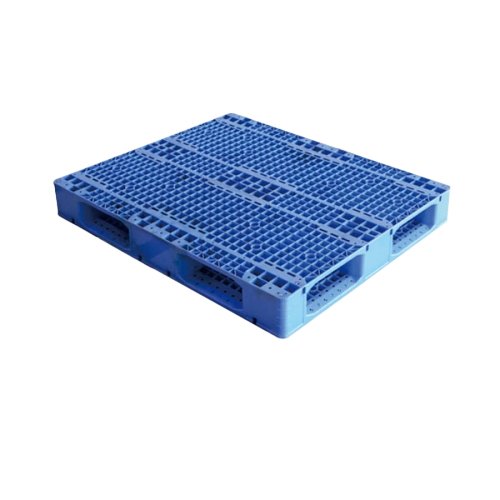
1200 × 1000 mm Reversible Plastic Pallet for Beer And Beverage Industry
Engineered for high-volume beer logistics, this 1200×1000mm double-sided HDPE pallet supports automated conveyor lines, four-way entry, and stable stacking up to 8 beer carton tiers without deformation. Ideal for racking, cold-chain, or export. As a plastic pallet manufacturer, we offer tailored specs to fit your operation.
Pallet Structure Matters: Features That Improve Transport Safety
Loads don’t just need to fit—they need to survive forklifts, conveyors, and long-haul bumps. The wrong pallet structure can turn a good shipment into costly damage. Whether you’re moving shrink-wrapped trays or heavy kegs, choosing the right base matters.
Here’s Common Beer Pallet Structures Compared:
| Pallet Structure | Key Features | Best For | Our Design Advantages |
|---|---|---|---|
| Closed-Deck with Anti-Slip Ribs | Sealed top with molded ribs for grip; optional vented surface to prevent pooling | Shrink-wrapped beer trays; cold/humid storage environments | Prevents slippage and carton collapse better than flat wooden decks |
| 3-Runner Base | Three longitudinal runners; reinforced for forklift entry and weight distribution | Heavy loads like kegs; long-haul shipping | Minimizes bending under load; stable for automated fork operations |
| Reversible Double-Deck Pallet | Two full decks with equal load-bearing capacity | High racking systems; two-way stacking; automation | Balanced strength on both sides; ideal for rotation and warehouse efficiency |
| Single-Faced Pallet | Deck on top only; lighter and cost-effective | One-way transport; limited warehouse space | Lower cost for export use; customizable for stackability and volume efficiency |
| Vented/Open Deck Pallet | Grid or slotted surface; improved airflow and drainage | Cold chain beer distribution; wet-fill lines | Reduces moisture buildup; suitable for refrigerated or washable environments |
You can see our customer’s factory feedback photo below — Our reversible plastic pallet used in a beverage canning line. Its reinforced base handles speed, weight, and automation—just what modern beer logistics demand.

Optimize Your Beer Pallet Loading for Cost-Efficiency
The goal of beer pallet loading is not to reach the highest case count. It is to build a load that stays stable from dock to delivery. Overloading leads to crushed cartons and leaks. Underloading wastes space and increases freight cost. The right balance depends on how the pallet will be handled.
Step 1: Identify the Transport Type and Set Stack Height
Before stacking cases, first confirm how the pallet will travel. The difference between LTL and TL shipments determines how high you should stack.
LTL (Less-than-Truckload) pallets are transferred multiple times and experience constant vibration. These loads need tighter control and lower stack heights.
TL (Full Truckload) pallets stay on one truck for most of the trip, allowing slightly taller stacks—but weight and braking forces still matter.
| Transport Type | Typical Handling | Recommended Stack Height |
|---|---|---|
| LTL shipment | Multiple transfers, heavy vibration | ≤ 6 layers |
| TL shipment | Fewer moves, long-distance travel | 8–10 layers |
| Mixed keg + case load | Heavy, uneven weight | Fewer case layers |
Once you have confirmed the case count and stack height for each pallet, the next step is calculating How Many Pallets Fit On a Truck based on the trailer dimensions, pallet size, total load weight, and loading pattern.
Even in a full truckload, pallet decks can sag 1–2 inches under load. During hard braking or ramp unloading, this sag shifts weight upward and increases the risk of top-layer collapse.
Step 2: Handle Mixed Loads Correctly
Cases and kegs behave very differently when stacked together. Kegs are heavy and stable. Cases are lighter and easier to crush. When they are mixed on one pallet, weight placement matters more than case count.
Simple stacking guidelines for mixed pallets:
- Put kegs on the bottom, in the center of the pallet
This creates a solid base and keeps the load balanced. - Place cases on top of the kegs or around them
Avoid resting cases on uneven keg edges, which can cause cartons to tilt or collapse. - Do not place heavy items near the pallet corners
Corner loading increases the chance of tipping during turns, braking, or forklift handling.
When heavy weight stays low and centered, the pallet is easier to control and far less likely to shift during transport.
Step 3: Do These 5 Checks Before Wrapping
Before wrapping the pallet, take one minute to do these simple checks. They catch most problems before the load leaves the dock.
- Press down on the top layer
If the cartons flex inward, the stack is too high or too heavy. - Look closely at the bottom corners
Bulging or rounding means the lower cases are already overcompressed. - Push the pallet gently from the side
Any wobble on the floor will turn into load shift during transport. - Measure the total pallet height
Make sure it stays within trailer clearance and handling limits. - Weigh the full pallet, including the plastic base
This helps prevent axle issues and compliance problems later.
If a pallet is unstable in the warehouse, it will only get worse on the road.
The most cost-efficient pallet is not the one with the most cases—it’s the one that arrives intact. Shipping 90 well-supported cases is almost always cheaper than losing 10 cases to crushing, leakage, or rework.
Do You Need Custom Pallets for Your Brewery?
As a plastic pallet manufacturer, we build around your operation—not assumptions. Poor fit causes slipped kegs, damaged cartons, or automation failures. Our custom molds support:
- Special dimensions for odd-size kegs
- Fork entry designs for tight spaces
- Closed or vented decks for humid or chilled zones
- Custom logos, barcodes, and RFID for traceability
We help you optimize both fit and cost, not overpay for “standard” features you don’t need.
Not sure if you need a custom pallet? Let’s talk.
Share your load type, stacking setup, or storage environment. We’ll recommend a fit-for-purpose beer plastic pallet—durable, cost-efficient, and ready to ship worldwide.
👉 Request a quote or consultation now.
Want to calculate standard box loads across pallet sizes? Check this guide on how many boxes fit on a pallet.