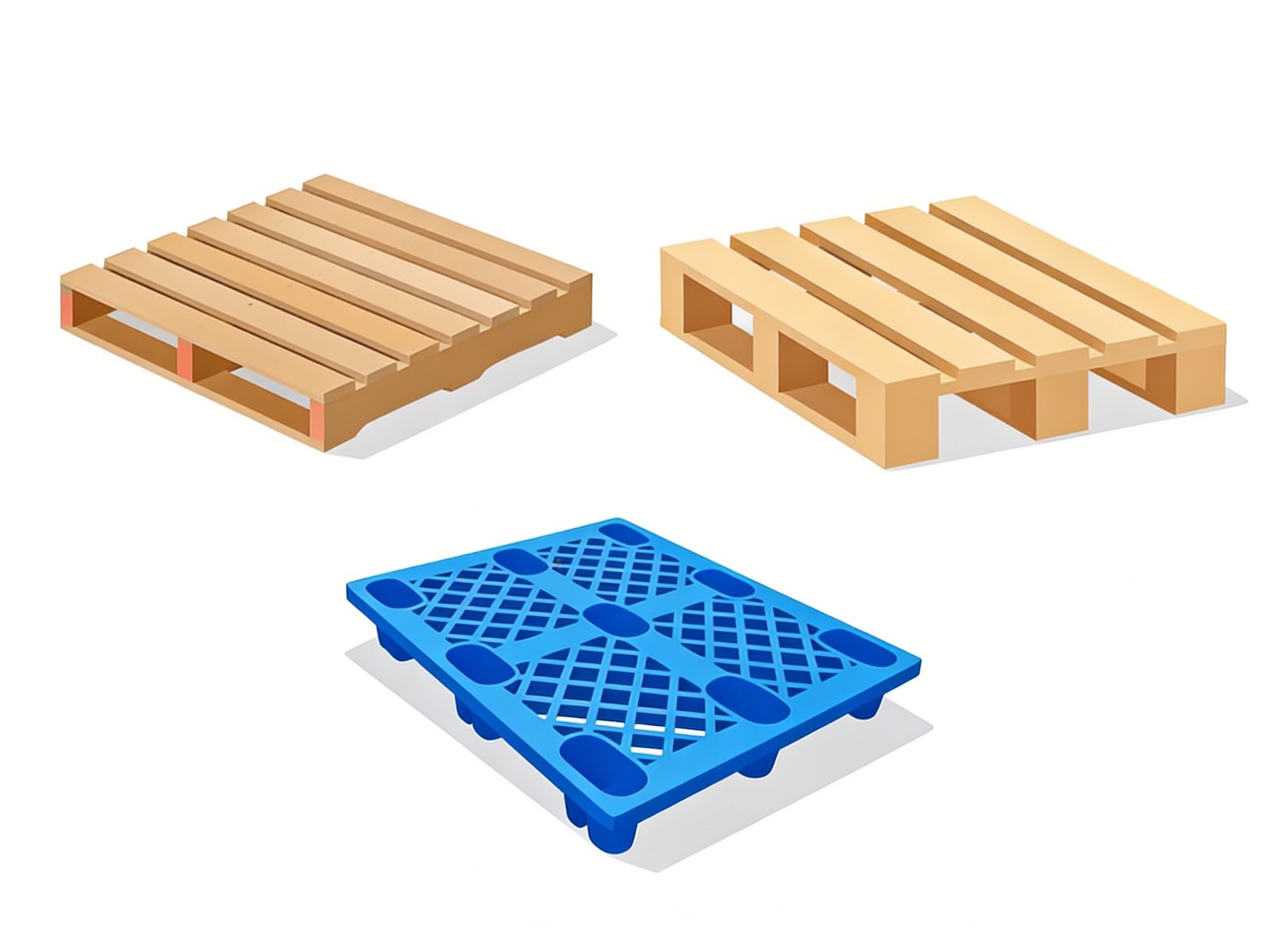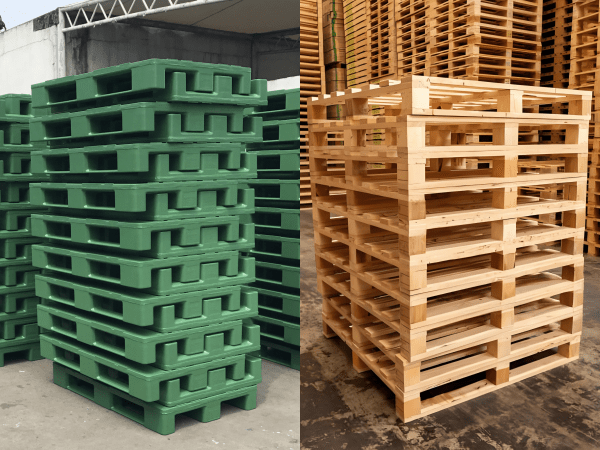
Wood and plastic are commonly used to make pallets for storing and transporting goods throughout the supply chain. For many businesses, wood pallets remain the preferred shipping platform because of their lower purchase price. However, when pallet service life is considered, businesses may prefer plastic pallets that can complete up to 200 reuse cycles.
This article breaks down the advantages and disadvantages of plastic and wood pallets, including cost, service life, durability, and sustainability, to help you make a more informed choice.
What Is Plastic Pallets And How Do They Work?
Plastic pallets are platforms made from durable HDPE or PP materials, including 100% virgin or recycled plastic. The following points briefly explain some of the advantages plastic pallets have over wood pallets.
- Plastic pallets resist moisture, bacteria, and pests, making them well suited to industries such as food and pharmaceuticals.
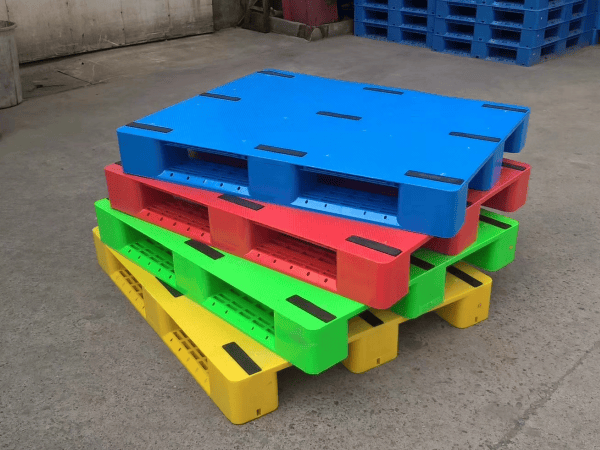
- Unlike wood pallets, plastic pallets can have either a solid or ventilated deck, supporting applications that require strict hygiene or better airflow.
- Plastic pallets have smooth, non-porous surfaces that can be washed directly with water. They do not crack or absorb moisture like wood.
- Plastic pallets are lightweight but strong, providing safer and more stable stacking and transportation while also helping reduce freight costs.
- Plastic pallets are produced with injection molds, offering greater flexibility than wood pallets for OEM and ODM customization.
- Plastic pallet materials come from petrochemical sources, but the pallets can be reused and recycled.
- Choosing nestable plastic pallets can reduce reverse logistics costs by up to 70%.
What Is A Wood Pallet And Where Are They Used?
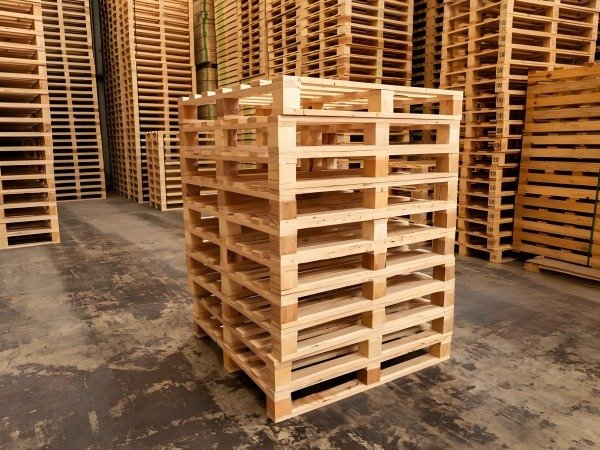
A wood pallet is made from solid wood boards or panels joined together with nails or screws. It serves the same basic purpose as a plastic pallet. Wood pallets are widely used in general manufacturing, agriculture, and logistics. However, because porous wood easily absorbs moisture and develops mold, it is less suitable for transporting food, pharmaceuticals, and other products with strict packaging requirements.
Key points about wood pallets include:
- Load capacity depends on the structure: Thicker wood generally provides a higher load capacity, while a typical wood pallet weighs between 30 and 70 pounds, or approximately 13 to 32 kg.
- Suitable for heavy loads: Wood pallets can handle large and heavy materials.
- Easy to repair: Damaged boards or other components can be replaced, allowing the pallet to remain in service.
- Lower upfront cost: Compared with plastic, wood is often more economical for one-way shipping.
Slip Resistance Comparison: Plastic Pallets vs Wood Pallets
The natural wood grain of a wood pallet provides a coefficient of friction of approximately 0.40–0.60, giving it strong initial slip resistance. However, repeated friction during use may gradually make the pallet surface smoother, similar to wood furniture that becomes polished over time.
Plastic pallets may look smooth, but their deck surfaces are normally designed with textured grid patterns. Their coefficient of friction is approximately 0.35–0.50, only slightly lower than that of wood pallets.
- Plastic pallets can also be further improved to provide stronger slip resistance.
- Plastic pallets can be fitted with welded round anti-slip pads or long anti-slip strips.
During mold customization, safety lips can be designed on all four sides of the pallet deck to directly prevent goods from sliding off.
For this reason, plastic pallets can ultimately provide better slip resistance than wood pallets.
Load Capacities of Wooden Pallets vs. Plastic Pallets
Wood pallets and recycled plastic pallets generally offer similar load capacities. If you only use pallets for routine operations, you may continue using the wood pallets already available. However, for one-way export shipments where the pallets do not need to be returned, recycled plastic pallets can be more economical and convenient. Their prices are often similar, while plastic pallets eliminate the fumigation certification requirements and customs clearance risks associated with wood pallets.
However, wood pallets normally cannot match the load capacity of reinforced virgin plastic pallets. Wood pallets mainly increase their load capacity through thicker boards or reinforced nailed structures. HDPE and PP pellets already provide strong and stable material performance, and plastic pallets can be further strengthened with glass fiber, reinforced rib structures, or multiple internal steel tubes.
We have prepared the following comparison of typical wood pallet and plastic pallet load capacities.
| Material | Load Type | lbs | kg |
| Wood Pallet (Standard) | Static Load | 2,500 – 6,000 lbs | 1,134 – 2,722 kg |
| Wood Pallet (Standard) | Dynamic Load | 1,500 – 3,000 lbs | 680 – 1,361 kg |
| Wood Pallet (Standard) | Rack Load | 1,000 – 3,000 lbs | 454 – 1,361 kg |
| Wood Pallet (Heavy-Duty) | Static Load | 6,000 – 10,000+ lbs | 2,722 – 4,536+ kg |
| Wood Pallet (Heavy-Duty) | Dynamic Load | 3,000 – 5,000 lbs | 1,361 – 2,268 kg |
| Wood Pallet (Heavy-Duty) | Rack Load | 1,500 – 3,000 lbs | 680 – 1,361 kg |
| Plastic Pallet (Virgin Material) | Static Load | 13,228 – 14,330 lbs | 6,000 – 6,500 kg |
| Plastic Pallet (Virgin Material) | Dynamic Load | 3,307 – 4,409 lbs | 1,500 – 2,000 kg |
| Plastic Pallet (Virgin Material) | Rack Load | 1,102 – 3,307 lbs | 500 – 1,500 kg |
| Plastic Pallet (Recycled Material) | Static Load | 2,205 – 8,818 lbs | 1,000 – 4,000 kg |
| Plastic Pallet (Recycled Material) | Dynamic Load | 1,102 – 2,205 lbs | 500 – 1,000 kg |
| Plastic Pallet (Recycled Material) | Rack Load | N/A | N/A |
For recycled plastic pallets, you may have heard buyers report that the actual load performance of supposedly heavy-duty “black” plastic pallets did not match the manufacturer’s claims. Most black pallets with inconsistent color are produced with a high percentage of recycled material. As a result, their load performance may be at least 30% lower than that of virgin-material pallets. We do not recommend recycled plastic pallets for heavy-load applications.
Take Enlightening Pallet products as an example. A plastic pallet made from virgin HDPE or PP and reinforced with internal steel tubes can support a static load of 6–6.5 tonnes, a dynamic load of 1.5–2 tonnes, and a rack load of 0.5–1.5 tonnes. Due to their material properties, recycled plastic pallets normally support only a 1–4 tonne static load and a 0.5–1 tonne dynamic load. If you see a recycled plastic pallet advertised with a higher load capacity than a virgin-material pallet, you should contact the manufacturer and carefully verify the test data. Enlightening Pallet always marks the load capacity of recycled-material and virgin-material pallets according to actual testing.
Weight Of Wood Pallet Vs Plastic – What’s The Difference?
Wood pallets are generally heavier than plastic pallets, especially when comparing products designed for heavy-duty applications. Using the common 1200 × 1000 mm size as an example, a plastic pallet weighs approximately 5–25 kg, while a wood pallet weighs approximately 22–33 kg.
The heavier a pallet is, the lower the handling efficiency becomes. An overweight pallet also increases logistics and transportation costs. In addition, choosing a heavier pallet uses more of the rated capacity of your warehouse racking, which means you may have to reduce the amount of product stored on each rack position.
Here’s a quick look at how wood and plastic pallets compare:
| Pallet Size (mm) | Plastic Pallet Weight (kg) | Wood Pallet Weight (kg) | Weight Difference (kg) |
| 755 x 755 | 6.2 | 15 | 8.8 |
| 1000 x 1000 | 14.6 | 25 | 10.4 |
| 1200 x 1000 | 17.6 | 30 | 12.4 |
| 1300 x 1100 | 21.5 | 35 | 13.5 |
| 1500 x 1500 | 28.5 | 45 | 16.5 |
Note: Wood pallet weights are approximate and can vary based on wood type and moisture content.
Key Takeaway: Plastic pallets are significantly lighter than wood pallets of the same size. This weight difference can lead to lower shipping costs and easier handling, especially in industries where weight is a critical factor.
Wood Pallets Vs Plastic Price Comparison – Initial Vs Long-Term Costs
When choosing between plastic pallets vs wood pallets, price isn’t just about the upfront number—it’s about the long-term value. Let’s compare the key costs.
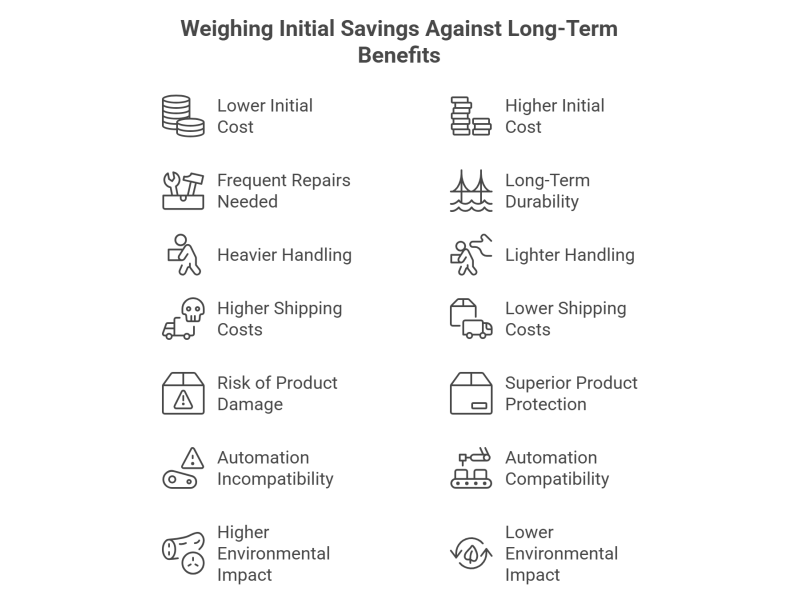
- Initial cost: Wood pallets are cheaper at first, often 3–5 times less than plastic pallets. But this saving can disappear quickly.
- Long-term costs: Plastic pallets last longer (up to 10 years), don’t splinter, and need fewer replacements. Over time, they save you on repairs and lost product costs.
- Handling and shipping: Plastic pallets are lighter, reducing freight expenses. Their uniform size also works better with automation, cutting labor and errors.
- Environmental costs: Plastic pallets can be recycled and reused more easily, reducing waste and environmental impact.
In the long run, plastic pallets may cost more upfront, but they offer savings that make a real difference for your business.
Let’s break down the actual costs for plastic pallets vs wood pallets—not just the initial price, but what you pay over time.
Initial Purchase Cost
Wood pallets cost less upfront—often 3–5 times cheaper—because they’re made from cheap, untreated timber and assembled with simple nails or screws. This keeps initial material and labor costs low, but at the expense of long-term reliability. Plastic pallets cost more because we use high-grade virgin or recycled polymers, precision-molded in one piece, ensuring consistent performance and a professional finish.
Production/Assembly Cost
Wood pallets are quickly assembled from cut planks, nailed or screwed together in basic workshops. This process is fast but lacks precision and structural integrity. Plastic pallets are molded in one piece with advanced equipment, ensuring perfect load-bearing and precise dimensions for automation.
Repair & Replacement Cost
Wood pallets splinter, absorb moisture, and break easily, requiring frequent repairs or full replacements. Damaged pallets increase product loss risks and hidden maintenance costs. Plastic pallets resist impact and moisture, maintaining their shape and function over years of use.
Handling & Labor Cost
Wood pallets are heavier and less ergonomic, increasing manual handling time and injury risks. Frequent replacements and repairs mean more labor hours. Plastic pallets are lighter and smooth-edged, streamlining handling and lowering safety hazards.
Shipping Cost
Wood pallets add significant weight to shipments, driving up freight costs and reducing payload capacity. Fuel use rises as shipping weight increases. Plastic pallets are much lighter, helping to cut shipping expenses and carbon footprint.
Product Damage Cost
Wood pallets break under load or during handling, risking damage to high-value goods. Splinters and protruding nails can also cause contamination. Plastic pallets are engineered to be strong, smooth, and hygienic, offering superior product protection.
Automation Compatibility Cost
Wood pallets vary in size and condition, disrupting conveyor and ASRS flow. Inconsistent dimensions can cause jams or misreads in automated systems. Plastic pallets are uniform and precisely molded, ensuring smooth, error-free integration into automation.
Environmental & Disposal Cost
Wood pallets degrade over time but break often, creating constant waste and higher disposal fees. Splinters and nails complicate recycling. Plastic pallets are recyclable and reusable in closed-loop systems, reducing long-term waste and environmental impact.
So while wood pallets may look cheaper at first, the hidden costs add up fast. Plastic pallets offer long-term savings and greater operational efficiency.
Wood Vs Plastic Pallets Environmentally Friendly – Which Is The Greener Choice?
Let’s compare the environmental impact of wood and plastic pallets in real-world use.
Wood pallets come from renewable timber and are biodegradable.
- But they break often, generating more waste and carbon from replacements.
- Frequent repairs and replacements lead to higher disposal costs.
Plastic pallets last longer, cutting replacement and material use.
- They support closed-loop recycling, keeping them in the supply chain.
- Consistent quality reduces product waste and carbon emissions.
So while wood pallets seem greener on paper, plastic pallets offer better long-term sustainability with fewer hidden costs.
Why Plastic Pallets Are The Smarter Investment For Modern Businesses
We know that pallet choice can make or break your operational efficiency. Let’s look at how plastic pallets outperform wood in every key area.
Durability & Long-Term Use
Plastic pallets resist splintering, cracking, and moisture, lasting up to 10 times longer than wood. This durability means fewer repairs, lower replacement costs, and less disruption to your operations.
Automation Compatibility
Plastic pallets have precise dimensions and smooth surfaces, ensuring flawless performance in automated warehouses. This boosts productivity and reduces manual labor errors.
Sustainability & Brand Value
Plastic pallets are fully recyclable and reusable, supporting sustainability goals. Their clean design also enhances your brand’s image, showing your commitment to efficiency and the environment.
Cost Efficiency Over Time
While plastic pallets cost more upfront, their long life reduces ongoing expenses. They cut freight charges with lower weight, fit perfectly into automated systems, and require minimal handling adjustments.
Plastic pallets deliver long-term efficiency and cost savings that wood pallets simply can’t match.
Your Smarter Switch To Plastic Pallets Starts Here – With Enlightening
Switching from wood pallets to plastic isn’t just a change—it’s a game-changer for your operations. Plastic pallets slash hidden costs from replacements, reduce product damage, and streamline automated systems—problems that frustrate B2B clients every day.
At Enlightening, we’re not just suppliers. As experienced plastic pallet manufacturers, we deliver custom solutions designed around your real needs—whether it’s optimizing automated warehouses, ensuring hygiene compliance for food and pharma, or cutting shipping costs with lightweight, durable designs.
Don’t let inefficient wood pallets hold your business back. Talk to our expert team today to get a custom plastic solution that maximizes efficiency, reduces costs, and supports your sustainability goals. Together, we’ll build a more resilient, productive, and profitable future for your company.
👉 Contact us now for a personalized consultation and quote. Let’s optimize your supply chain, one smart plastic solution at a time.