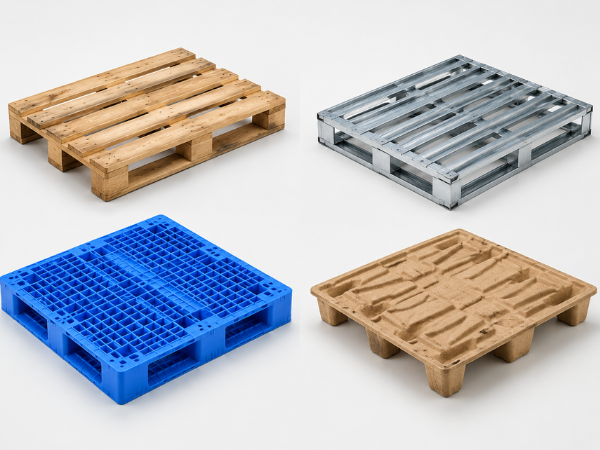
A plastic pallet is not only a simple plastic platform. It is a strong base used for long-term loading, moving, stacking, and storing goods. In today’s fast-paced industrial age, plastic pallets are gradually replacing traditional wooden pallets in many industries due to their efficiency and practicality.
Plastic pallets can also help your goods be moved more easily by forklifts, shipped in containers, and used together with automated production and warehouse systems.
This article will introduce where plastic pallets are used and when you should use the right plastic pallets for your business.
When Should You Use a Plastic Pallet?
If your pallets are just used for one-way shipping, and you don’t care about the hygiene and appearance, and do not require long-term use, you can continue using wooden pallets.
But if you face any of the problems below, it may be time to switch to plastic pallets.
- The warehouse environment is humid, causing the pallets to get moldy.
- The wooden pallets often break at the boards.
- Your customers complain about wood chips, wood spines or unpleasant odors on the products.
- You are concerned about the customs clearance difficulties for the wooden pallets during export.
- The current pallets cannot be used for long-term circulation.
- After racking storage, your wooden pallets quickly deflect, bend, and crack.
- Your automated warehouse has low-throughput pallets.
- You use a forklift frequently, and the pallet shows obvious deformation.
- The production environment is at low/ high temperatures.
- The hygiene requirements in your industry are gradually increasing.
- You want to reduce the long-term maintenance and replacement costs.
Besides these points, pallet condition also matters in food, medical, and cold chain industries. A dirty or damaged pallet can affect your warehouse environment and product cleanliness. Even orders may fly away if your clients see a bad environment. Choosing 100% virgin HDPE/PP plastic pallets can help you reduce these problems.
Meanwhile, wooden pallets will absorb moisture and warp; it’s difficult to maintain compliant hygiene conditions during long-term use. If you serve the U.S. food supply chain and are forced to frequently replace wooden pallets to meet FDA hygiene standards, switching to plastic pallets can lower your long-term costs.
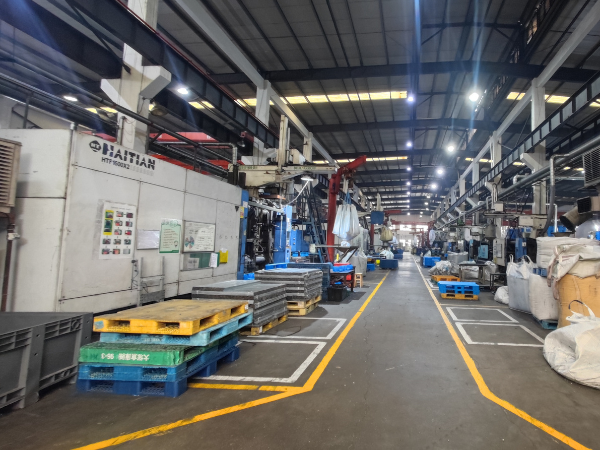
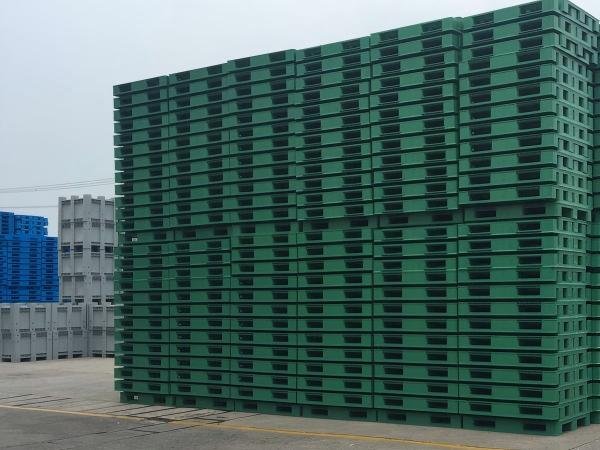
A single jam caused by a wooden pallet might only waste 10 minutes, but if it happens repeatedly throughout the day, it disrupts the rhythm of the entire production line. Enlightening Pallet’s plastic pallets are mainly made by one-time injection molding processes, which means even you buy over 500+ large quantity pallets, these pallets still have consistent dimensional tolerances. This advantage can keep your automated line running smoothly and reduce the unplanned downtime that your ASRS system cannot afford.
A way to detect fragments from plastic pallets is also smarter. Wood splinters often require manual visual inspection, which is easy to overlook; however, “metal-detectable plastic pallets” can help you solve this concern: An agent can be detected by metal detection equipment is added to the raw plastic material, and the finished product looks no different from common plastic pallets. If a plastic fragment enters the packaging process, it can be detected by your standard metal detectors or certain X-ray inspection systems, thereby reducing the risk of batch rework.
What are the Uses of Plastic Pallets?
We can confidently state that the vast majority of goods that can be stored, handled, or transported by wooden pallets can be switched to plastic pallets. Additionally, the strength of plastic pallets can be further enhanced by adjusting the raw material proportion. Plastic pallets also have advantages for industry-specific customization: they can be precision-customized to fit your production or storage needs, and the customization options available are both more extensive and effective. Below, we highlight the key industries that utilize plastic pallets.
Plastic pallets have a higher handling capacity than wooden pallets. Plastic pallets can move 1.5-2T goods by 2–3 layers of stacked palletized loads at a time. While they look similar to wooden pallets, you will find that loads are more stable during handling, with fewer instances of collapse or conveyor jams, thereby reducing the hassle of re-handling goods.
Plastic pallets are designed for efficient compatibility with equipment such as forklifts and pallet trucks for cargo handling. Especially HDPE/PP plastic pallets have excellent impact toughness. When a forklift fails to align perfectly during handling, plastic pallets are less likely to sustain significant damage.
Plastic pallets are compatible with the following handling equipment, catering to various warehousing and logistics scenarios:
- Counterbalance forklift: Commonly used for warehouse loading and unloading, container loading, and factory circulation.
- Reach truck: Ideal for high-level shelving warehouses and compatible with rackable plastic pallets.
- Electric pallet truck: Good for medium and short-distance whole-pallet handling within the warehouse.
- Manual hydraulic vehicle: Recommended for plastic pallets with an open bottom structure.
- Electric stacker: Well suited to light and medium-sized goods stacking, inbound, and short-distance circulation.
- AGV/AMR handling robots: Compatible with automated warehouses and production line material distribution.
- Conveyor system: Support roller conveyor, chain conveyor, and automatic sorting line.
- AS/RS Automated Stacked Rack: Suitable for stable-sized and standard-bottom-structured shelf-type plastic pallets.
- Automatic palletizer / Un palletizer: Suitable for standard-sized plastic pallets and automatic packaging lines.
- Pallet shuttle / 4-way vehicle system: Ideal for high-density automated warehousing, but requires higher requirements for the flatness and flexure control of the pallet bottom.
- Order pickers: Can be integrated with plastic pallets to improve picking efficiency for cartons, components, and small-batch goods.
Pharmaceutical Industry
Export wooden pallets do have an ISPM 15 mark, but it just means the pallets meet the plant quarantine standards; it doesn’t say they have a unified health performance. In contrast, plastic pallets made from virgin plastic (HDPE/PP) benefit from the material’s inherent antimicrobial properties; even from different factories, you can expect these compliant virgin plastic pallets to have more consistent hygiene performance than wooden pallets.
Plastic pallets are qualified for these processes in high-hygiene-requirement industries: Raw material storage & placement, production, circulation, semi-finished product transfer, cold chain storage, finished product dispatch, automated storage, and export logistics, etc.
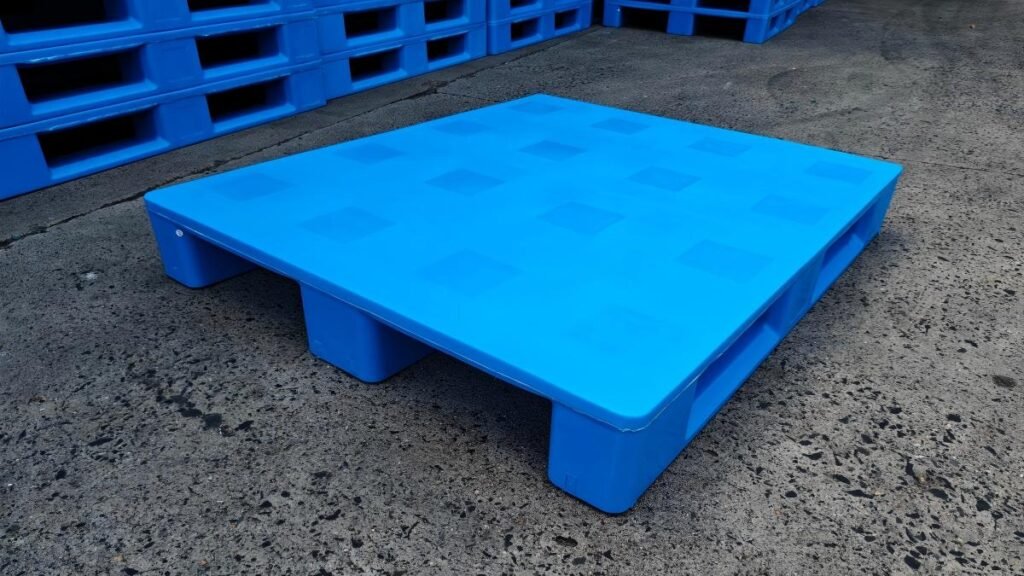
Enlightening Pallet Closed Deck Hygienic Plastic Pallets have been welcomed by the pharmaceutical industry for 25 years. A seamless deck design, non-absorbent, makes the pallets have no hidden dirt. They are durable with 70 ℃ hot water washing and repeated high-pressure washing. This type is a good option for cleanrooms, where pallets need to be cleaned frequently. For more roles the plastic pallets play in the Pharmaceutical Industry, you could read this article.
Automated Equipment
In automated warehouses, pallets are part of equipment operation; a pallet failure can lead to system downtime.
Plastic pallets have no metal components, thereby reducing the risk of equipment alarms and production interruptions. Unlike wooden pallets, which rely on assembly processes. Plastic pallets are mass-produced by molds to ensure uniform dimensions. So you can choose a supplier and cooperate for many years, without concerns regarding specification variances between batches.
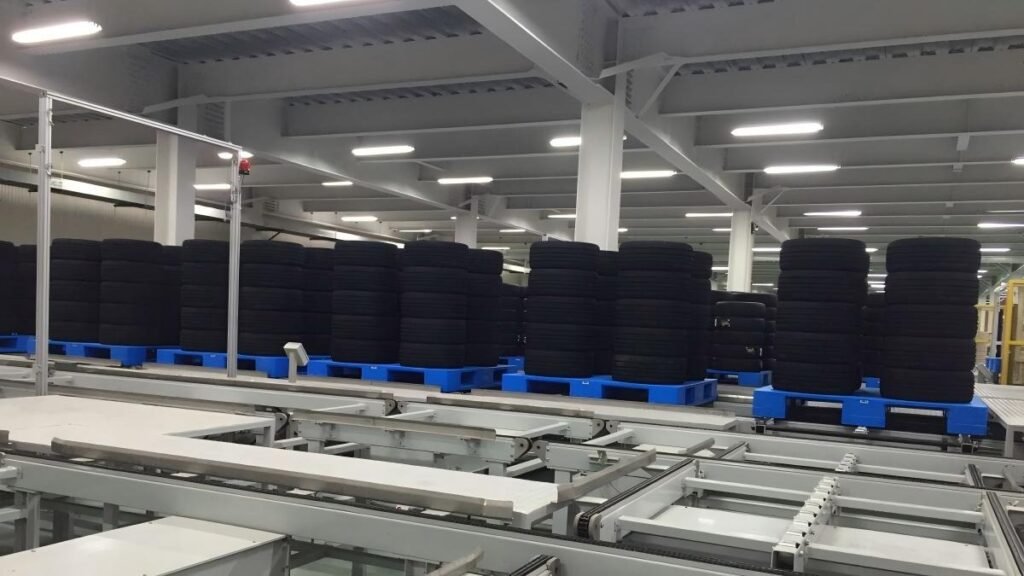
Plastic pallets are compatible with automated conveyor lines, AS/RS, AGVs/AMRs, stacker cranes, palletizers, depalletizers, and other standard supply chain automation equipment.
Different pallet types work with automated equipment in different ways because the pallet’s bottom structure directly affects compatibility:
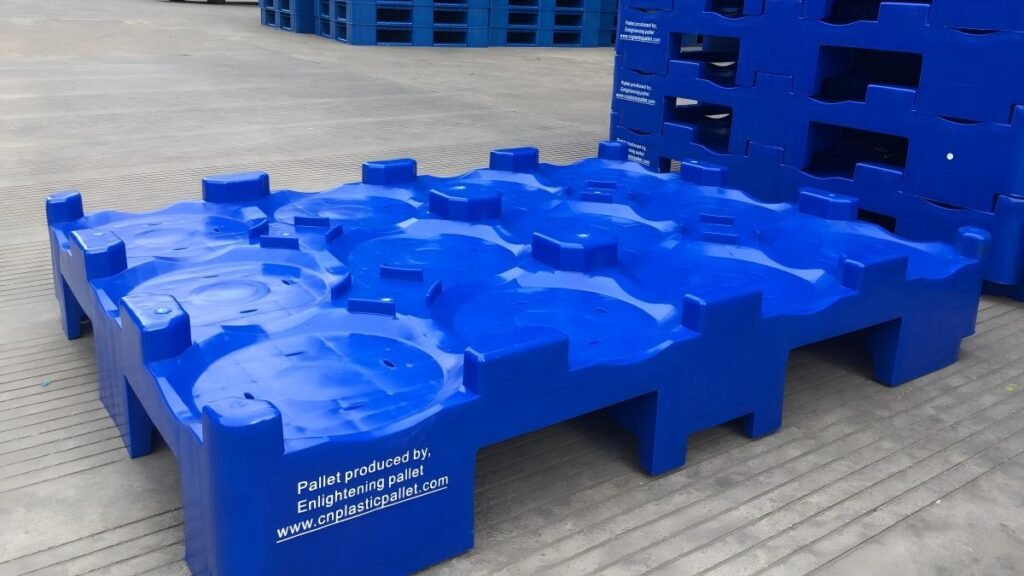
- Pallets with fewer support points (9-leg plastic pallets) are more suitable for ground use. We don’t recommend using them for automated equipment.
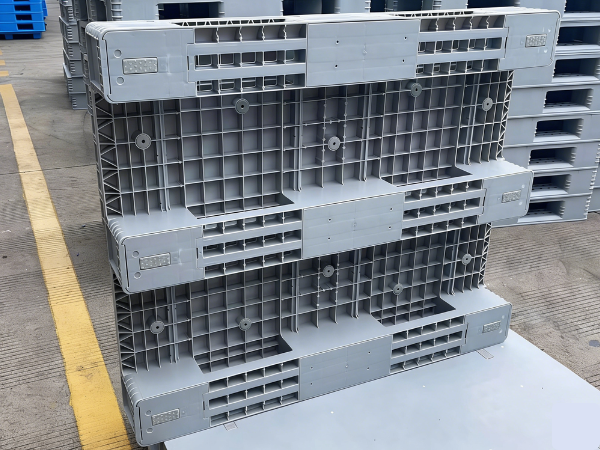
- If your equipment is a chain conveyor line, 3-runner plastic pallets are suitable. Such pallets have 3 runners at the bottom and can correspond to the chain track of the conveyor line. The chain could drive the pallet forward and give consistent support from the bottom.
- We recommend 6-runner plastic pallets (also called full perimeter plastic pallets) for automated equipment. It has a continuous and symmetrical support edge at the bottom, which makes it easier to stabilize, align with the forks, and be placed accurately.
- Double-sided plastic pallets have a heavy self-weight and are in direct contact with the equipment, so they are not recommended for use in automated equipment. It performs better in heavy-load stacking and shelving.
Closed-Loop Logistics
Plastic pallets are used for your closed-loop logistics this way: loading → transport → unloading → empty pallet recovery → cleaning/inspection → reuse for shipment.
You will notice that, unlike wooden pallets, plastic pallets can be washed; this enables true closed-loop logistics, as the condition of the pallets remains controllable and reusable after every return trip.
If you want to further reuse the returnable pallets, you can add QR codes or request that your manufacturer leave RFID slots for you. These features can help you calculate pallets’ tracking flow, reuse frequency, and damage rate easily.
While plastic pallets typically withstand around 200 cycles compared to a maximum of 30 for wooden pallets, the long-term cost advantage of plastic pallets is clearly superior.
However, we advise checking pallets once the rotation is over 200 times for safety. When pallets’ centers sink by more than 10mm, pallets are not suitable for automatic equipment anymore. When pallets sink by more than 20mm. We don’t advise using such pallets in logistics. You could use them as a ground base, or sell them in the second-hand market.
Export
Plastic pallets can make customs clearance quickly, as plastic pallets don’t need an ISPM15 exemption.
If you export goods related to food, beverages, medicine, chemicals, automotive parts, electronic products, and industrial accessories. We recommend plastic pallets. No mold, debris, and no insect eggs. Suitable for industries that have strict hygiene requirements.
The most important thing is that you don’t need to worry that the pallets can’t be accepted by local logistics. Today, each country has its standard pallet size, you can send goods with pallets safely. We selected some normal sizes in different countries as follows:
- 1219×1016 mm (48×40 inch): The most common GMA pallet size in North America
- 1200×800 mm: Euro pallet / EPAL 1 size
- 1200×1000 mm: Pallet size for exports in Europe, Asia and internationally
- 1100×1100 mm: Pallet size for use in Asia
- 1165×1165 mm: Pallet size for use in Australia
Some other countries may have special size requirements for pallets, so you need to check with your recipient in advance. You could also check Standard Pallet Sizes here for more details.
Food Industry
In the food industry, the hygienic condition of pallets directly impacts the warehouse environment and food packaging cleanliness. If you are exporting to the US or serving the US food supply chain, using plastic pallets that are easy to clean, non-shedding, and non-absorbent makes it easier to comply with FSMA requirements regarding food contamination prevention and hygiene management.
Plastic pallets meet the requirements for the temporary storage, warehousing, transport, and export of food ingredients, beverages, dairy products, meat, seafood, baked goods, and frozen foods.
Particularly in food processing areas, packaging zones, cold storage facilities, or during client facility audits, choosing 100% virgin HDPE/PP plastic pallets can not only ensure regulatory compliance but also provide a clean appearance that instills your clients’ confidence.
However, plastic pallet compliance goes beyond mere words. For cold storage applications, pallets must be made from 100% virgin material; you can request suppliers provide FDA, EU food contact, SGS, or third-party material testing reports to verify full compliance.
Additionally, if you work in the food industry, besides looking for a reasonable unit price, you should also see whether the pallets withstand high-pressure washing, are non-absorbent, odor-free, suitable for cold storage, and whether their appearance and hygienic integrity can be maintained over the long term. Enlightening Pallet has supplied food-grade plastic pallets to famous regional manufacturers such as Patisen and Ferrero Mexico; please feel free to contact us directly if you are interested.
Heavy Duty
Wood pallets are prone to broken deck boards, loose nails, cracked blocks, and bottom deformation under heavy-duty applications. For products such as bottled beverages and industrial components that require strong support, heavy-duty plastic pallets are stronger than most wooden pallets, can support static loads of up to 6 tons, without the risk of pallet collapse and product damage.
We also understand that heavy loads require pallets more than just static load capacity. Stability during forklift handling, long-term stacking, racking storage, transportation, and extended use is also important.
Heavy-duty plastic pallets meet these requirements because it’s stable bottom support structures, thicker material construction than standard plastic pallets, optimized rib reinforcement designs, and built-in galvanized steel reinforcements.
Most heavy-duty plastic pallets are suitable for heavy sacks, stacked beverage cartons, oil drums, chemical drums such as IBC containers, automotive components, metal parts, and machinery accessories.
For more demanding applications, Enlightening Pallet can add glass fiber to virgin HDPE or PP materials, increasing static, dynamic, and racking load capacities by an additional 1–1.5 tons.
For heavy loads stored on racking systems, we recommend choosing rackable plastic pallets with steel reinforcements and requesting samples to verify that the static, dynamic, and racking load capacities match the supplier’s specifications.
Anti-Humidity
Pallets help keep products away from damp floors. In warehouses, supermarkets, and distribution centers, goods are commonly stored on plastic pallets.
For long-term storage, whether pallets are absorbent is also important. Wooden pallets can absorb moisture from the wet floor, becoming heavier, moldy, and warped. They may also transfer moisture to products, causing cartons to soften and increasing the risk of product returns.
Plastic pallets do not absorb water and are easier to clean and dry. They are well suited for cold storage facilities, seafood warehouses, meat storage, beverage warehouses, port warehouses, underground storage areas, and regions with high humidity. However, this does not mean moisture cannot form on the pallet surface. Surface condensation may still occur, but it is easier to remove. Regular pallet maintenance is still recommended.
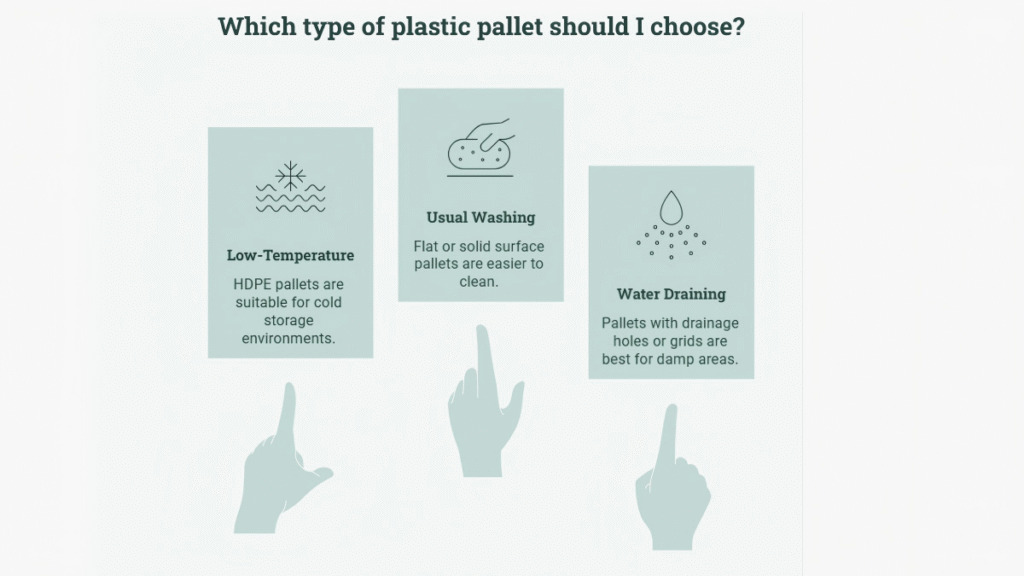
You can follow these recommendations when choosing anti-dumping plastic pallets:
Low-temperature → Choose HDPE plastic pallets
Usual washing & cleaning → Flat or solid surface plastic pallets are better
Damp & water draining required → Use drainage holes or grid surfaces plastic pallets
Paper & Textile Industry
You could also find plastic pallets in the paper and textile industry. Paper, tissues, diapers, textiles, packing material, etc., goods like these are soft and fragile. When you use wood pallets, wood splinters, wood bits, and nails will damage the goods easily, leading to a complaint you don’t want.
Besides, raw materials like yarn, fabric rolls, and packed clothing are very heavy. Human labor may find it hard to move. On this occasion, plastic pallets could help a lot. Their stable, scratch-resistant surfaces could protect your goods well. Especially compatible with paper cartons, PE filming, soft packages.
What’s more, if you already have a Modern Textile Distribution center, our pallet series is an ideal choice for you. Covers most standard sizes you may need, perfectly fit in no matter Auto-storage, Retrieval systems and robotic shuttles. Pallets for Textile Industry 1500 × 1500 mm, keep your pallets consistent with your standardized flow.
In Conclusion
Enlightening Pallet offers durable plastic pallets that meet food-grade standards. Our advanced plastic pallets are lightweight, strong, durable, moisture-resistant, and will not degrade due to humidity or microbial activity, resulting in a longer service life. If you are interested in our plastic pallet solutions, please visit our contact page or submit your requirements directly through the inquiry form on this page.