Buying plastic pallets in 2026 isn’t just about price, quality, and lead time. What we’re seeing now: major markets are tightening rules around packaging reusability, material traceability, cleanliness documentation, and cross-border compliance. If you’re still using 2025 standards to select pallets, you risk delays at customs, unexpected compliance costs, and suppliers who can’t back up their claims when audits happen.
Smart buyers in 2026 are asking: which pallet type meets my industry’s compliance requirements across different markets, how do I compare total cost between virgin and recycled materials, and will this choice keep my supply chain running smoothly through 2029?
This guide walks you through: comparing plastic pallet types for your specific needs, understanding what different countries now require, calculating real long-term value, and choosing pallets that won’t become compliance headaches as regulations evolve.
Are There New Plastic Pallet Materials in 2026?
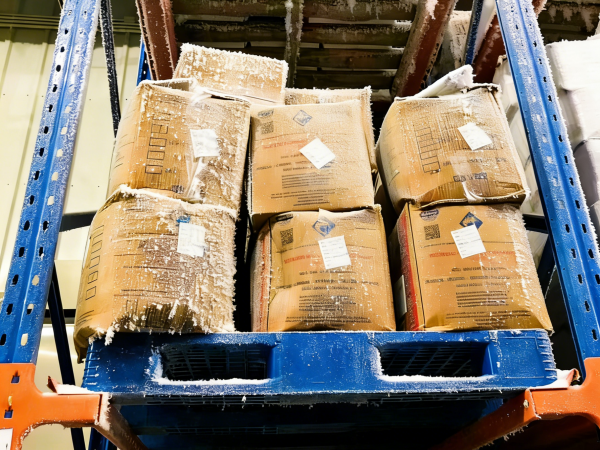
No—there are no new “breakthrough” materials replacing plastic pallets in 2026. HDPE, PP, and their recycled blends still dominate the market, and that’s unlikely to change in the near term. What has changed is the way buyers need to evaluate these materials. In 2026, the real question is no longer “Is recycled content available?” but “Can this recycled material perform consistently, batch after batch, in my real operating conditions?” We regularly see buyers run into trouble when suppliers chase higher regrind percentages without controlling material stability—because a pallet that looks good on paper but cracks in cold storage or deforms on racks quickly becomes a costly mistake.
The smarter approach in 2026 is to prioritize verification over percentages. If you receive pallet samples from two suppliers, compare pallets with the same structural design by checking dynamic load, rack load, and low-temperature impact resistance—and test them with your own forklifts, racking, and automation, not just a lab report.
Just as important, request a clear material declaration that states the resin type, recycled-content range, and batch-control process. If a supplier can’t explain where the material comes from or how it is controlled, you don’t need to carry that risk—especially as data requirements tighten under frameworks like the EU’s PPWR and Canada’s plastics registry. For a practical, side-by-side breakdown of how materials behave in real operations, see our pallet material comparison guide.
What Are the Main Types of Plastic Pallets In 2026?
At Enlightening Pallet, we manufacture pallets for every industry that needs them. In 2026, plastic pallets still fall into three main categories: heavy-duty pallets, export pallets, and racking pallets.
Heavy-Duty Plastic Pallets
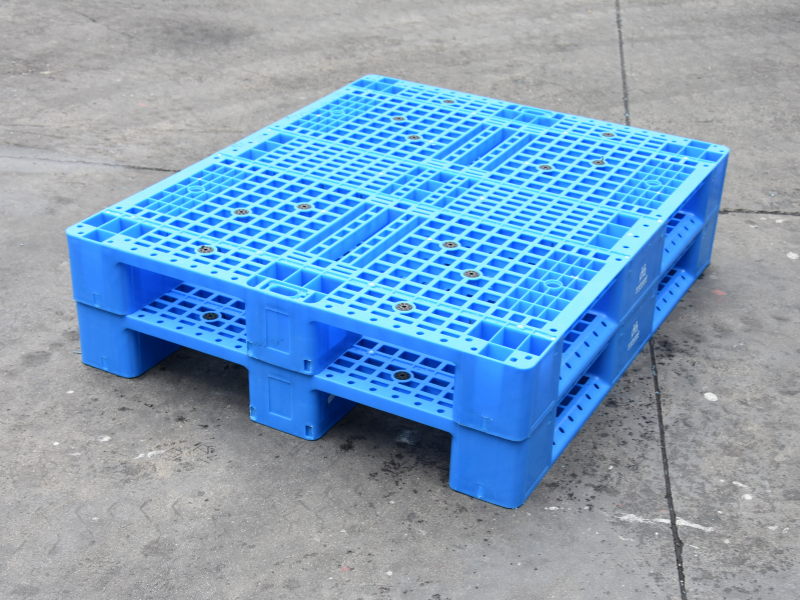
Heavy-duty plastic pallets are built for high load, high impact, and high-cycle handling—where deformation, cracking, and rack deflection are not acceptable. In practice, 3-runner pallets, reversible (double-face) pallets, and 6-runner pallets can all be engineered as heavy-duty models; the “heavy-duty” label comes from the structure, rib design, and reinforcement strategy, not the name. At Enlightening Pallet, we build heavy-duty pallets by strengthening the structural rib design and adding steel tube reinforcement where higher stiffness is required, so your pallets keep their shape and load capacity under demanding stacking, forklift handling, and racking conditions.
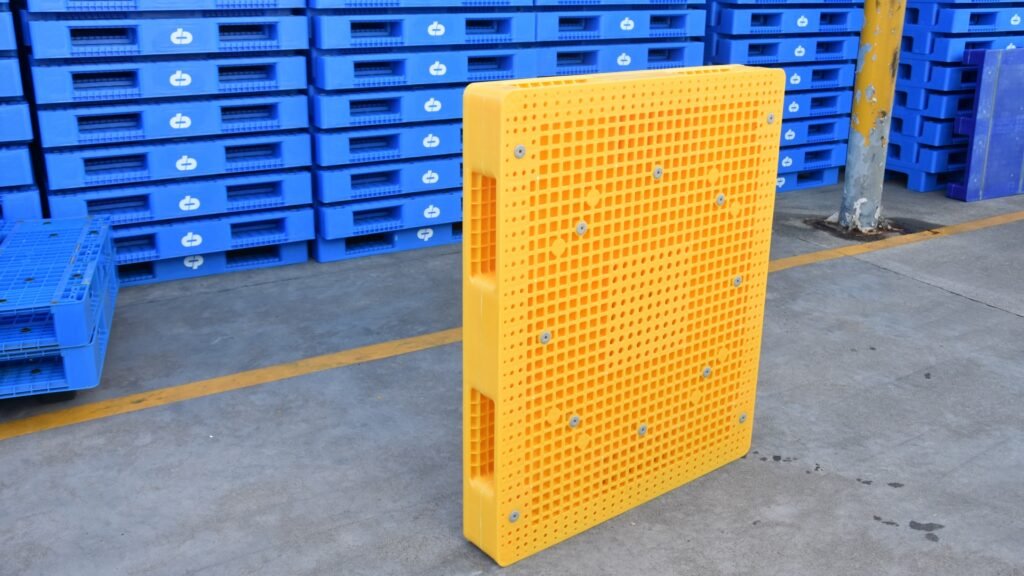
A simple starting point is this: a heavy-duty plastic pallet should be rated at least 6 tons of static load. But static load alone can be misleading—some pallets meet 6T static for floor stacking yet only handle around 1.5T dynamic in forklift moves, or perform poorly on selective racking because the base was not designed for beam support. That’s why you should always confirm all three ratings—static, dynamic, and rack load—and match them to how you actually use pallets. We’ve seen buyers choose “6T pallets” for ground storage, then run into trouble when they try to place the same loaded pallets on racks and discover the rack load is only 1T, which creates an avoidable safety and operational risk.
Export Plastic Pallets
In 2026, export plastic pallets typically fall into two practical categories: returnable export pallets (used repeatedly in closed-loop trade lanes) and one-way export pallets (used once and not returned). The right choice depends on how your cargo moves. If you need to control freight cost and container efficiency, a 9-leg nestable pallet is often the smart base layer inside a container—placed on the first tier, then loaded with cartons, sacks, or wrapped goods above. If you’re shipping higher-value products and want maximum stability for a one-way shipment, a double-face pallet (for example, a ventilated reversible pallet made with recycled material) offers strong stacking stability and safer handling through multiple touchpoints.
At Enlightening Pallet, we focus on these two export needs and make selection straightforward: we offer recycled material options for cost-sensitive loads and virgin HDPE/PP options for higher-value cargo where consistency and protection matter most. And because export requirements vary by route and industry, we recommend aligning pallet design with your shipment type first—then confirming documentation and handling conditions (forklift entry, stacking height, and any cleanliness requirements) to avoid surprises at the border. If your shipments are focused on the Southern Hemisphere, we also prepared an easy-to-read guide to Australia export pallets regulation.
Rackable Plastic Pallets
Rackable plastic pallets are built to stay stable when they sit on rack supports—like beams, rails, or rollers—instead of resting fully on a solid floor. In this setup, stability comes from the pallet’s bottom support structure: the runners (or full perimeter base) bridge across the beams, spread the load, and control deflection so the pallet doesn’t sag between supports. In 2026, the most widely used rackable plastic pallet is still the 3-runner plastic pallet, because it provides reliable support on racking, works smoothly with forklifts, and delivers a strong balance of cost and performance.
If your facility has tight aisles or compact rack layouts, an advanced option worth knowing is the reverse three-runner design: the 3 runners are oriented opposite to the standard 3-runner layout, with the pallet feet aligned parallel to the short side, which can make placement easier and more stable in space-limited racking systems. Whichever style you choose, confirm rack load capacity for your exact rack type (selective, drive-in, push-back, or flow) and ask for the test conditions—because a pallet that looks fine on the floor can behave very differently once it’s spanning beams under real warehouse loads.
How Should You Choose Plastic Pallets in 2026?
Start here: your destination market sets the compliance bar, so the “right pallet” for 2026 is the one that ships smoothly today and still meets documentation expectations next year. Think of it as buying pallets for your supply chain, not just your warehouse—reusability proof, material declarations, and traceability data are quickly becoming standard asks in major markets. So before you compare prices, do two simple checks:
(1) confirm the pallet is fit for your handling method (forklift, racks, automation, cold storage)
(2) confirm the supplier can provide the paperwork in writing (resin type, recycled-content range, unit weight, and batch control).
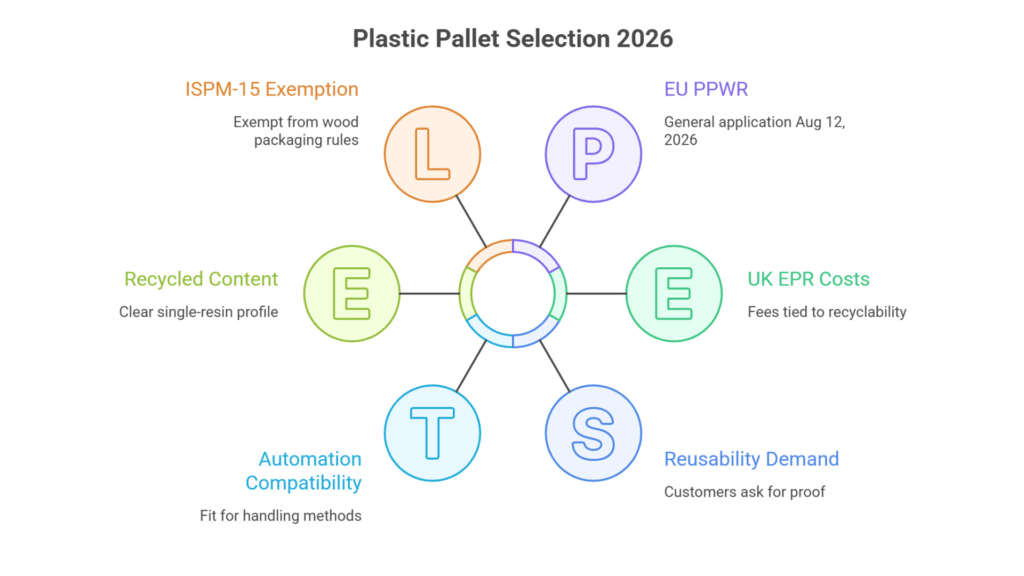
If you ship to Europe, note this: EU PPWR enters general application on Aug 12, 2026, and customers will increasingly ask you to prove pallets are reusable and traceable; reuse targets for transport packaging are set to 40% by 2030 and 70% by 2040. The practical move is simple: choose pallets with documented reuse positioning (built for repeat cycles, repairable if needed) and ask your supplier for a material declaration + traceability statement you can file.
For the UK, packaging EPR costs become more “real” as fees are tied to recyclability, so choose pallets with a clear single-resin profile (HDPE/PP) and a simple, documented end-of-life recycling path—and make sure your supplier can provide the written declarations to support it.
Shipping to Canada? Treat documentation as a gatekeeper: require resin type, unit weight, recycled-content range, and batch control before you approve a supplier, because reporting expectations are expanding even if some phases are delayed.
For Australia, keep it practical: cleanliness documentation is non-negotiable—contamination can trigger treatment, delays, and extra fees—so select pallets with Hygienic Plastic Pallet and keep a basic cleaning/inspection record for shipments.
And for the US, lean on a clear advantage: plastic pallets are exempt from ISPM-15 wood packaging rules, so you can avoid heat treatment and fumigation complexity—just make sure the pallet is strong enough for your network by verifying dynamic load and rack load under your real handling conditions.
Will Plastic Pallet Costs Rise in 2026?
When HDPE/PP resin costs rise, plastic pallet unit prices usually rise as well, but in 2026 the bigger issue is volatility, not a one-way increase: Plastic Today notes that major commodity resin prices ended 2025 at lower levels, early-2026 pricing was expected to be mostly flat to down, yet PP could see a slight lift going into Q1 2026—so quotes can move depending on timing and region.
The most practical way to protect your budget is straightforward: buy from a stable manufacturer, not a dealer/trader—dealers typically just pass through short-term resin swings and rarely share savings back when the market softens. Ask one simple set of questions before you place an order: Do you buy resin on contract or spot? What inventory buffer do you hold for my model? Can you offer a clear quote-validity window and a planned batch delivery schedule? Lock a short quote window, order in planned batches, and compare options by cost per trip (service life + failure rate), because a slightly higher unit price often wins if it avoids cracking, warping, and repeat reorders.
If you want a clear breakdown, our plastic pallet cost analysis guide shows how to compare total cost across common pallet types.
Conclusion
In short, this 2026 buyer’s guide is built to help you choose plastic pallets that stay compliant, perform reliably in real handling, and deliver the lowest cost per trip—not just the lowest quote today. If you want to start the year with a clearer plan, Enlightening Pallet can recommend the pallet models that best fit your 2026 operation, balancing price advantage and service life based on your cargo value, handling method (forklifts/racks/automation), and export lanes—reach out, and let’s upgrade your plastic pallets at the beginning of 2026 with a selection you can use confidently all year.