Gestionar envíos internacionales a menudo puede parecerse a resolver un rompecabezas complejo. Cuenta con el inventario perfecto, un embalaje impecable y un calendario logístico definido. Sin embargo, su carga llega al muelle de destino y es rechazada o sufre retrasos porque los palés no son compatibles con los sistemas del almacén local. Si su empresa se está expandiendo en Japón o mantiene relaciones comerciales con este país, conocer la norma específica sobre el tamaño de los palés en Japón no es solo una recomendación: es un requisito esencial para lograr una cadena de suministro fluida.
En esta guía completa analizaremos las dimensiones exactas que rigen el mercado japonés, explicaremos por qué cumplir estas normas oficiales protege su rentabilidad y mostraremos cómo elegir el palé más adecuado para que su cadena de suministro funcione sin contratiempos.
¿Cuál es exactamente el tamaño estándar de palé en Japón?
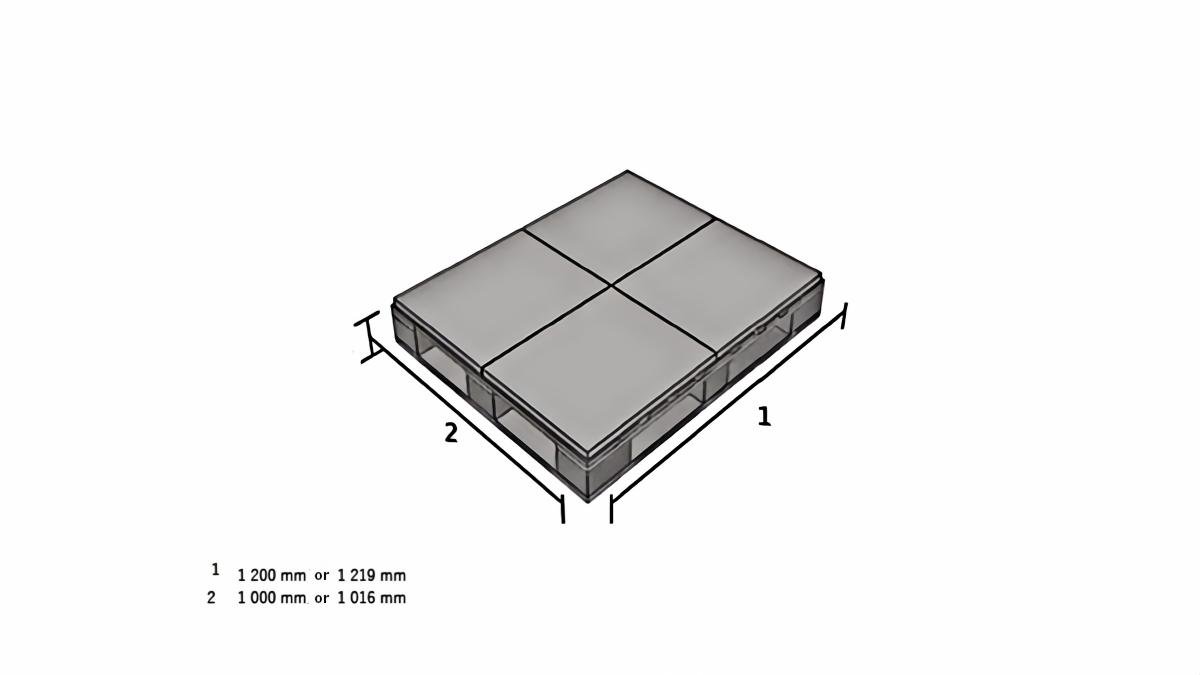
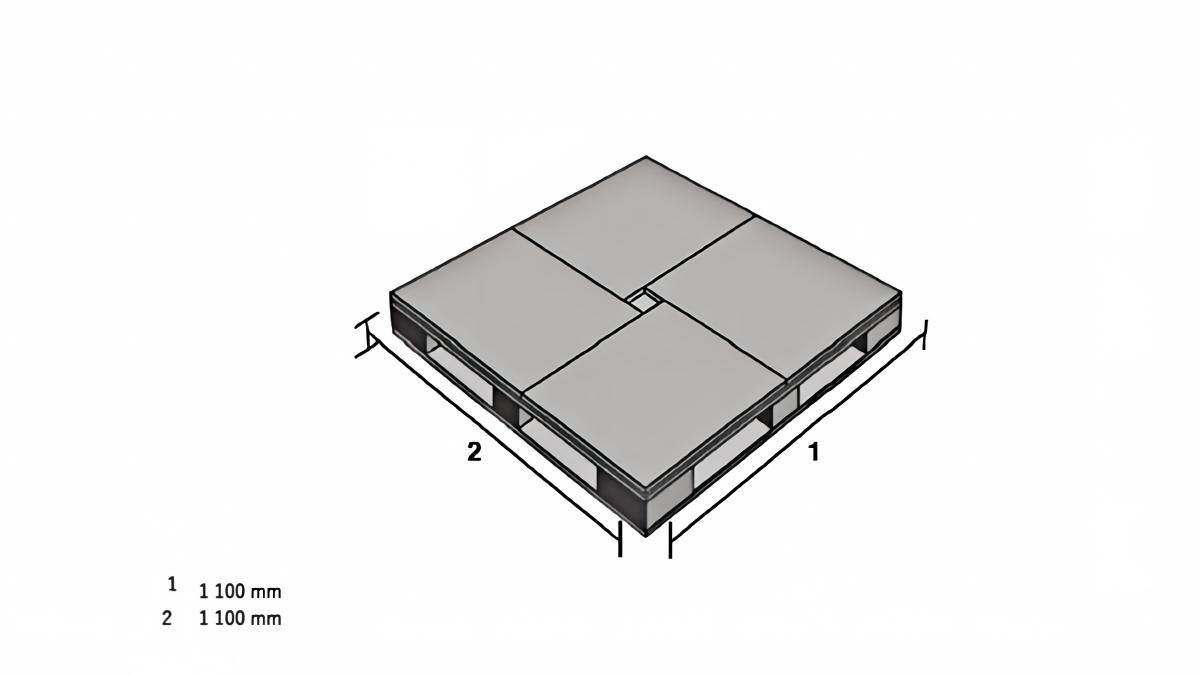
El tamaño estándar de palé en Japón comprende cuatro especificaciones establecidas en la norma JIS (Norma Industrial Japonesa) Z 0106: 1100 × 1100 mm (T11), 1200 × 1000 mm (T12), 1200 × 800 mm y 1219 × 1016 mm:
1100 × 1100 mm (palé T11)
El palé T11, de 1100 × 1100 mm, es el pilar del transporte nacional japonés. En el sector del transporte se considera el ajuste perfecto: dos unidades caben cómodamente una junto a otra en la caja de un camión japonés estándar, con el espacio libre justo, lo que evita que la carga se desplace durante trayectos por carreteras irregulares.
Si transporta mercancías dentro de Japón, esta es la opción predeterminada. Es el estándar de referencia para el que están diseñados específicamente los almacenes automatizados locales, las cintas transportadoras y los sistemas de estanterías. Ya sea que transporte productos de alimentación de consumo diario, refrescos o clasifique paquetes de comercio electrónico, esta base cuadrada es la que permite mantener abastecidos los estantes de las tiendas del país día tras día.
1200 × 1000 mm (palé T12)
El palé T12, de 1200 × 1000 mm, es la opción habitual para las empresas que gestionan operaciones logísticas internacionales desde Japón. Su base se adapta bien a las dimensiones de los contenedores marítimos estándar, lo que permite aprovechar más espacio útil en cada carga y evita pagar por transportar espacio vacío.
Es el palé que prefieren la mayoría de los exportadores japoneses para enviar mercancías a China, Corea del Sur y los mercados de la ASEAN . También lo utilizan plantas químicas, proveedores de componentes de automoción y fabricantes de maquinaria pesada, porque mantiene la carga estable y sus dimensiones son constantes de un lote a otro, algo fundamental cuando los palés se apilan en tres o cuatro niveles dentro de un almacén o contenedor.
1,200 × 800 mm
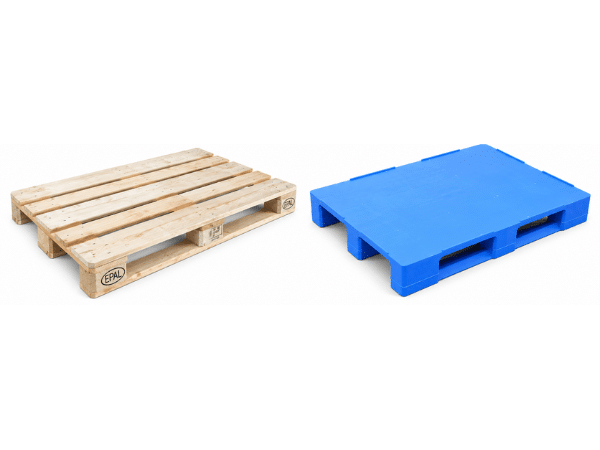
Para el comercio con Europa, el palé de 1200 × 800 mm es la opción ideal. Coincide exactamente con el tamaño del europalé estándar, lo que facilita la importación de vinos europeos y artículos de moda de lujo, así como el envío de mercancías en sentido contrario, sin los molestos retrasos derivados del reembalaje.
Sin embargo, lo que convierte este tamaño en un aliado discreto en Japón es su formato manejable. Con solo 800 mm de ancho, atraviesa fácilmente puertas traseras estrechas, montacargas reducidos y los conocidos callejones angostos del centro de Tokio. Es la solución preferida para entregar cosméticos de alta gama, productos farmacéuticos y artículos de diseño directamente en tiendas urbanas concurridas donde los palés más grandes no pueden pasar.
1,219 × 1,016 mm
El palé de 1219 × 1016 mm constituye el enlace ideal para el comercio entre Estados Unidos y Japón, ya que coincide con el clásico estándar estadounidense GMA de 48 × 40 pulgadas. Si su empresa importa grandes cargamentos de carne de vacuno norteamericana, alimentos congelados o productos frescos, esta base permite que esas extensas cadenas de suministro funcionen sin contratiempos.
También es un recurso clave para los minoristas de gran formato de Japón, como Costco. Como estos palés son los mismos que utilizan los proveedores estadounidenses, las mercancías llegan a los puertos japoneses ya apiladas y listas para su traslado. En lugar de dedicar horas a desarmar las cargas en la trastienda, los trabajadores pueden llevar el palé completo directamente a la zona de venta. Es una solución que ahorra mucho tiempo en cadenas de frío de alta rotación y clubes mayoristas de gran volumen.
La norma JIS no establece de forma estricta una única altura; no obstante, para la infraestructura logística japonesa recomendamos una altura total de entre 144 y 150 mm, a fin de garantizar una compatibilidad óptima con las carretillas elevadoras, las transpaletas y los sistemas automatizados de estanterías locales.
¿Cómo organizar su logística con los tamaños de palé JIS?
Observará que las cuatro especificaciones de palés de la norma JIS coinciden parcialmente con otras normas internacionales de embalaje. Esto se debe a que la norma JIS busca aumentar la eficiencia del transporte nacional y, al mismo tiempo, adaptarse a las operaciones internacionales de importación y exportación.
Análisis de las especificaciones de palés de Asia y del resto del mundo
Para los responsables de cadenas de suministro internacionales, comprender cómo se ajustan las normas japonesas a otros sistemas regionales es esencial para cumplir sin dificultades los requisitos transfronterizos. Veamos las principales especificaciones utilizadas en las redes comerciales regionales y mundiales:
| Pallet Type / Standard | Dimensiones (mm) | Dimensions (Inches) | Primary Regional Usage & Logistics Fit |
| T11 Standard (JIS) | 1100 × 1100 | 43.3 × 43.3 | Japan domestic logistics, mandatory at most local docks; South Korea, Malaysia, Singapore, China |
| T12 Standard (ISO) | 1200 × 1000 | 47.2 × 39.4 | International trade; cross-border shipping between Asia Pacific, Europe, and North America |
| EUR / EPAL 1 | 1200 × 800 | 47.2 × 31.5 | Continental Europe; built to fit through standard European doorways |
| GMA Standard | 1219 × 1016 | 48.0 × 40.0 | North America; standard for consumer grocery and retail supply chains |
Como se muestra arriba, si gestiona importaciones y exportaciones dentro de Asia, los tamaños T11 y T12 pueden cubrir las necesidades de la mayoría de los países. Para operaciones comerciales entre Japón y Europa, el formato de 1200 × 800 mm será la solución ideal.
Notably, the 1219 × 1016 mm (48” × 40”) specification is recognized within Japanese trade specifically to accommodate North American supply chains. If your logistics loop involves seamless transit between Japan and the US/Canada without the need for cross-docking re-palletization, choosing this GMA-equivalent size is the most efficient strategy.
Análisis de las especificaciones de palés de Asia y del resto del mundo
Los tamaños estándar de palés JIS se basan en tres módulos: 600 × 400 mm, 600 × 500 mm y 550 × 366 mm, que corresponden a especificaciones ISO para embalajes rígidos rectangulares de transporte, como cajas de cartón y cajones. Este sistema modular mejora la eficiencia del transporte y reduce el espacio vacío dentro de los contenedores. Estos tres formatos pueden colocarse sobre un palé JIS sin sobresalir de sus bordes:
600 x 400 mm Package on 1200 x 1000 mm (Or 1219 x 1016 mm) Pallet:
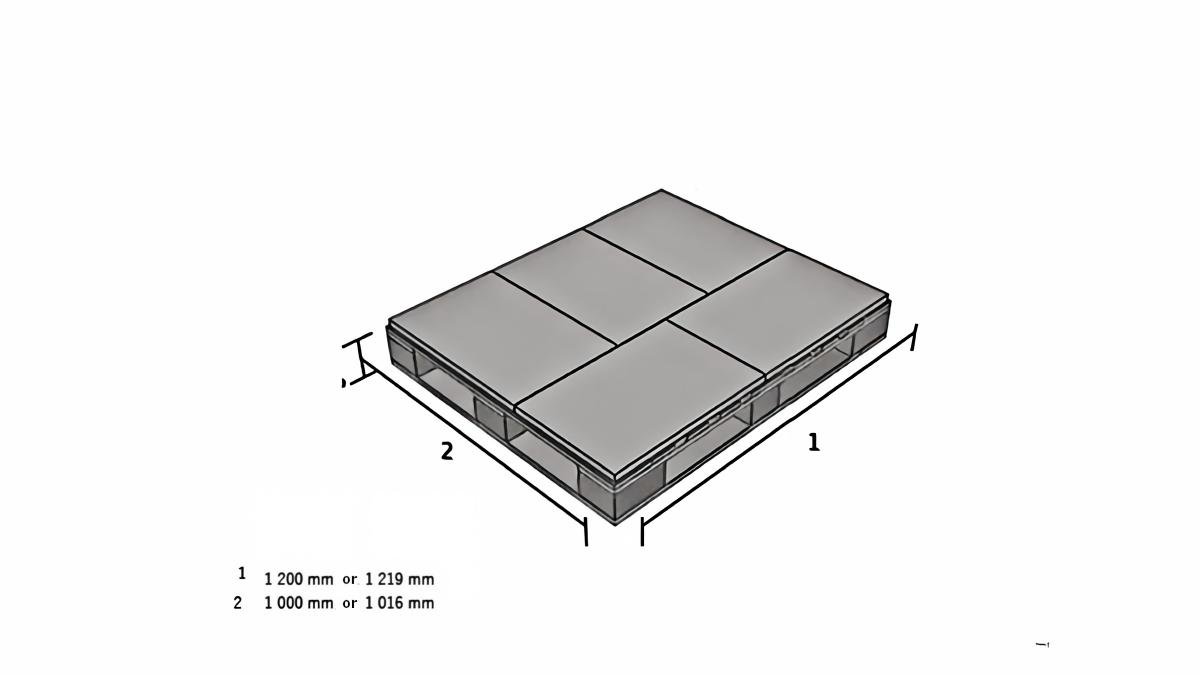
600 x 500 mm Package on 1200 x 1000 mm (Or 1219 x 1016 mm) Pallet:
600 x 500 mm Package on 1100 x 1100 mm Pallet:
Breaking down 600, 500, 400 mm into smaller modular:
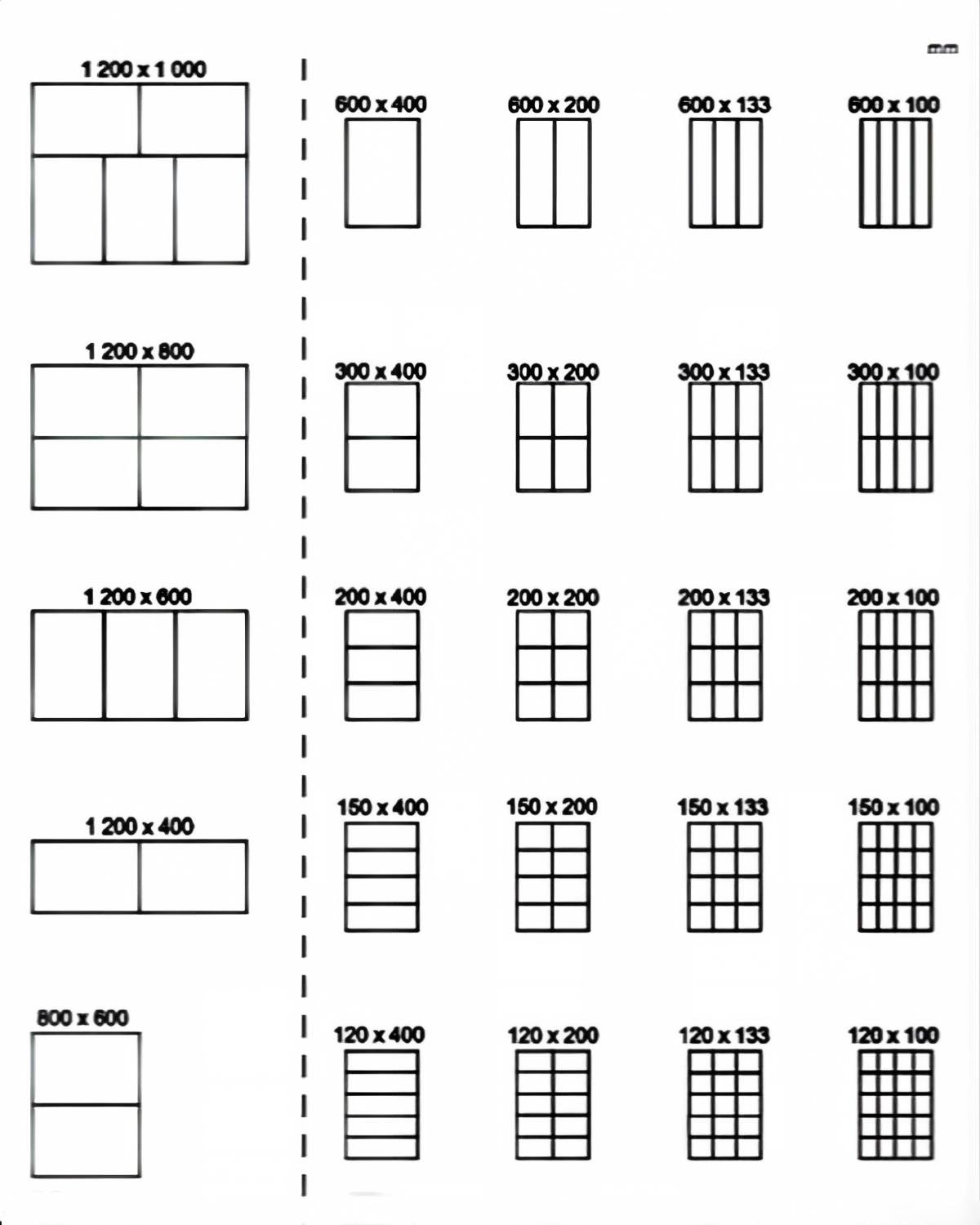
Resulta muy sencillo encontrar el palé JIS adecuado si también utiliza dimensiones estándar para la unidad mínima de embalaje. La combinación de embalajes estándar y palés JIS no solo permite ahorrar espacio en el contenedor, sino también aumentar la eficiencia de los envíos.
Why Plastic Pallets Are Always Your Better Choice
Al importar a Japón u operar dentro del país, la elección del material es tan importante como el cumplimiento de las dimensiones. Los palés de plástico de alta calidad conformes con la norma JIS se han convertido cada vez más en la referencia de la logística japonesa por varias razones fundamentales:
- Higiene estricta y cumplimiento de la NIMF 15: Japón aplica exigentes normas aduaneras y de almacenamiento. A diferencia de los palés de madera, los de plástico están exentos por naturaleza de los requisitos de tratamiento contra plagas de la NIMF 15, lo que elimina el riesgo de retrasos aduaneros causados por moho o insectos xilófagos.
- Compatibilidad con almacenes automatizados: Japón depende en gran medida de avanzados sistemas automatizados de almacenamiento y recuperación (ASRS) de alta densidad. Los palés de plástico ofrecen una uniformidad dimensional total y no sufren deformaciones estructurales, evitando los costosos atascos en las cintas transportadoras y los errores de sensores que suelen provocar los palés de madera astillados o irregulares.
- Integridad estructural y cumplimiento de la regla de «cero saliente»: Los centros logísticos japoneses aplican una estricta regla que impide que la carga sobresalga del palé para evitar daños en los productos. Los palés de plástico de alta densidad mantienen una rigidez dimensional absoluta bajo la carga máxima, garantizando que la mercancía permanezca perfectamente alineada, sin desplazarse ni deformarse durante el transporte.
Preguntas frecuentes
¿Puedo enviar mercancías a Japón en palés estadounidenses estándar de 48 × 40 pulgadas (GMA)?
Sí, puede enviar mercancías a Japón en palés de 48 × 40 pulgadas, ya que este tamaño cumple tanto la norma JIS como las normas ISO. Sin embargo, este formato aprovecha mejor un contenedor de 40 pies y resulta menos eficiente en uno de 20 pies. Además, dado que la logística nacional y la cadena de suministro japonesas se han diseñado tradicionalmente en torno a palés cuadrados de 1100 × 1100 mm, los palés de 48 × 40 pulgadas pueden requerir ajustes para adaptarse a las estanterías de los almacenes japoneses. Por ello, recomendamos consultar durante la fase de planificación con su agente de aduanas o socio logístico en Japón para determinar si es necesario volver a paletizar la mercancía conforme al estándar T11 antes del envío.
¿Se aceptan los palés de plástico en los sistemas de almacenamiento automatizado (ASRS) de Japón?
Sí. Los sistemas automatizados de almacenamiento y recuperación (ASRS) japoneses prefieren claramente los palés de plástico de alta calidad y, con frecuencia, los exigen. Como los almacenes automatizados dependen de mediciones precisas mediante sensores, cualquier deformación, astillado o variación dimensional de un palé de madera tradicional puede provocar errores del sistema o atascos en las cintas transportadoras. Los palés de plástico moldeados por inyección mantienen unas dimensiones completamente precisas incluso bajo cargas pesadas, lo que garantiza un funcionamiento impecable en los centros de distribución japoneses de alta tecnología.
¿Los palés de plástico importados a Japón requieren tratamiento térmico conforme a la NIMF 15?
No. Los palés de plástico están totalmente exentos de la normativa NIMF 15. A diferencia de los materiales de embalaje de madera, que requieren un tratamiento térmico o una fumigación estrictos y una marca IPPC visible para superar la aduana japonesa, los palés de plástico no presentan riesgo de albergar plagas xilófagas. Elegir palés de plástico de alta resistencia agiliza el despacho aduanero internacional y elimina retrasos inesperados por cuarentena en los puertos japoneses.
Pensamiento final
Al preparar su cadena de suministro para triunfar en el mercado japonés, los pequeños detalles generan grandes beneficios. La decisión estratégica de adoptar el estándar de palé T11 de 1100 × 1100 mm protege sus mercancías frente a daños durante la manipulación, respeta los protocolos de los almacenes locales y evita retrasos imprevistos por tener que volver a paletizar la carga.
¿Desea optimizar sus operaciones de transporte internacional o renovar la flota de palés de su fábrica para cumplir las estrictas normas japonesas? Permítanos ayudarle a encontrar la solución de palés de alta calidad y plenamente conforme más adecuada para su empresa. Póngase hoy mismo en contacto con nuestros expertos en logística y hagamos que su carga cruce todas las fronteras sin contratiempos.