跳到内容
跳到内容 
Global warehousing costs have risen across many markets, with continued pressure from storage space, freight volatility, labor shortages, and the growing cost of operational errors. If you manage a warehouse or source pallets for an active supply chain, these pressures are probably already affecting your daily operation.
The good news is that two of the most effective tools for cutting operational waste are also two of the most overlooked: nestable plastic pallets and stackable plastic pallets. Used in the right context, they don’t just marginally improve your workflow — they directly reduce what you spend on empty pallet storage, return freight, product damage, and wasted vertical space.
In this article, we’ll show you exactly how each type works, where it saves you money, and how to decide which one fits your operation — or whether running both makes more sense.
Nestable Plastic Pallets Save the Most Space When Empty
If empty pallets are eating up floor space in your warehouse, nestable plastic pallets are the most direct fix available.
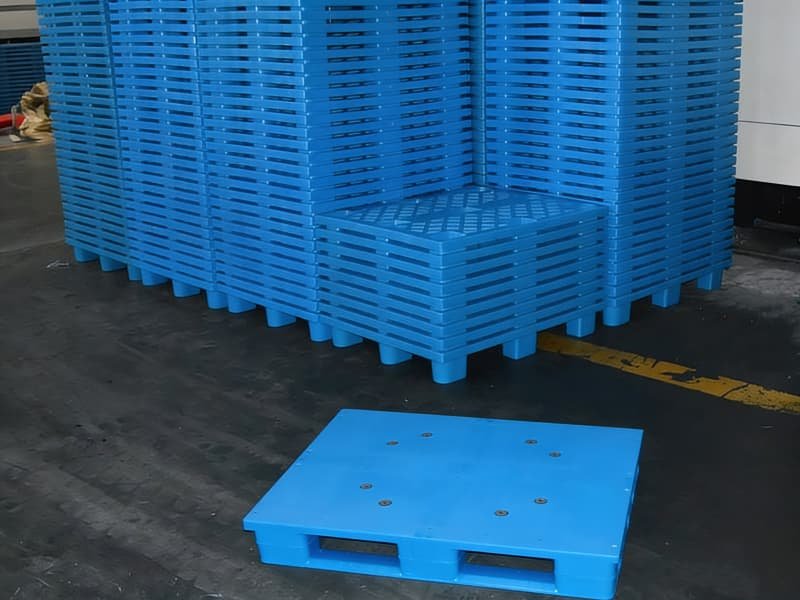
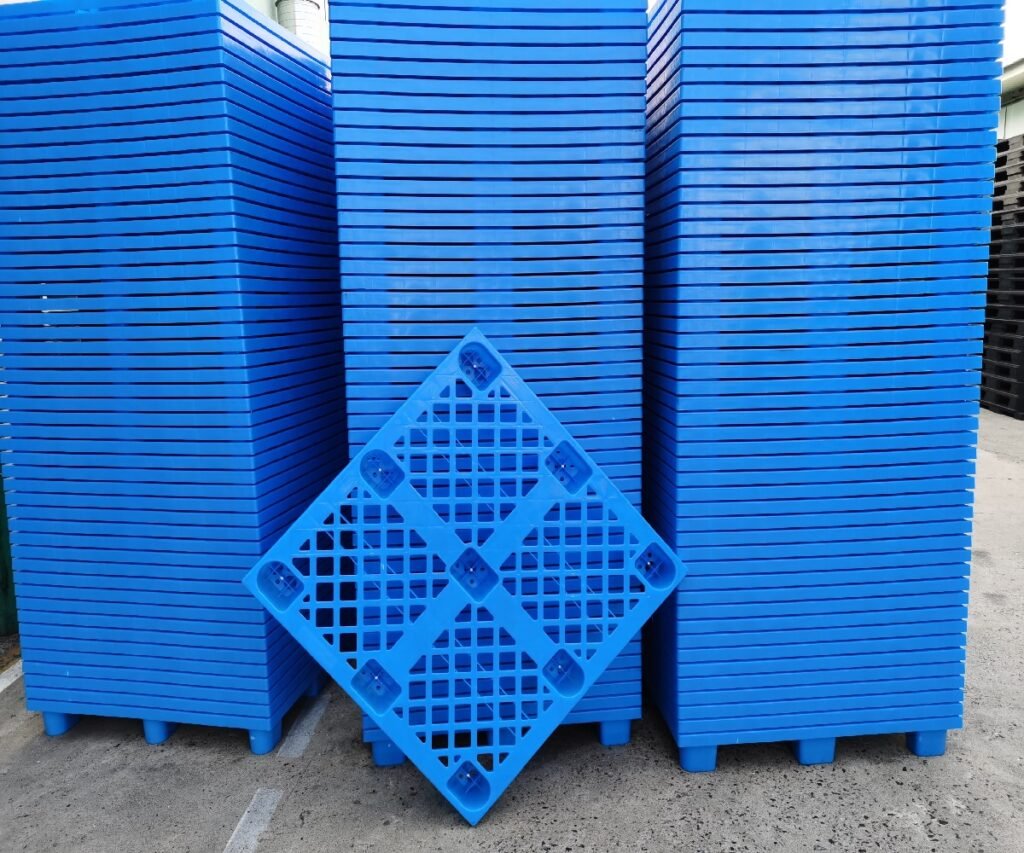
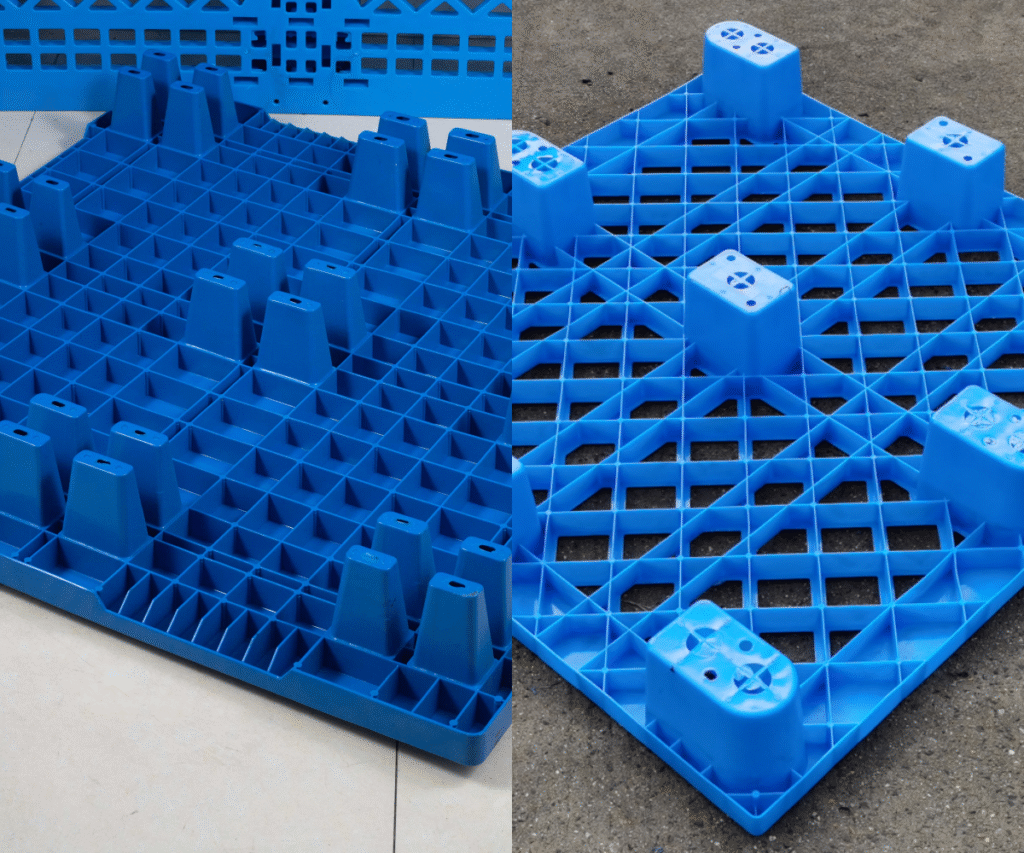
Here’s how they work: a nestable pallet has a tapered or recessed base, so when it’s empty, one pallet slides down into the one below it. Injection molding gives nestable pallets a precise fit — they nest cleanly together and separate just as easily.
This is traditional wood pallets simply cannot do — and it’s a big part of why they’re being phased.
When it comes to saving space, nestable pallets deliver in 4 specific ways:
1. Dramatically less floor space for empty pallet storage
A well-designed nestable pallet can stack up to 30+ units in a single column. Compare that to standard non-nestable pallets, where the same column holds far fewer — nestable pallets typically let you store at least 50% more pallets in the same footprint, and often much more depending on the nest depth.
For warehouses managing hundreds or thousands of empty pallets, it translates directly into recovered floor space you can actually use for something else.
2. Far better use of truck space on return trips
Let’s use a concrete example:
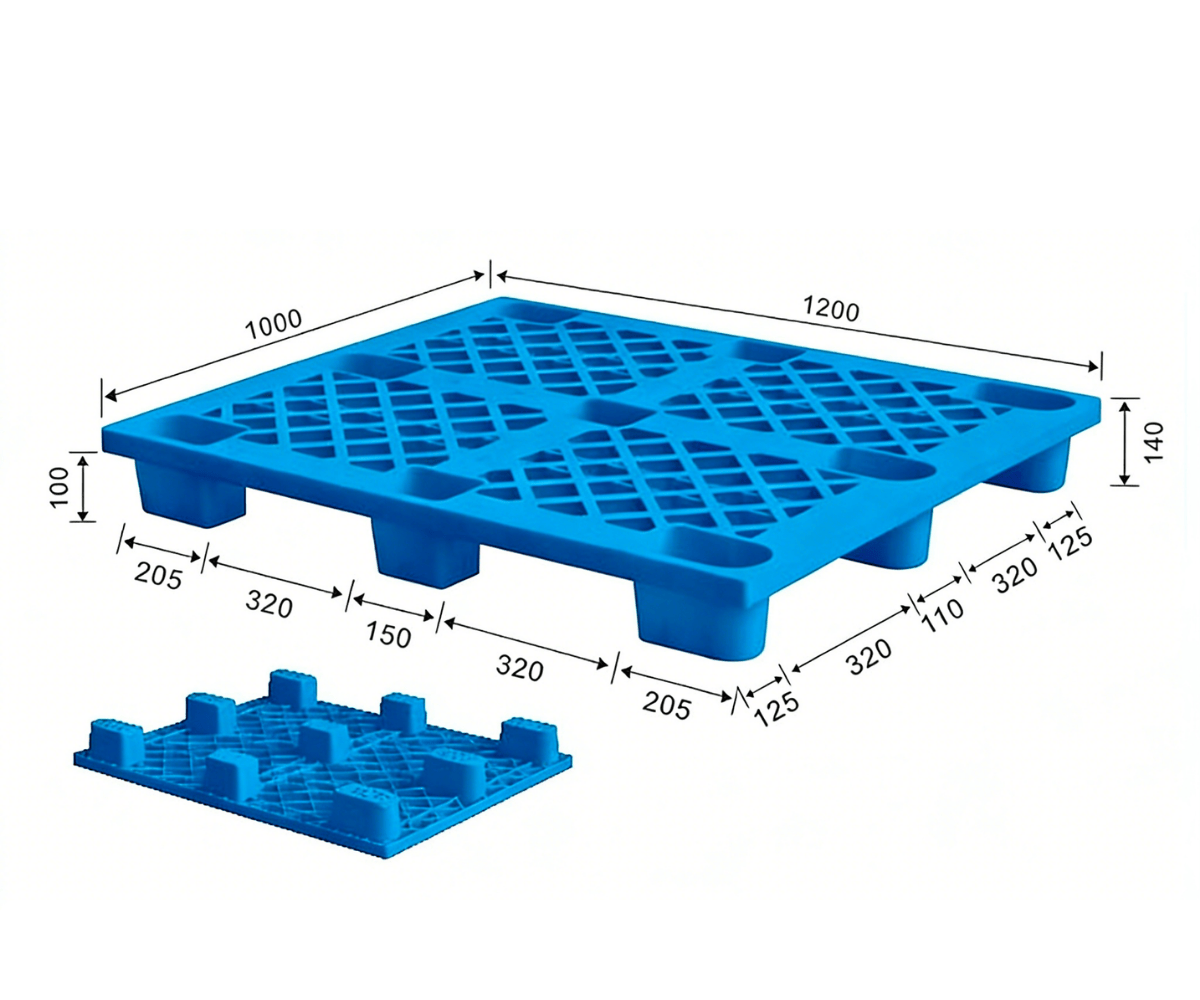
Take a nestable pallet with a base height of 100mm, a total height of 140mm, and a deck thickness of 40mm. When pallets nest, each additional pallet only adds the deck thickness — 40mm — to the stack height, not the full 140mm.
- 12 non-nestable pallets stacked: 12 × 140mm = 1,680mm
- 12 nestable pallets stacked: 100mm + (11 × 40mm) = 540mm
That’s a height reduction of over 65–70% for the same number of pallets. Put simply, a truck that carries 500 standard empty pallets can carry around 1,200 nestable pallets in the same space.
3. Much easier to manage through peak and off-peak seasons
Pallet demand doesn’t stay constant. After a busy season, you’re left with a large volume of empty pallets that need to go somewhere until they’re needed again. With standard pallets, that means a significant amount of floor space sitting occupied for weeks or months.
Nestable pallets compress that storage requirement dramatically. The same number of pallets takes up a fraction of the space, which means you’re not sacrificing warehouse capacity during your quietest periods just to store pallets you’re not using yet.
4. Simpler empty pallet handling across the board
Fewer, more compact stacks mean less movement around the warehouse, fewer forklift trips to consolidate empty pallets, and a tidier operation overall. The administrative and handling overhead of managing empty pallets goes down because there are simply fewer stacks to track, move, and organize.
When to Prioritize Nestable Plastic Pallets
Nestable pallets are most commonly the right fit in these contexts:
| Material | Typical Use Cases |
| Recycled (regrind) | Single-use export, low-load internal transfers, container loading bases |
| Virgin material | Retail replenishment, closed-loop return systems, printing and paper industries, operations with strict hygiene or size consistency requirements |
Nestable pallets also work best in operations like these:
- Retail and FMCG distribution with frequent empty pallet returns
- Multi-site networks where pallets move regularly between warehouses
- Seasonal businesses managing large pallet buffers during off-peak periods
- Export operations using pallets primarily as a container loading base
- Any operation where return freight cost is a meaningful line item
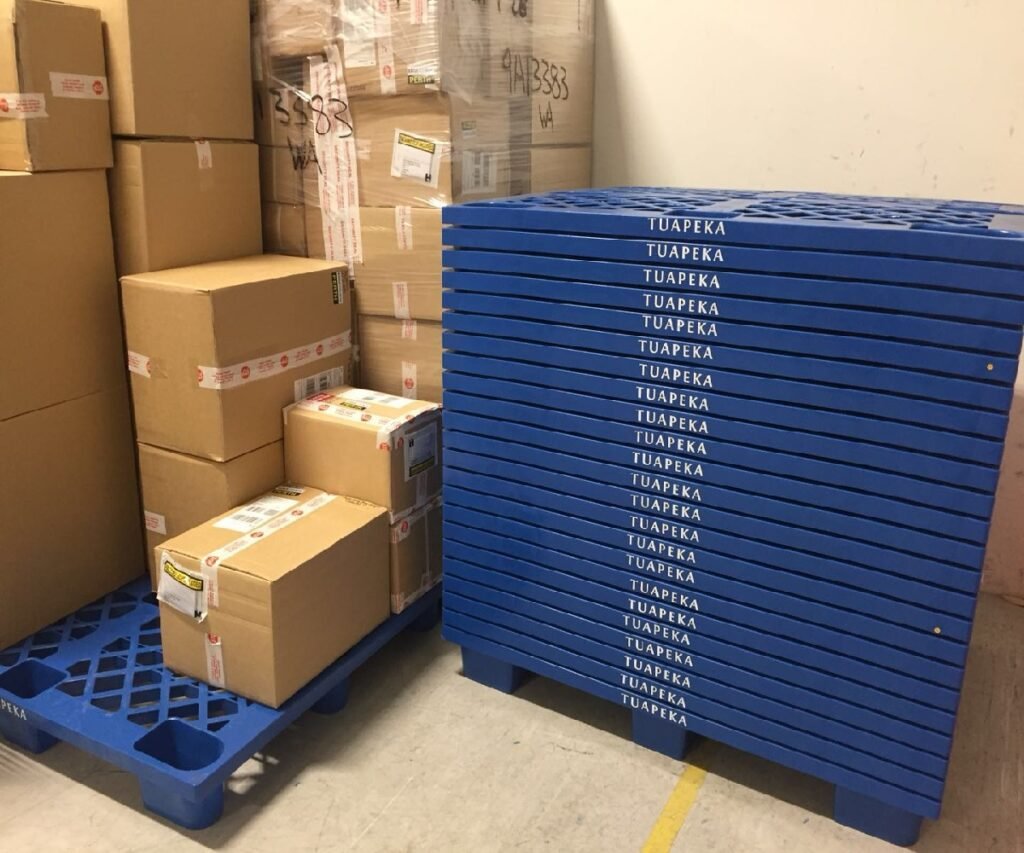
One important note: nestable pallets are not the right choice for every situation. Where we see buyers run into trouble is when they expect nestable pallets to cover more than they’re designed for — loaded floor stacking, conveyor lines, heavy repeated loads, or a single pallet that handles every stage of the operation. It’s not that the pallet is defective. It’s that it was never built for that job.
If your main challenge is where empty pallets go and what it costs to move them back, nestable pallets are a solid choice. If your main challenge is what happens when the pallets are loaded, the next section is more relevant to you.
Stackable Plastic Pallets Deliver the Most Stable Loaded Stacking
If loaded pallets are shifting, stacks aren’t holding, or your team is stacking lower than your warehouse height allows — that’s the problem stackable pallets are built to fix.
Stackable plastic pallets come in three main structures: 3-runner, 6-runner (full perimeter), and double deck. Each one is designed differently, but they share the same core purpose: giving loaded pallets a stable, consistent base that holds up under the weight of whatever is stacked on top. The value isn’t simply that they “can stack” — it’s that they keep the stack steady, protect the goods on lower tiers, and reduce the risk of the whole thing shifting or collapsing.
1. A more stable base for loaded stacking
When a pallet flexes or sits unevenly under load, the pressure it transfers to the goods below becomes uneven too. That’s when bottom-tier cartons get crushed, drums deform, and bags split — not because the total weight exceeded the limit, but because the load wasn’t distributed evenly. A well-built stackable pallet keeps the base flat and consistent, so the weight above sits where it should.
2. Safer stacking at every level
Stacking failures rarely look like a sudden collapse. More often, a stack gradually leans — a slight tilt after a forklift sets it down, a slow shift during storage — until it becomes a safety hazard. Stackable pallets with solid base structures reduce that drift from the start, because the load path from top to bottom is stable and predictable.
3. Less damage to lower-tier goods
Bottom-tier packaging takes the most punishment. An unstable or flexible pallet base concentrates pressure on certain points rather than spreading it evenly — and that’s what causes damage. A structurally consistent stackable pallet distributes weight evenly across the base, which directly reduces compression damage on lower layers.
4. More usable vertical space in your warehouse
A lot of warehouses are stacking lower than they need to — not because the building or racking can’t handle more, but because the team doesn’t trust the stack to stay stable at height. When your pallets are reliable under load, stacking higher becomes a practical option, not a risk. That means more storage capacity from the same floor space, without any changes to your facility.
When to Prioritize Stackable Plastic Pallets
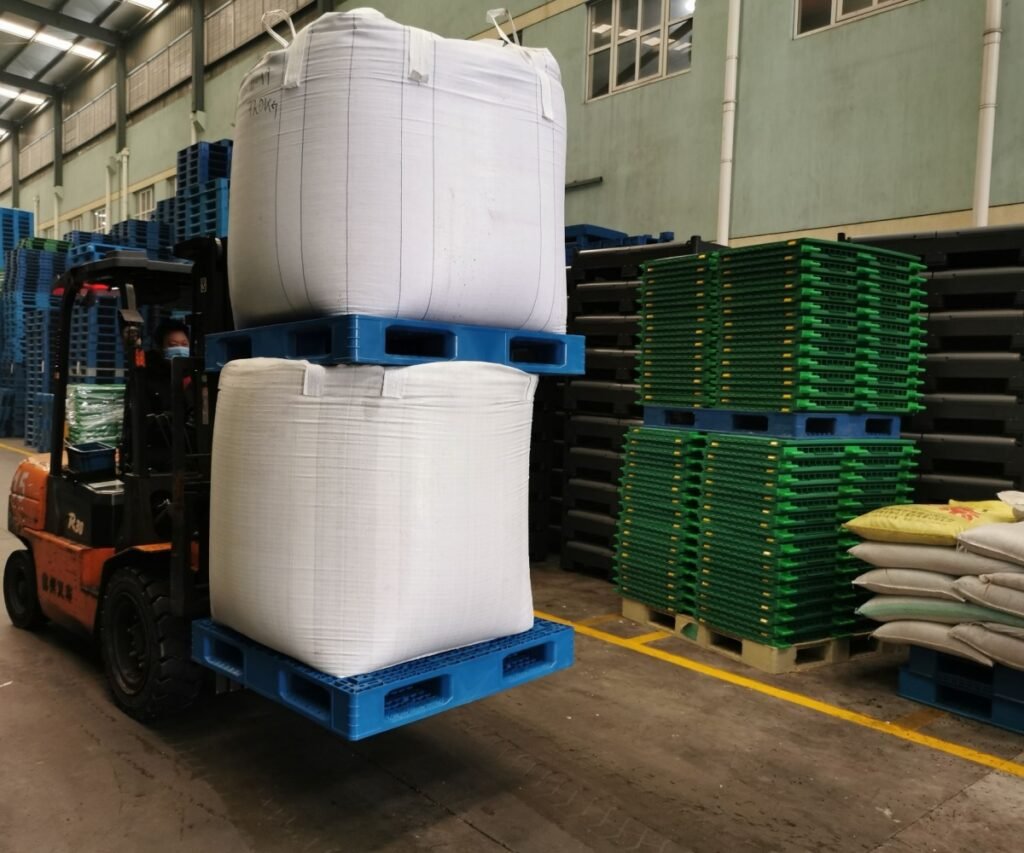
They’re especially worth prioritizing when the product itself makes stacking difficult. Bags of flour or animal feed, drums, large water containers, anything with a high or uneven center of gravity — these loads shift easily on an unstable base, especially when a forklift is involved. A stackable pallet with good base coverage keeps things even and significantly reduces that risk.
Stackable pallets are a practical fit across a wide range of industries and applications:
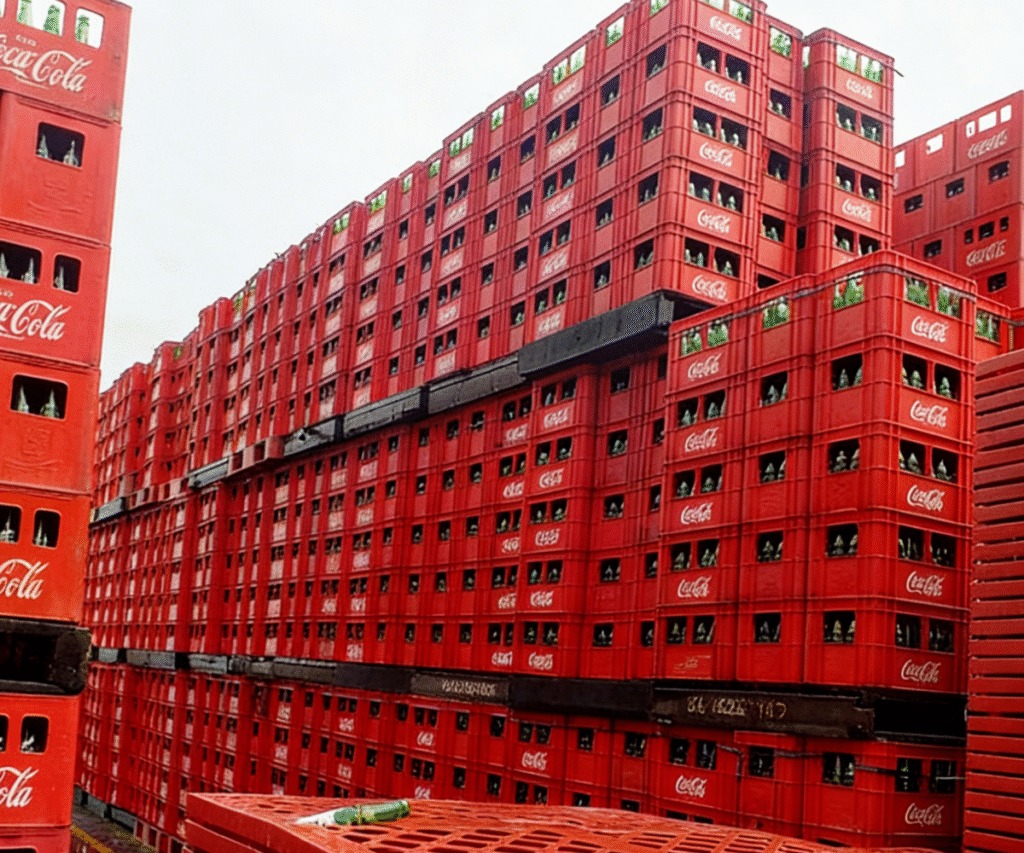
- Food and beverage production — stable stacking for bottled goods, canned products, and bulk packaging
- Flour, feed, and agricultural products — reliable base for heavy bag loads that shift easily on uneven surfaces
- Chemical and industrial drums — consistent support for cylindrical containers that are prone to rolling or tipping
- Pharmaceutical and medical supply chains — clean, structurally consistent pallets that meet hygiene and handling standards
- Retail and FMCG distribution — high-frequency forklift handling with dependable stack integrity across the full distribution cycle
- Automated warehouses and conveyor systems — compatible base profiles for smooth integration with mechanical handling equipment
One thing to keep in mind: regrind (recycled) material stackable pallets are generally not suitable for racking. The material properties affect long-term load-bearing performance, and putting a regrind pallet on rack beams under sustained weight is a risk not worth taking. If racking is part of your operation, stick with virgin material pallets and confirm the rackable spec before you buy.
The Two Most Common Misconceptions About Nestable & Stackable Pallets
1. Nestable & Space-Saving ≠ Better Storage Efficiency
Yes, nestable pallets save space — but only when they’re empty. In most operations, pallets spend the majority of their working life loaded. If your real challenge is loaded stacking stability, forklift handling, or automated line compatibility, nestable pallets won’t solve that. They’re built for empty pallet management, not loaded performance.
2. Stackable ≠ Rackable
We see this confusion constantly.
Stackable means that the pallet can safely withstand the load weight when stacked with goods on the ground. The force travels straight down through the legs — straightforward, well-supported, low risk.
Rackable pallet is a different requirement entirely. When you place a pallet on rack beams, the middle section is unsupported and has to span the gap. That creates bending stress, and not every pallet is built to handle it — especially under heavy loads or over extended periods.
Therefore, for a pallet to work safely on racking, it generally needs to meet 3 criteria:
- a dynamic load rating of at least 1 tonne on rack beams
- a 3-runner base is ideal; a 6-runner or double-deck configuration also works.
- heavy-duty use need steel tube reinforcement inside the runners.
So the bar for racking is meaningfully higher than for ground stacking. A practical example: a lightweight 3-runner pallet without reinforced steel tubing might perform perfectly well on a flat warehouse floor, but put it on rack beams and it can flex, sag, or crack. If racking is part of your operation, always confirm the rackable spec separately. Stackable on the label is not enough.
Want to understand exactly what makes a pallet rackable? Read our full guide: What Is a Rackable Plastic Pallet?
When to Use Both — Nestable and Stackable in the Same Operation
Nestable and stackable pallets aren’t alternatives to each other — they solve different problems. For larger or more complex operations, running both often makes more sense than trying to find one pallet that covers everything.
A simple way to think about it by zone:
| Zone | Recommended Pallet | Why |
| Storage & stacking area | Stackable | Loaded stability is the priority |
| Empty pallet holding & staging area | Nestable | Space efficiency when empty is the priority |
| Dispatch & circulation area | Depends on cargo value | Low-value goods → nestable; high-value goods → stackable |
We recommend matching the right pallet to the right zone rather than forcing one type across your entire operation.
5 Questions to Find the Right Pallet Quickly
If you’re still not sure which direction to go, these five questions will get you there fast.
| # | Question | If Yes, Lean Toward |
| 1 | Do your pallets sit empty for long periods? | Nestable |
| 2 | Do you regularly send empty pallets back or move them between sites? | Nestable |
| 3 | Do you need to stack loaded pallets on top of each other? | Stackable |
| 4 | Do pallets go through conveyor lines or automated systems? | Stackable (verify dimensions and base profile) |
| 5 | Do pallets go on storage racking? | Confirm rackable spec — stackable alone is not enough |
Most buying mistakes aren’t really about picking the wrong product — they’re about a mismatch between what the pallet is built for and how it’s actually being used. A few common examples:
- Bought nestable pallets to save space — but the real problem was loaded stacking, not empty storage
- Bought stackable pallets for floor stacking — base structure didn’t work well under real conditions
- Needed conveyor compatibility — pallet dimensions didn’t fit the system
- Planned for export — actual load capacity wasn’t enough for the shipment
How Nestable and Stackable Pallets Reduce Your Real Costs
The first thing worth understanding is that these two pallet types don’t save money in the same places.
- Nestable pallets reduce the costs tied to empty pallets — storing them, moving them back, and managing large quantities between busy periods.
- Stackable pallets reduce the costs tied to loaded pallets — damaged goods, unstable stacks, safety incidents, and vertical space you’re not fully using.
If you try to evaluate them against the same criteria, you’ll end up comparing the wrong things.
Nestable pallets earn their cost advantage on the empty side of the cycle. Because they stack inside each other, a nestable pallet takes up roughly a quarter of the floor space of a standard pallet when empty — a 4:1 nesting ratio is typical for well-designed nestable plastic pallets. That means the same storage area holds four times as many empty pallets.
On the return freight side, the difference is even more tangible. A truck that fits around 500 standard empty pallets can carry approximately 1,200 nestable pallets in the same space. That means you’re potentially running fewer than half the return trips for the same number of pallets. The saving isn’t that nestable pallets are cheaper to buy — it’s that every empty pallet costs less to store and less to ship back.
Stackable pallets make more financial sense when you look at cost per use rather than purchase price.
| Wood Pallet | Plastic Stackable Pallet | |
| Typical purchase price | $15 | $50–$80 |
| Average cycles | 6–10 | 200+ |
| Cost per trip | ~$1.88 | ~$0.25–$0.40 |
The ROI doesn’t come from a lower price tag. It comes from a much lower cost spread across the full life of the pallet.
Maintenance and damage costs are harder to put a single number on, but the logic is straightforward. Wood pallets need regular inspection for loose nails, splinters, cracks, and structural weakness — and every damaged pallet that slips through creates risk. Plastic pallets don’t have nails, don’t splinter, and don’t absorb moisture, so the day-to-day maintenance burden is simply lower.
For stackable pallets specifically, the bigger cost advantage is often what they prevent:
- Bottom-tier cartons getting compressed or crushed under the weight above
- Drums and containers deforming from uneven pressure at the base
- Loads shifting mid-transit when a forklift picks up or sets down the stack
- Stacks gradually leaning over time until they become a safety risk on the warehouse floor
Those losses don’t always show up as a line item, but they add up. A stable, well-structured stackable pallet reduces all of them.Getting the most out of your stackable pallets also comes down to how you stack them. → Read our full guide: How to Stack a Pallet for best practices that help you stack safely and get the most out of your warehouse space.
Not Sure Which Pallet Is Right for You?
If you’re not certain your current setup is working as well as it could — or you’re sourcing pallets for a new operation and don’t want to get it wrong — we’re happy to help you think it through.
We work with procurement managers and warehouse teams to figure out where the real inefficiencies are: whether that’s return freight, storage space, product damage, or pallets that don’t fit the equipment you’re running.
At Enlightening Pallet, We can help you work out which pallet type fits each part of your operation, whether a mixed approach makes sense for your setup, what specs to look for before you commit to an order, and how to source the right product — including custom sizes, load ratings, and materials — against your actual requirements.
Get in touch and we’ll give you a straightforward recommendation based on your operation.