跳到内容
跳到内容 
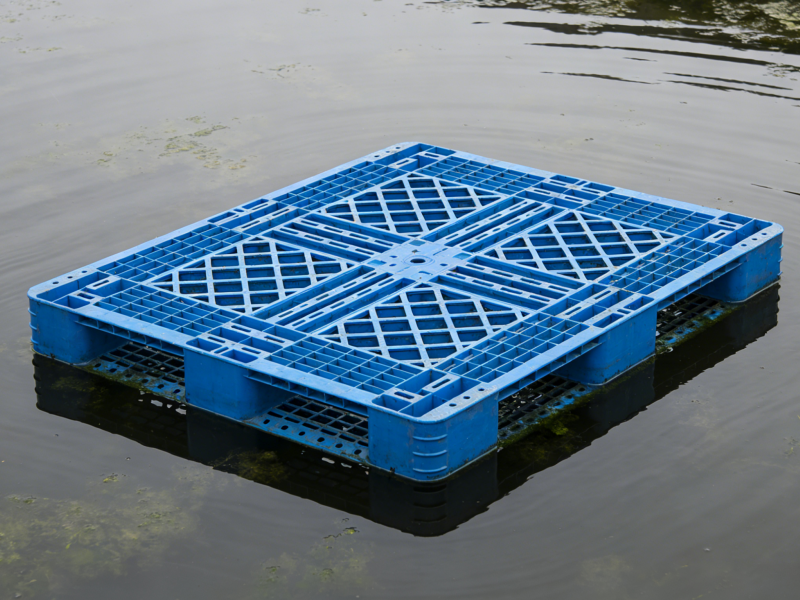
Plastic pallets usually float when placed in water. However, floating is not determined by plastic as a material, but by pallet structure and internal design.
Our article explains when plastic pallets float, when they do not, and how structure and application determine the outcome, you can quickly judge whether a plastic pallet is suitable for water-related environments.
How Pallet Structure Affects Floating Behavior
Material density sets the baseline:
Most plastic pallets are made from HDPE or PP. These plastics are lighter than water by nature.
In simple terms, HDPE and PP usually have a density of about 0.90–0.96 g/cm³, while water is around 1.00 g/cm³.
So at a material level, plastic does not naturally sink. But this is only the starting point. Material alone does not decide whether a pallet will float or not.
Internal air volume makes the difference:
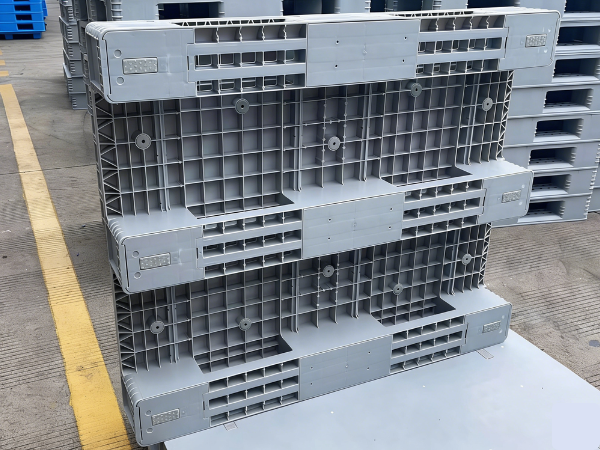
Most plastic pallets are not solid blocks. Many are built with hollow sections or enclosed spaces inside. These spaces trap air, which reduces overall density and makes the pallet more likely to float when placed in water.
Solid plastic pallets are different. With little or no air inside, they are heavier and tend to sink once placed in water.
Water entry changes everything:
Some pallets allow water to flow inside through open legs or gaps.
As water replaces the air, the pallet becomes heavier and loses buoyancy. It may float briefly, then sink.
Pallets that stay sealed keep air inside longer. As long as air stays trapped, floating is more likely.
Extra weight reduces floating:
Some steel reinforcement plastic pallets with extra weight makes floating harder, even if some air remains inside.
Simple structures behave more predictably:
One-piece molded pallets usually have fewer weak points. Their behavior in water is easier to predict.
Pallets made from several parts may slowly take in water, which can change how they float over time.
Why plastic alone doesn’t decide floating? Plastic pallets are not solid pieces of plastic. Some hold a lot of air, some hold very little. How much air stays inside, how thick the walls are, and how much weight is added make the real difference.
That’s why two plastic pallets can behave very differently in the same water.
In short, floating depends on the pallet’s structure, not on the material name.
Choosing the Right Pallet for Water-Related Applications
If plastic pallets are used or considered in aquaculture or water-related operations, the right choice depends on how the pallet is expected to behave in water.
Below are practical suggestions based on real use cases, not theory.
When floating pallets make sense:
In some cold chain and seafood processing environments, pallets are frequently exposed to wash-down water, melting ice, or wet floors. In these settings, occasional contact with water is normal, but pallets are not meant to stay underwater.
Pallets that naturally float can be easier to spot and retrieve if they fall into water channels or drainage areas. As long as floating is controlled and does not interfere with equipment or workflow, this behavior is usually acceptable. The key is that floating here is incidental, not the main function.
When pallets should not float:
In aquaculture, fish ponds, or long-term water exposure environments, floating is often a problem rather than a benefit. Loose or drifting pallets can disturb stock, damage pond structures, or become difficult to control.
For these uses, pallets that sink or stay firmly in place are more practical. Stability matters more than buoyancy. If a pallet moves when it shouldn’t, it creates extra work and unnecessary risk.
A simple way to judge the right option:
If a pallet is only exposed to water during cleaning or short handling steps, floating behavior is usually not critical.
If a pallet is placed near or inside water for long periods, predictable and stable behavior becomes essential.
The main takeaway is straightforward: don’t choose a pallet based on whether it floats or sinks alone. Choose it based on how controlled its behavior will be in your actual working environment.
Conclusion
Plastic pallets may float or sink depending on their structure, not because they are plastic.
For non-standard or experimental uses, buoyancy may seem useful.
For industrial and facility environments, predictable behavior and operational control matter far more than floating.
Understanding how structure and application interact is the key to choosing the right pallet—and avoiding unintended risk.