跳到内容
跳到内容 
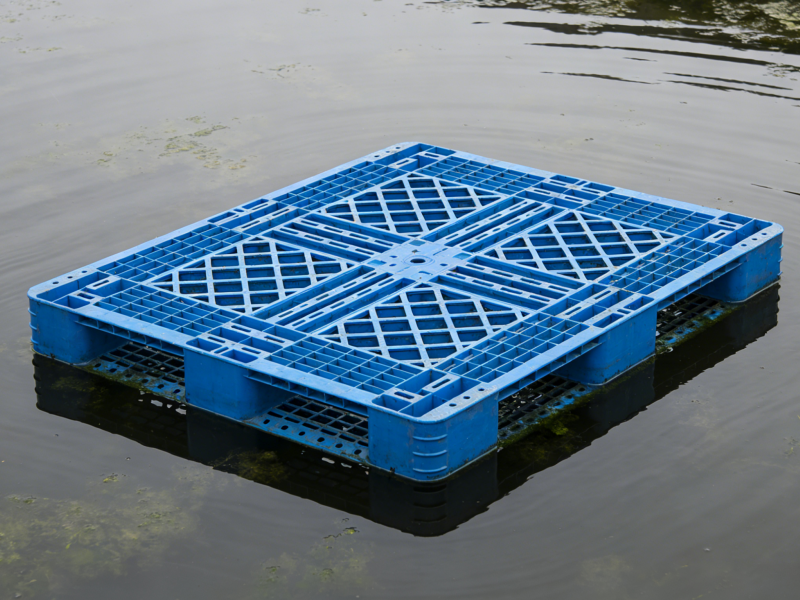
The material reality of plastic pallets is straightforward: whether manufactured through injection molding, blow molding, or rotational molding, the core material is thermoplastics—virgin High-Density Polyethylene (HDPE) and Polypropylene (PP), or their recycled versions. Everything else—additives, structural reinforcements, and processing techniques—builds upon these two foundational materials.
Let me walk you through these different pallet materials and how to choose the right one for your operation.
High-Density Polyethylene (HDPE) — The Versatile Workhorse
High-Density Polyethylene (HDPE) is one of the most widely used pallet materials. For pallets specifically, HDPE outperforms PP in three critical areas: low-temperature resistance, impact strength, and corrosion resistance.
Low-temperature resistance becomes critical in cold storage operations. Take our Enlightening Pallet HDPE Heavy Duty Weather Resistant Pallet as an example—it maintains structural integrity even when temperatures regularly drop to -20°C in cold storage facilities, while PP alternatives tend to become brittle under the same conditions. This isn’t just about withstanding cold; it’s about maintaining load-bearing capacity and impact resistance when it matters most.
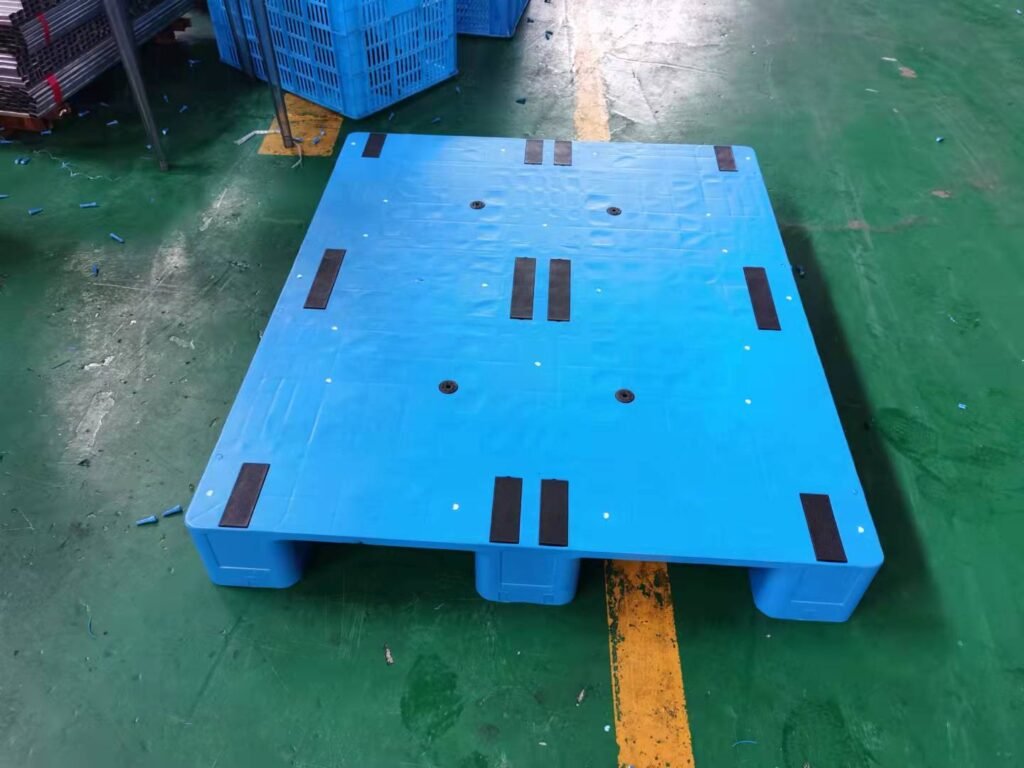
Impact strength is where HDPE truly distinguishes itself. The material absorbs shocks rather than cracking, which translates directly to longer service life when forklifts are moving fast or when pallets encounter rough handling in automated systems. If you’re managing high-impact operations or handling products with sharp edges, HDPE’s toughness becomes your insurance policy against unexpected failures and costly downtime.
Corrosion resistance means your pallets won’t degrade when exposed to cleaning agents, oils, or outdoor weathering. HDPE’s natural resistance to moisture and chemicals ensures consistent performance even in harsh environments. This chemical stability becomes especially critical in food processing or pharmaceutical industries, where contamination risks must stay at zero and pallets undergo frequent washdowns with aggressive sanitizing agents.
Polypropylene (PP) — Built for Heavy Loads and Heat
PP pallets emerged earlier in industrial history and were widely adopted in chemical processing and automotive manufacturing. Even today, PP remains the ideal choice for applications demanding exceptional rigidity and heat resistance.
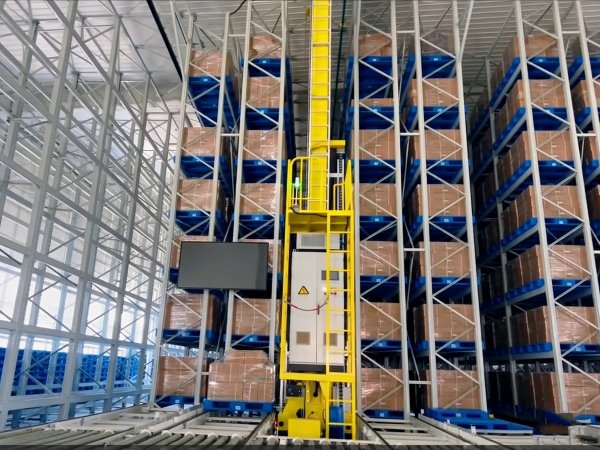
The rigidity advantage of PP truly shines in racked storage systems. When pallets sit on beams for extended periods under consistent loads, PP’s stiffness prevents the gradual sagging you’d see with more flexible materials. This is precisely why automotive parts manufacturers and beverage distributors routinely specify PP for their heavy-duty applications—the material maintains its shape even when supporting static loads exceeding 2,000 kg.
Beyond structural rigidity, PP offers superior heat tolerance with a melting point around 160°C compared to HDPE’s 130°C. This higher threshold means PP pallets won’t deform during steam cleaning cycles or in hot manufacturing environments, making them particularly suitable for operations that require high-temperature sanitation or thermal processing.That said, PP does come with a tradeoff: it’s more susceptible to brittle failure in sub-zero conditions. If your supply chain involves cold storage below -10°C, HDPE becomes the better choice unless you’re looking at modified PP formulations with impact modifiers added. However, for ambient or warm environments, PP’s combination of strength and thermal resistance is nearly unmatched.
Modified Plastics — Engineered for Specific Challenges
Some applications demand more than standard HDPE or PP, and that’s where custom-modified plastics come into play. By incorporating specific compounds into the base resin, we can tailor pallets to meet unique operational requirements that off-the-shelf materials simply cannot address.
Common modifications include:
- UV stabilizers for outdoor storage, preventing the photodegradation that causes standard plastics to crack after months of sun exposure.
- Anti-static additives essential in electronics manufacturing, where even minor static discharge can damage sensitive components worth thousands of dollars.
- Flame retardants that meet safety codes in certain industries, though they do add cost and slightly reduce impact strength.
- Impact modifiers that act as “shock absorbers” within the polymer matrix in extreme cold or high-impact environments, preventing catastrophic brittle failures.
- Antimicrobial additives used in food and pharmaceutical supply chains to prevent mold growth and cross-contamination in high-humidity cold storage environments.
Here’s what this means for you: if you’re storing pallets outdoors in California sun, a UV-stabilized HDPE pallet extends your service life from 18 months to 3+ years—that’s cutting your replacement costs in half. If you’re handling electronics, anti-static additives prevent those $5,000 component losses from a single discharge.
Composite Materials — Combining Materials for Cost or Strength
Composite pallets mix plastic with wood, paper, rice husks, glass fiber, or steel. You’re either cutting costs or boosting load capacity—rarely both.
Wood-plastic and paper-plastic composites cost 20-30% less than virgin plastic by blending recycled plastic with wood fiber or paper pulp. They work well for one-way export shipments or light loads under 800 kg where you need better durability than wood but can’t justify pure plastic costs.
The catch: they absorb moisture and degrade faster when exposed to chemicals or outdoor weather. If your pallets sit in humid warehouses or get cleaned frequently, stick with pure plastic.
Steel-reinforced plastic pallets embed steel tubes into critical stress points—where forklift tines enter and where deck meets runners. Adding 6-8 steel tubes can boost dynamic load capacity from 1,500 kg to 2,500+ kg, letting you stack heavier without sagging in racked storage. Depending on your mold design, you can fit 4-12 steel reinforcements.
Glass fiber-reinforced PP (GFPP) distributes chopped glass strands throughout the entire plastic structure, achieving static loads beyond 5,000 kg. But these pallets weigh 30% more and cost significantly more than steel-reinforced options, making them practical only for permanent installations in manufacturing facilities where pallets never leave the production floor.
Choosing Between Virgin and Recycled Materials
The virgin-versus-recycled decision isn’t just about sustainability—it’s about matching material performance to your actual operational requirements and regulatory constraints.
In Europe, the EU’s Circular Economy Action Plan actively encourages recycled content, and some markets incentivize it through regulations or procurement preferences. But here’s what many people miss: not all applications can use recycled materials. Food-grade pallets, for instance, must use virgin FDA-approved resins to meet contamination standards—there’s no negotiation on this.
For non-food applications, recycled pallets make excellent economic sense if your situation fits these criteria:
- Budget range of $8-10 USD per pallet
- One-way export shipments (pallet doesn’t return to your facility)
- Dynamic loads under 500 kg per pallet
- Ground-level storage only (no racking systems or automated warehouses)
- Industries outside food, pharmaceutical, or electronics sectors
- Short-haul transport with maximum 3 trip cycles
- Countries without strict packaging waste regulations (unlike Germany’s stringent requirements)
When these conditions align, recycled pallets deliver 30-40% cost savings with acceptable performance. But push beyond these parameters—higher loads, longer service life, or stricter regulatory environments—and virgin materials become the only viable choice.
For food and pharmaceutical applications, always specify food-grade virgin HDPE with proper certifications (REACH, RoHS, FDA compliance). The documentation trail matters as much as the material itself during audits.
In Conclusion: What Really Determines Performance in Material Selection
Here’s what most people miss: the material itself is just one factor. Pallet performance depends on formulation (additives), structural design (rib patterns and reinforcements), manufacturing process, and whether steel tubes are embedded for extreme loads. This is why you can’t simply declare “PP is stronger than HDPE”—a well-engineered HDPE pallet with optimized ribs can outperform a poorly designed PP pallet, even though PP has higher raw tensile strength.
At Enlightening Pallet, we use a 4-step methodology to match pallets to your supply chain:
(1) assess environmental conditions—temperature range, chemical exposure, UV exposure;
(2) analyze load requirements—dynamic vs. static, stacking height, racking vs. floor storage;
(3) verify regulatory requirements—food-grade certification, recycled content mandates, export restrictions;
(4) optimize lifecycle cost, not just purchase price—factoring durability, replacement frequency, and end-of-life handling.
Need help determining which material fits your operation? Our technical team at Enlightening Pallet can walk through your requirements and recommend the optimal configuration—standard virgin HDPE, heat-stabilized PP, steel-reinforced composite, or custom-modified formulation. With 20+ years manufacturing experience, 60+ injection and rotomolding machines, and ISO 9001-certified quality control at every production stage, we’ve engineered pallets for virtually every supply chain scenario and can apply that expertise to your unique challenges.