La mayoría de los problemas con los palés en las cámaras frigoríficas no aparecen el primer día, sino seis meses después, cuando un palé se resquebraja bajo carga o cuando el moho empieza a aparecer en las mercancías que se suponía debían almacenarse de forma segura. Para entonces, el daño ya está hecho.
El palé adecuado para almacenamiento en frío evita todo eso. En esta guía, analizaremos los materiales, el tamaño, la compatibilidad con las estanterías de almacenamiento en frío y cómo elegir el palé adecuado para su operación, para que no tenga que descubrirlo de la manera difícil.
¿Qué es un palé de almacenamiento en frío?
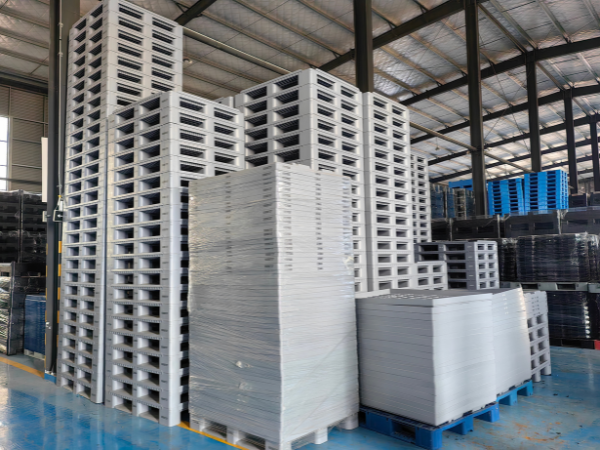
A tarima de almacenamiento en frío está especialmente diseñado para entornos de baja temperatura y se utiliza ampliamente para el almacenamiento y transporte de productos como frutas, verduras, carne, mariscos, productos farmacéuticos y químicos. Estos productos son muy sensibles a las fluctuaciones de temperatura, por lo que las tarimas de almacenamiento en frío deben permanecer estables en entornos entre -20°C y -30°C, sin volverse quebradizo o deformarse.
Por eso los palets de almacenamiento en frío son cruciales para industrias como la alimentaria, farmacéutica y de mariscos: garantizan que tus productos estén bien protegidos y evitan daños durante el almacenamiento.
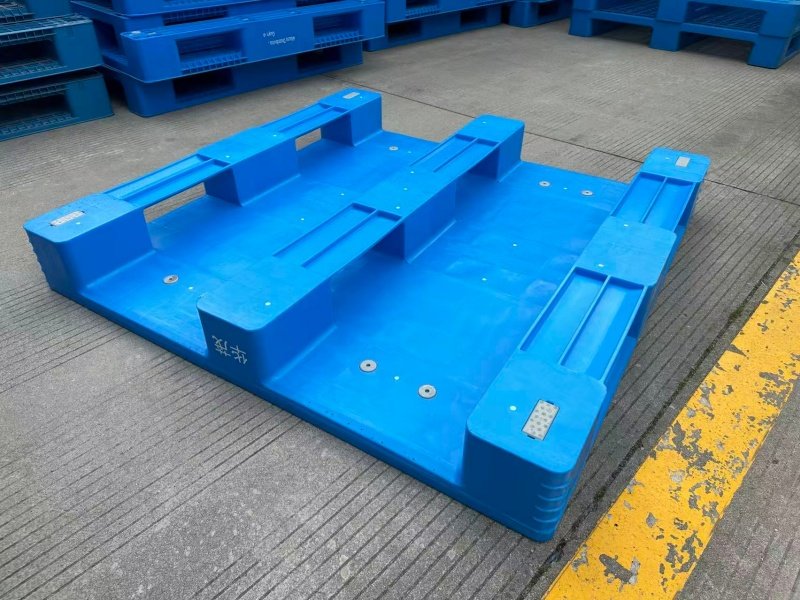
¿Qué características debe tener un palé de almacenamiento en frío?
La resistencia a bajas temperaturas y la estabilidad estructural son importantes, pero no lo son todo. Estas son las características clave que debe tener tu palé para almacenamiento en frío:
1. Resistencia a la humedad y al mohoLos ambientes de almacenamiento en frío tienden a tener alta humedad. Si la humedad penetra en el material de tus paletas y llega a tus productos, el moho se convierte en un verdadero problema. Tu paleta necesita evitar que esa humedad entre.
2. Resistencia QuímicaLos palets deben poder soportar la exposición a ácidos, álcalis y sales sin degradarse, especialmente si se almacenan o transportan productos químicos o ciertos productos alimenticios.
3. Fácil de limpiar: Para operaciones con estrictos requisitos de higiene, busque tarimas con superficies lisas y sin uniones. Son mucho más fáciles de lavar y es más probable que cumplan con los estándares de la FDA o de la UE para materiales en contacto con alimentos.
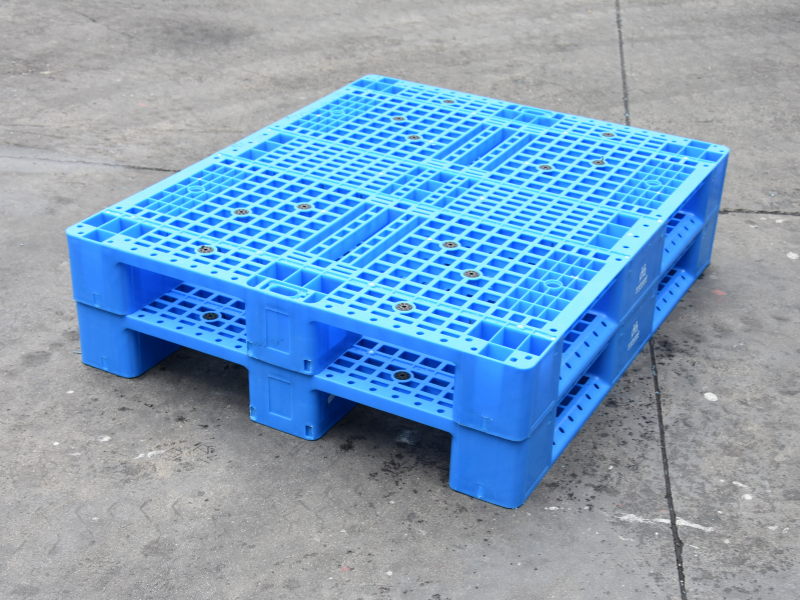
Una nota: encontrarás muchos palés de superficie ventilada comercializados como “higiénicos”. No se equivocan, pero los palés ventilados son más adecuados para entornos que necesitan circulación de aire para prevenir el moho, como el almacenamiento a corto plazo de frutas y verduras. No son la primera opción para la mayoría de las aplicaciones de almacenamiento en frío.
4. Capacidad de cargaLos palets de almacenamiento en frío se utilizan típicamente en sistemas de estanterías y para almacenamiento apilado, por lo que necesitan soportar el peso de manera fiable sin flexionarse ni fallar con el tiempo.
5. Durabilidad y vida útilSi has estado operando tu planta de almacenamiento en frío por más de diez años, lo último que quieres son tarimas que te ralenticen. Una buena tarima para almacenamiento en frío debería durar al menos 5-8 años como mínimo, porque reemplazar las tarimas también significa reorganizar tu almacén a su alrededor. La calidad del material y la estructura de construcción siguen siendo los dos factores más importantes que determinan cuánto tiempo dura realmente una tarima.
Aquí tienes una comparación rápida de la vida útil típica por tipo de paleta:
| Tipo de palet | Vida útil | Durabilidad | Notas |
| HDPE virgen | 10–15 años | Alta | Excelente resistencia al frío, a los productos químicos y a la humedad. Soporta bien el uso frecuente y prolongado. |
| PP | 8–12 años | Media | Buena resistencia al frío, pero ligeramente menos duradera que el HDPE bajo cargas elevadas a lo largo del tiempo. |
| Acero | más de 10 años | Alta | Capacidad de carga muy alta. Necesita un tratamiento anticorrosión para mantenerse fiable en condiciones frías y húmedas. |
| Madera | 5-8 años | Baja | Absorbe humedad fácilmente. Sin el tratamiento adecuado, el moho y los daños son comunes, especialmente en el almacenamiento en frío de alta humedad. |
| Aluminio | más de 15 años | Alta | Resistencia excepcional al frío y a la corrosión. Mayor costo y menor capacidad de carga que el acero, pero ideal para necesidades especializadas de cadena de frío. |
6. PesoLas tarimas más ligeras son fáciles de mover y apilar, lo que es más importante de lo que la gente suele esperar en una operación de almacenamiento en frío concurrida. Así es como se comparan los materiales comunes:
- Paletas de PP se encuentran entre las opciones más ligeras disponibles, lo que las hace adecuadas para frutas, verduras, mariscos y otros productos ligeros.
- Paletas de HDPE son ligeramente más pesados que el PP debido a una mayor densidad del material, pero aún así son manejables para la mayoría de las operaciones.
- Paletas de madera generalmente son más pesados que el plástico — el peso adicional viene con un mejor soporte para cargas más pesadas, pero a costa de una mayor facilidad de manejo.
- Paletas de aluminio son la opción metálica más ligera, aunque todavía más pesadas que las tarimas de plástico.
- Paletas de acero ofrecen la mayor capacidad de carga de cualquier material, pero también son los más pesados. Si necesita una resistencia de nivel de acero, el peso es el compromiso que hará.
¿Qué paletas son adecuadas para uso en almacenamiento en frío?
No todos los palets están construidos para el almacenamiento en frío. Los cambios de temperatura, la humedad y los ciclos constantes de congelación pueden agrietar, deformar o debilitar rápidamente el material incorrecto. Aquí tienes un resumen rápido de los principales tipos para tu operación:
1. Paletas de plástico HDPE
Entre todos los materiales de paletas de plástico, el palet de HDPE tiene el rango de temperatura más amplio: estable de -40 °C a 70 °C sin aditivos. En términos prácticos, eso significa que sus tarimas no se volverán quebradizas ni se deformarán en condiciones de congelación profunda como suelen hacerlo las tarimas de madera. Soportan bien cargas pesadas en estanterías de almacenamiento en frío y, con el uso adecuado, puede esperar razonablemente más de 10 años de vida útil.
El HDPE también es naturalmente resistente a la humedad, lo que ayuda a prevenir la acumulación de moho y bacterias con el tiempo. Si te dedicas al almacenamiento de alimentos o a la distribución farmacéutica, donde los estándares de higiene son innegociables, esa es una ventaja real que es fácil pasar por alto hasta que te enfrentas a un problema de contaminación.
2. Paletas de Plástico PP (Polipropileno)
Los palés de PP son una opción confiable para entornos de almacenamiento en frío que se mantienen por encima de -20°C. Debido a que el PP tiene una menor densidad de material que el HDPE, un palé de PP hecho con el mismo molde y proceso saldrá más ligero, y esa diferencia se suma cuando su equipo mueve palés con frecuencia a lo largo del día.
El PP no maneja el frío extremo tan bien como el HDPE, pero sigue superando a los palés de madera en la mayoría de los entornos de cadena de frío del mundo real. Si trabajas en refrigeración de alimentos, almacenamiento farmacéutico o industrias similares donde las cargas no son extremadamente pesadas y las temperaturas no bajan demasiado, el PP es una opción práctica y rentable a considerar.
Artículo relacionado: Comparación de materiales de paletas
3. Paletas de acero
Las tarimas de acero son la opción correcta cuando necesita almacenar artículos pesados como maquinaria o equipo industrial. Se mantienen sólidas entre -30 °C y 70 °C, y no se doblan ni se deterioran bajo cargas pesadas con el tiempo.
Ten en cuenta que el acero al descubierto puede oxidarse en condiciones frías y húmedas. Obtener palets con un acabado galvanizado o con recubrimiento en polvo se encarga de eso; vale la pena revisarlo antes de comprar.
4. Paletas de aluminio
Las tarimas de aluminio funcionan bien en temperaturas de -40 °C a 100 °C, y como el aluminio no se oxida, no necesitarás mucho mantenimiento a largo plazo. También son más ligeras que el acero, lo que marca una gran diferencia cuando tu equipo mueve tarimas con regularidad.
La única limitación es que el aluminio no puede soportar cargas muy pesadas tan bien como el acero. Pero si trabajas en la industria biofarmacéutica, de alimentos ultracongelados o industrias similares donde el peso no es la principal preocupación, el aluminio es una opción sólida.
5. Paletas de madera tratada
Las tarimas de madera son la opción más económica aquí. Si tu almacenamiento en frío se mantiene entre -10 °C y 30 °C y tus cargas no son demasiado pesadas, la madera tratada cumple su función, y generalmente puedes hacerlas a medida para adaptarlas a tu diseño de almacenamiento específico.
La desventaja es que la madera absorbe humedad con el tiempo, lo que puede provocar moho en condiciones frías y húmedas. Por lo tanto, los palets de madera funcionan mejor en lugares donde los requisitos de higiene no son muy estrictos, o cuando solo los necesita para uso a corto plazo.
La paleta adecuada depende de su rango de temperatura, peso de carga y requisitos de higiene. Si no está seguro de qué material se adapta a su configuración, estaremos encantados de ayudarle a resolverlo.
¿Cuáles son los tamaños de los palés de almacenamiento en frío?
No existe un estándar universal único para los tamaños de paletas de almacenamiento en frío. La siguiente tabla se basa en los requisitos reales de nuestros clientes en diferentes industrias; considérela como un punto de partida práctico, no como una regla fija.
| Industria | Tamaño de paleta común | Notas |
| Procesado de Carne | 1200 × 1000mm | Maneja alta capacidad de carga y movimiento frecuente. Permanece estable en condiciones de almacenamiento en frío. |
| Frutas y Vegetales | 1200 x 1000 mm, 1200 x 800 mm | El tamaño más grande funciona mejor para almacenamiento a granel. Ambos tamaños son adecuados para el almacenamiento en frío de productos perecederos. |
| Mariscos | 1200 x 1000 mm, 1200 x 800 mm | La higiene y la resistencia a la humedad son la prioridad aquí. Ambos tamaños se utilizan ampliamente en la cadena de frío de productos del mar. |
| Lácteos | 1200 × 1000mm | Buen ajuste para almacenamiento a granel de productos lácteos donde la resistencia a la humedad y la estabilidad a bajas temperaturas son importantes. |
| Bebidas y cerveza | 1200 × 1000mm | Funciona bien tanto para productos embotellados como enlatados. Necesita sólida resistencia al frío y protección contra la humedad. |
| Farmacéutica | 1200 x 1000 mm, 1200 x 800 mm | Se aplican altos estándares de higiene. Ambos tamaños se utilizan comúnmente y cumplen con los requisitos típicos de almacenamiento farmacéutico. |
| Logística de Cadena de Frío | 1200 x 1000 mm, 1200 x 800 mm | Cubre la mayoría de los escenarios de cadena de frío. El tamaño se puede ajustar según el tipo de carga y cómo se almacenen o transporten los productos. |
| Almacenamiento de productos químicos | 1200 × 1000mm | Necesita una gran capacidad de carga y resistencia química. Este tamaño maneja bien los productos químicos pesados en entornos fríos. |
El tamaño adecuado para ti dependerá de tu sistema de estanterías, el peso de la carga y la distribución de tu almacén. Si no estás seguro de por dónde empezar, no dudes en contactarnos; estaremos encantados de ayudarte a elegir el tamaño de palé adecuado para tu configuración real.
Cómo elegir la paleta de almacenamiento en frío adecuada
Las tarimas para almacenamiento en frío se utilizan en tres situaciones principales: en el suelo, en sistemas de estanterías y en operaciones de manipulación regulares. Cada situación tiene requisitos diferentes, así que las analizaremos una por una.
Cómo elegir un palé para manipulación frecuente
Como regla general, si tus palés se mueven 3 o 5 veces o más al día, eso se considera manipulación frecuente, y tu elección de palé debe reflejarlo.
Aquí importan más dos cosas:
- Peso: Para el manejo manual, el palé en sí debe pesar menos de 10 kg. Cualquier cosa más pesada supone una tensión innecesaria para tu equipo a lo largo de un turno completo.
- Resistencia al impacto: Para las operaciones de montacargas, los golpes y raspones son inevitables. Necesitas una tarima que pueda soportar impactos repetidos sin agrietarse ni romperse. Las tarimas de madera no aguantan bien en estas condiciones.
Nuestra recomendación: Paletas de HDPE. Son lo suficientemente ligeros para su manipulación manual, lo suficientemente resistentes para el uso de carretillas elevadoras y resistentes al tipo de daño superficial que proviene de las operaciones diarias de almacenamiento en frío. Los palés de PP son una segunda opción razonable para cargas más ligeras, aunque no son tan duraderos bajo un uso intensivo y frecuente.
Cómo elegir un palé para almacenamiento en el suelo
Los pisos de almacenamiento en frío se utilizan a menudo para la colocación temporal, es decir, para retener los productos mientras esperan ser trasladados a estanterías o enviados. Para el uso de pisos, dos cosas deben guiar su decisión:
- Resistencia a la humedad primero. Los suelos de los almacenes frigoríficos tienden a tener una mayor humedad que el resto de las instalaciones. Su palé no debe absorber agua, o corre el riesgo de que aparezca moho y se produzcan daños estructurales tanto en el palé como en sus mercancías.
- Capacidad de carga segundo. Asegúrate de que el palé pueda soportar el peso total de lo que sea que apiles sobre él. Un palé que se flexiona o falla bajo carga representa un riesgo de seguridad y una posible pérdida de producto.
Si tu almacenamiento en frío se mantiene alrededor de los 10 °C y los requisitos de manipulación son bajos, un palé de madera tratado contra la humedad puede ser una opción rentable. Pero para el almacenamiento de alimentos o productos farmacéuticos, o en cualquier lugar donde el suelo permanezca frío y húmedo durante largos períodos, la madera no es una solución confiable a largo plazo.
Para la mayoría de las aplicaciones de pisos de almacenamiento en frío, Paletas de HDPE o PP de nueve patas son la mejor opción. La estructura de nueve patas distribuye el peso de manera uniforme por el suelo, evitando la presión concentrada en un solo punto. Un buen palé de plástico de nueve patas suele ofrecer una capacidad de carga estática de alrededor de 4 toneladas, lo que cubre la mayoría de las necesidades de almacenamiento en el suelo cómodamente.
Cómo elegir un palé para estanterías de almacenamiento en frío
Los sistemas de estanterías de almacenamiento en frío aprovechan al máximo el espacio vertical, pero también ejercen una presión sostenida a largo plazo sobre sus paletas de una manera que el almacenamiento en el suelo no lo hace. Y si el tamaño de su paleta no coincide con su sistema de estanterías, estará desperdiciando espacio o creando un riesgo de seguridad. Ambos problemas son fáciles de evitar si sabe qué buscar.
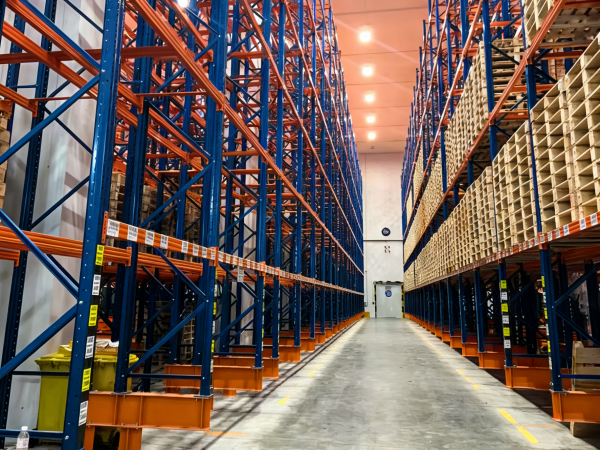
¿Qué hace que el almacenamiento en estanterías sea diferente del almacenamiento en el piso?
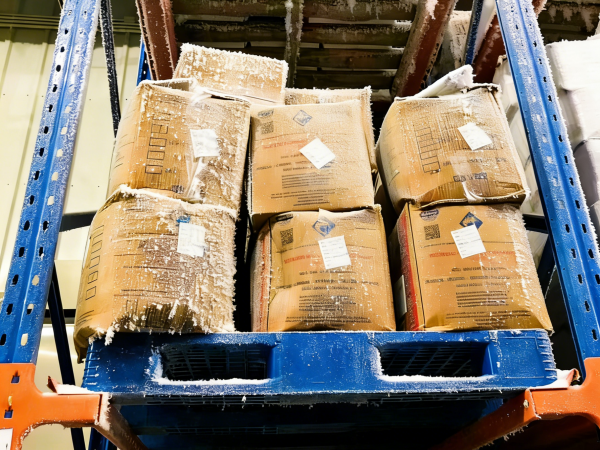
Un palé apoyado en una viga de estantería con una carga completa puede permanecer en esa posición durante días o semanas. Ese tipo de presión sostenida causa bicho raro — una deformación gradual y permanente que ocurre incluso cuando el palé no está técnicamente sobrecargado. Para ralentizar esto y sacar el máximo provecho de sus palés en el estante:
- Elige materiales de alta densidad. Una mayor densidad resiste mejor la deformación a largo plazo.
- Busca paletas reforzadas con acero. Un tubo de acero interno ralentiza significativamente la deformación y extiende la vida útil de la paleta. Tanto las paletas de HDPE como las de PP pueden reforzarse de esta manera, lo que generalmente aumenta la capacidad de carga estática a alrededor de 6 toneladas.
- No exceda la carga nominal. Sobrecargar los palés por encima de su límite indicado es la forma más rápida de acortar su vida útil.
Para la mayoría de las aplicaciones de estanterías de almacenamiento en frío, El HDPE es nuestra primera recomendación — fuerte capacidad de carga, buena estabilidad dimensional y rendimiento fiable a bajas temperaturas.
Como guía general, recomendamos:
- Carga estática: al menos 2 toneladas
- Carga dinámica: más de 1 tonelada
- Carga del rack: al menos 1 tonelada
Un consejo práctico: en entornos de bajas temperaturas, compre con una clasificación de carga superior a su requisito real. El frío afecta el rendimiento del material. Si necesita una carga de rack de 0,5 toneladas a -30 °C, especifique un palé con una capacidad nominal de 0,75 a 1 tonelada para mantener un margen de seguridad.
3 parámetros de estantería que necesitas conocer antes de comprar
El tamaño del palé tiene que coincidir con tu sistema de estanterías, no al revés. Antes de hacer un pedido, mide estas tres cosas:
Profundidad vertical Así de profundo es tu rack de adelante hacia atrás. La longitud de tu paleta necesita coincidir con esto. Si es demasiado corta, la paleta se asienta de forma inestable; si es demasiado larga, sobresale de la viga. La mayoría de los racks tienen una profundidad de 1000-1200 mm, lo que corresponde a longitudes de paleta estándar de 1000 mm o 1200 mm.
Longitud de la viga Esta es la distancia entre las dos columnas verticales en cada bahía de estantería. Determina cuántos palets caben uno al lado del otro en una fila. Por ejemplo, una viga de 2700 mm de largo normalmente permite colocar dos palets de 1200 mm de ancho con un pequeño espacio entre ellos para permitir el paso.
Altura del rack La altura total del rack te indica cuántos niveles puedes apilar. Pero la altura útil por nivel no es el espaciado completo de los niveles, sino el espaciado de los niveles menos el grosor de la viga. Tu palé más la carga deben caber dentro de esa holgura, o tu montacargas no podrá operar de forma segura.
¿Qué palet funciona mejor para tu tipo de estantería?
Estantería selectiva El tipo de estantería más común en almacenamiento en frío. Cada paleta es accesible individualmente y el tamaño es bastante estándar. A Paleta de HDPE de entrada de cuatro vías de 1200 x 1000 mm funciona bien aquí y cubre la mayoría de las configuraciones de almacenamiento en frío de alimentos y productos farmacéuticos.
Racks Autoportantes Los montacargas entran directamente en el estante para colocar y retirar paletas; esto es bueno para el almacenamiento de alto volumen de un solo SKU. El ancho de la paleta debe coincidir exactamente con la separación de los rieles. Incluso una pequeña desalineación puede hacer que las paletas se atasquen o se vuelquen. Antes de hacer un pedido, envíe las dimensiones de los rieles de su estante a su proveedor de paletas y confirme el ajuste antes de comprometerse.
Estanterías de pasillo estrecho Mayor densidad de almacenamiento, pero espacio operativo más reducido. Debido a los pasillos estrechos, incluso una ligera deformación de la paleta puede causar problemas durante las operaciones con montacargas. Elija paletas de HDPE dimensionalmente estables y asegúrate de que el ancho del palé sea al menos 100 mm más estrecho que el pasillo.
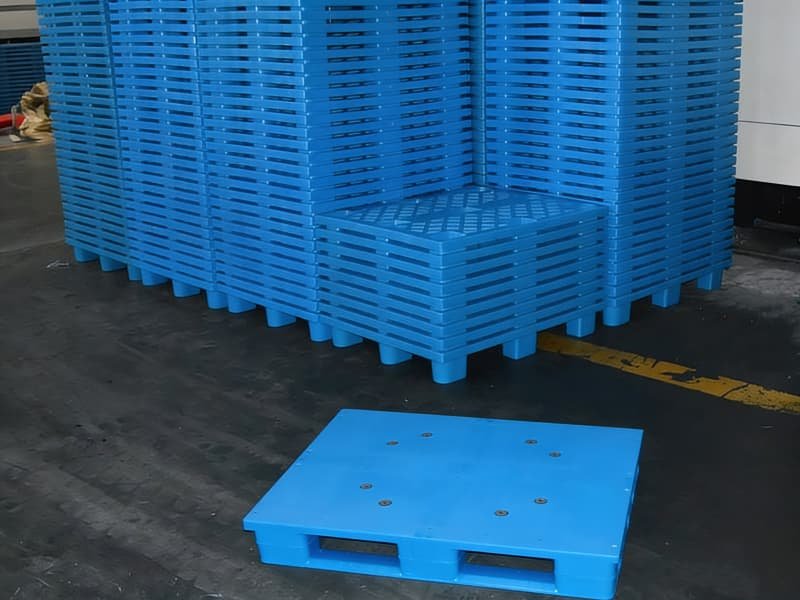
Estantería de flujo de palets Los pallets se mueven sobre rodillos incorporados desde el extremo de carga hasta el extremo de recogida por gravedad, un ajuste natural para la gestión de inventario FIFO. La base del pallet debe ser plana y lisa, o los rodillos no distribuirán la carga de manera uniforme y el pallet se atascará o desviará. Utilice paletas HDPE de cubierta plana aquí. Los diseños de nueve patas o de base compleja no funcionan bien en estanterías de flujo.
Estanterías de gran altura A menudo se combinan con sistemas automatizados de almacenamiento y recuperación (AS/RS), con alturas de estantería que alcanzan los 10 metros o más. Los sistemas automatizados funcionan con parámetros fijos, por lo que la precisión dimensional es muy importante: una paleta que esté ligeramente fuera de especificación puede provocar errores en el equipo. Elija Paletas de HDPE o acero con tolerancias dimensionales estrictas, y confirma la especificación exacta del palé con tu proveedor de sistema de automatización antes de realizar el pedido.
Rotary Racking El bastidor en sí gira para acercar las tarimas al operador. El tamaño de la tarima debe coincidir exactamente con las dimensiones del soporte del mecanismo de rotación. No adquiera tarimas de forma independiente e intente que encajen a posteriori. confirme las especificaciones requeridas directamente con su proveedor de racks antes de comprar.
Apilamiento de bloques No requiere estanterías — las tarimas se apilan directamente en el suelo. La tarima inferior soporta el peso total de todo lo que está sobre ella, por lo que la capacidad de carga y la resistencia a la deformación son más importantes aquí que en cualquier aplicación de estanterías. Elija paletas de HDPE de alta capacidad y establecer un límite estricto en la altura de apilamiento para evitar daños por compresión a largo plazo en la capa inferior.
¿Cómo mantener tus palets de almacenamiento en frío?
Los palets en almacenamiento en frío sufren más desgaste que los palets utilizados a temperatura ambiente: el moho, la acumulación de escarcha y las grietas son más comunes en entornos de baja temperatura y alta humedad. A continuación, se presentan algunos pasos sencillos de mantenimiento para mantener sus palets en buen estado:
Retire el hielo y la escarcha regularmente. Cuando se acumule escarcha o hielo en un pallet, muévelo a un área ligeramente más cálida para manipularlo; no intentes quitar el hielo dentro del congelador. Para los pallets de plástico, usa un rascador dedicado o agua tibia para limpiar la superficie. Forzar la acumulación congelada con la herramienta incorrecta puede agrietar el pallet.
Limpia el moho rápidamente. Utilice una solución desinfectante o sanitizante para tratar cualquier crecimiento de moho. Las tarimas de plástico pueden soportar el lavado a alta presión, que es la forma más efectiva de eliminar el moho y el olor. Evite los químicos agresivos que dejan residuos, ya que pueden contaminar sus productos y degradar el material de la tarima con el tiempo.
Inspeccione los palets cada 1-2 meses. Los palets de plástico son resistentes a la humedad, pero la exposición prolongada a condiciones frías y húmedas afecta al material con el tiempo. Comprueba rajaduras, deformaciones o cualquier daño visible de forma regular. Si detectas algún daño, reemplaza el palet en lugar de seguir usándolo; un palet deteriorado bajo carga representa un riesgo de seguridad.
Utilice prácticas de apilamiento adecuadas en los estantes. Si sus tarimas se utilizan en un sistema de estanterías, asegúrese de que siempre estén colocadas correctamente en las vigas. Un soporte irregular —donde la tarima sobresale o está descentrada— hace que el estrés se concentre en un área, lo que acelera la deformación y acorta la vida útil de la tarima.
Para obtener más información sobre cómo mantener su configuración de almacenamiento segura y en buen estado, consulte: Seguridad de Estanterías de Almacén
Preguntas frecuentes sobre paletas para almacenamiento en frío
¿Puedo usar un palé de plástico normal en lugar de un palé para almacenamiento en frío?
No. Los entornos de almacenamiento en frío suelen funcionar entre -30 °C y 10 °C, y las tarimas de plástico convencionales a menudo contienen un alto porcentaje de material reciclado que se vuelve quebradizo y se agrieta por debajo de -10 °C. Las tarimas para almacenamiento en frío están hechas de HDPE o PP virgen, que se mantienen estables hasta -40 °C. No es una diferencia pequeña: usar la tarima incorrecta en un entorno de congelación profunda representa un riesgo real para la seguridad y la pérdida de productos.
¿Son los palés de plástico mejores que los de madera para el almacenamiento en frío?
Sí, el plástico gana aquí. Los palés de plástico para almacenamiento en frío manejan las bajas temperaturas, la humedad, el moho y la exposición química mucho mejor que la madera. Los palés de madera absorben la humedad con el tiempo, lo que provoca el crecimiento de moho y el debilitamiento estructural, algo que no deseas en un entorno de almacenamiento en frío, especialmente para productos alimenticios o farmacéuticos.
¿Cuánto dura una paleta de almacenamiento en frío?
Un palé de almacenamiento en frío de HDPE o PP virgen suele durar de 10 a 15 años. Con una limpieza regular y un mantenimiento básico, puede prolongar razonablemente esa vida útil en otros 2 o 3 años.
¿Qué certificaciones debo buscar en un palé de almacenamiento en frío para uso alimentario?
Para almacenamiento en frío de grado alimenticio, busque palets con Certificación FDA, de contacto alimentario de la UE o ISO. Estos confirman que el material no es tóxico, inodoro y seguro para su uso con productos alimenticios. Tenga en cuenta que las certificaciones CE y REACH desempeñan funciones diferentes: no califican un palé para su uso en contacto con alimentos, por lo que no permita que esas etiquetas sustituyan a las correctas.
Conclusión
Hemos cubierto qué son los palets de almacenamiento en frío, qué características buscar, qué tamaños son estándar y cómo elegir el palet adecuado para su aplicación. En este punto, debería tener una idea lo suficientemente clara como para tomar una decisión segura. Si está listo para obtenerlos, puede comenzar navegando por nuestra palet de almacenamiento en frío de 1200 × 800. Si sus requisitos son diferentes o necesita un tamaño personalizado, simplemente envíenos una consulta y uno de nuestro equipo se pondrá en contacto con usted de inmediato.