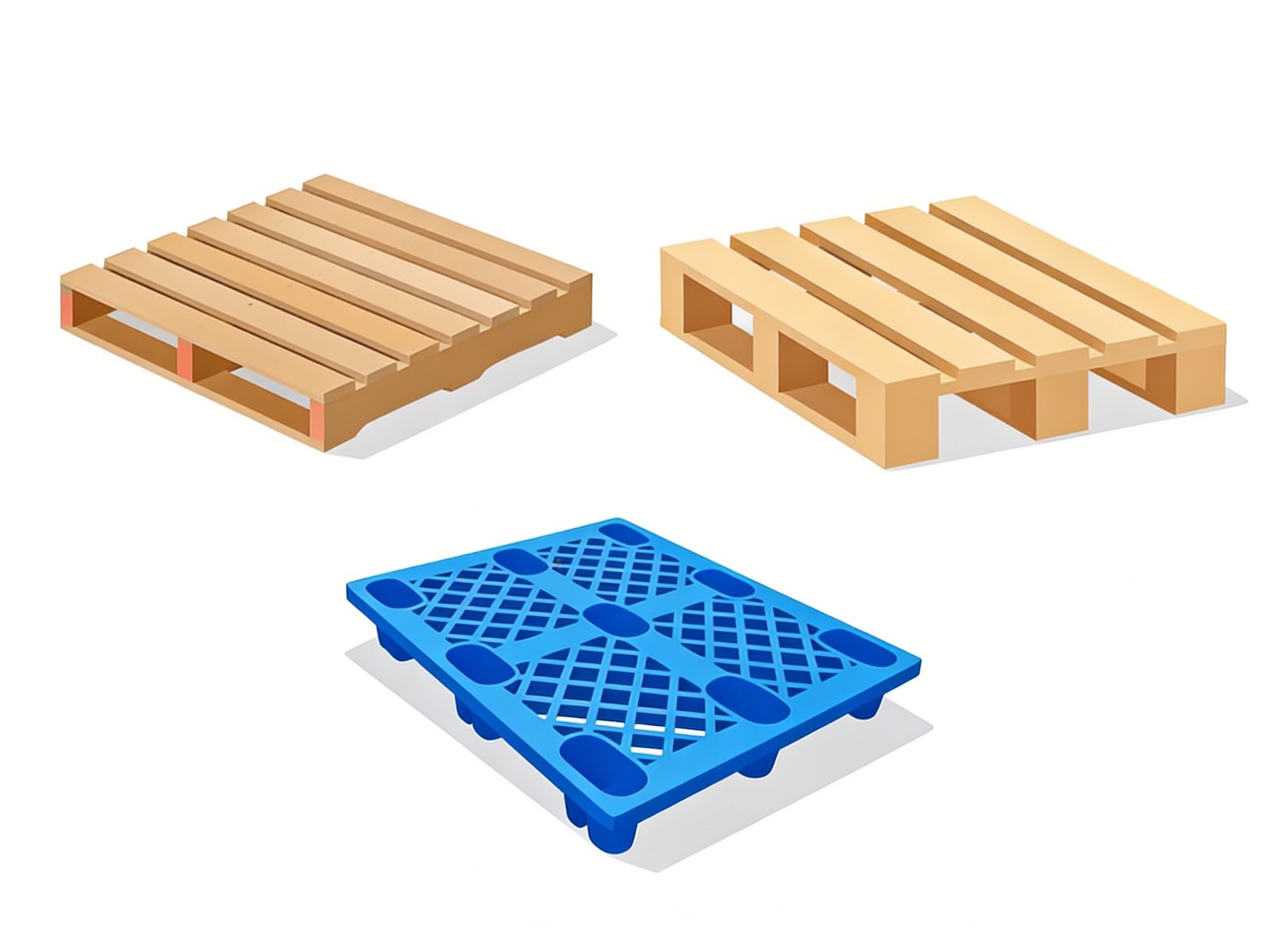
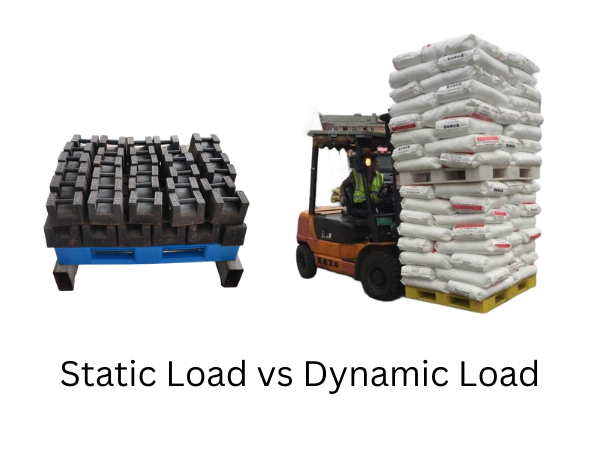
Si le preguntas a los compradores sobre la diferencia entre los palés de plástico planos y los de rejilla, la mayoría de las respuestas suenan igual: diferente superficie, diferente uso; pero eso solo rasca la superficie.
Después de más de 25 años en la industria del palé de plástico, trabajando con fábricas de alimentos, marcas de FMCG, almacenes automatizados y proyectos de almacenamiento en frío, hemos aprendido una cosa claramente:
La diferencia real entre los palets planos y los de rejilla no es lo que ves, sino cómo se comportan con el tiempo dentro de un sistema.
Empecemos con lo que todo el mundo ya sabe, y luego pasemos a la parte que la mayoría de la gente nunca explica.
Las Diferencias Más Obvias
Palé de plástico plano (Palé de plástico de cubierta sólida)
Una tarima de plástico plana utiliza un cubierta sólida, lo que significa que la superficie superior es una cubierta completamente cerrada, con sin agujeros.
Esto facilita la limpieza y la hace mucho más adecuada para entornos sensibles a la higiene.
Las tarimas plásticas planas se suelen elegir para:
- Almacenes interiores
- Sistemas Automatizados de Almacenamiento y Recuperación
- Industrias alimentaria, farmacéutica y química
- Requisitos de alta higiene
- Sistemas de almacenamiento en estanterías
Un malentendido común es que un palé de cubierta sólida debe tener una base completamente cerrada.
En realidad, muchos palets de cubierta sólida usan una superficie superior cerrada mientras la parte inferior presenta una estructura acanalada o reforzada en forma de rejilla, como se muestra arriba, para equilibrar el costo, el peso y el rendimiento estructural.
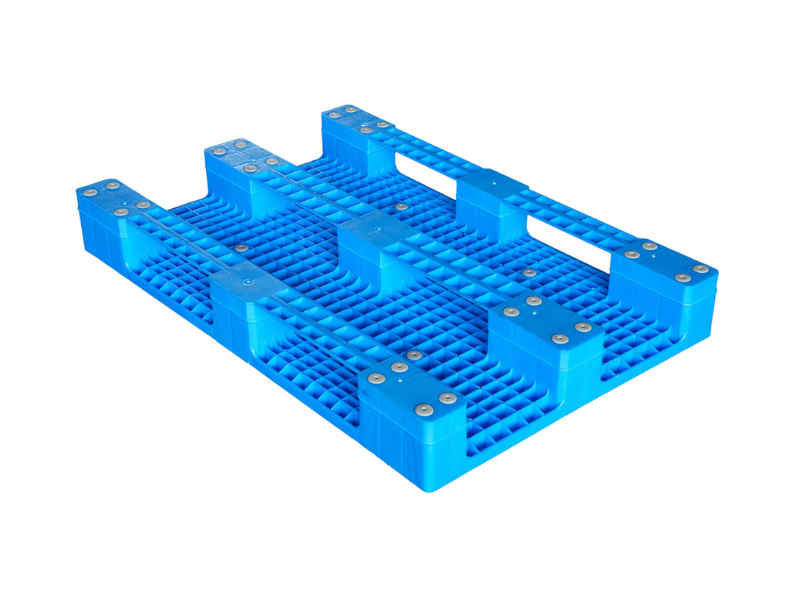
Paleta de plástico (ventilada / cubierta abierta / Paleta de plástico de rejilla)
Una tarima de plástico tipo rejilla utiliza un terraza abierta diseño.
La superficie puede presentar orificios cuadrados, aberturas ranuradas o patrones de panal de abejas.
Debido a las aberturas, la limpieza suele requerir un enjuague más exhaustivo.
En la práctica, los palets de rejilla suelen presentar uno de dos diseños de rejilla:
- Malla gruesa (tamaño del agujero > 30 mm)
- Cuadrícula fina (tamaño del agujero < 15 mm)
Se utilizan comúnmente para:
- Almacenamiento de suelo en cuarto frío
- Procesamiento de mariscos
- Almacenamiento de frutas y verduras
- Entornos exteriores
- Manejo terrestre de alta frecuencia
Una comparación rápida que necesitas saber
| Artículo | Paleta plana de plástico | Palé de plástico de rejilla |
| Superficie de la cubierta | Completamente cerrado | Abierto, ventilado |
| Capacidad de carga | Más alto | Potencialmente más bajo |
| Rendimiento de higiene | Excelente | Moderada |
| Fuga de líquido | No | Sí |
| Esfuerzo de limpieza | Muy fácil | Requiere más cuidado |
| Peso | Más pesado | Encendedor |
| Idoneidad para estanterías | Muy adecuado | Debe ser verificado |
| Nivel de precios | Más alto | Bajar |
Desde un punto de vista de compras, esto generalmente lleva a una conclusión simple para ti:
- Si los bienes son de alto valor, pesados, sensibles a la contaminación, de importancia crítica para la higiene, utilizados por marcas multinacionales de FMCG, automatizados o almacenados en estanterías — elija paletas planas de plástico.
- Si el ambiente es húmedo, requiere drenaje, implica rotación frecuente o el control de costos es crítico — elija tarimas de plástico de rejilla.
Hasta ahora, estas son las diferencias visibles. Las más críticas rara vez se discuten.
Las diferencias que nadie te cuenta
Las siguientes diferencias rara vez aparecen en los catálogos de productos.
Provienen de años de pruebas en nuestra fábrica, proyectos a nivel de sistema y comentarios directos de clientes que confían en las tarimas en operaciones reales, no solo en el papel.
Ruta de carga completamente diferente
Un palet plano no se apoya en costillas individuales para soportar peso.
En cambio, toda la cubierta trabaja en conjunto para distribuir cargas puntuales en cargas superficiales.
¿Qué significa esto en la vida real?
Significa que el palé se mantiene estable incluso cuando la carga no está perfectamente colocada, ya sea porque la base está desnivelada o el peso está concentrado en un área.
Es por esto que, con el mismo material HDPE y la misma carga, los palés planos tienden a permanecer estables en el estante con el tiempo, mientras que los palés de rejilla son más propensos a ceder gradualmente debido a la deformación por fluencia.
Las tarimas de rejilla siguen una ruta de carga diferente:Carga → vigas de la rejilla → costillas locales → largueros / pies
No hay una capa continua de cubierta que actúe como amortiguador.
En aplicaciones reales (no teóricas), las mercancías cargadas en puntos como cajas, contenedores metálicos o pies de IBC concentran la presión en solo unas pocas costillas.
Con el tiempo, esto lleva a:
- colapso de terraza local
- costillas de parrilla agrietadas
- fluencia plástica permanente
Por eso los palés de rejilla a menudo parecen “bien” a corto plazo, pero desarrollan problemas más adelante.
Mecanismos de Deformación a Largo Plazo
Las tarimas planas experimentan principalmente Avance Global, lo que significa la tarima edades en conjunto.
La deformación ocurre lentamente, permanece incluso a través de la cubierta, y, lo que es más importante, es previsible.
Debido a esto, los ingenieros pueden controlarlo mediante espesar la cubierta, optimización de nervaduras de refuerzo, o añadiendo barras de acero.
Es por eso que las tarimas planas son comúnmente confiables en Sistemas AS/RS, estantería de gran altura, y aplicaciones que requieren una vida útil de más de 10 años.
Los pallets de rejilla se comportan de manera muy diferente.
Suelen sufrir de Creep localizado, donde comienza la deformación en puntos débiles específicos, usualmentemente el costillas centrales o directamente bajo cargas pesadas.
Una vez que comienza este tipo de deformación, la resistencia estructural disminuye rápidamente.
La capacidad de carga no se desvanece gradualmente, sino que se cae de repente.
Esto explica por qué muchos palets de rejilla parecen estar bien al principio, y luego fallar de repente después de 2-3 años, aunque todavía parezcan aceptables en la superficie.
La brecha real dentro de los sistemas de estanterías
En los sistemas de estanterías selectivas, dos palabras clave son las más importantes: Compartición de carga de viga y Control de deflexión.
Estos son también los dos puntos a los que los clientes vuelven con más frecuencia después de un uso prolongado.
Con paletas planas, la el eje participa activamente en la distribución de carga.
Los tirantes actúan principalmente como estructuras de soporte, lo que significa la deflexión real se mantiene menor y La tensión de la viga se distribuye de forma más uniforme..
Esto es exactamente lo que buscan nuestros clientes que operan almacenes automatizados, centros de distribución de bienes de consumo, y plantas farmacéuticas o químicas.estabilidad en la que pueden confiar a lo largo del tiempo.
Las estanterías de rejilla se comportan de manera diferente en las estanterías.
Aquí, la cubierta en sí no comparte la carga.
La mayor parte de la fuerza se concentra en el corredores y costillas locales, lo que hace tensión de viga mucho más localizada y deja mucho menos margen de error.
Como nuestros ingenieros explican a menudo durante las evaluaciones de estanterías —y como muchos clientes confirman más tarde—los pallets de rejilla no están prohibidos en los estantes, pero su tolerancia a la variación es mucho menor.
Diferencias de Estabilidad de Carga
Las tarimas planas ofrecen un mayor área de contacto, lo que mantiene coeficiente de fricción más estable y ayuda reducir el deslizamiento de la carga durante el manejo.
Esta estabilidad es lo más importante en paletizado automatizado, líneas de transporte de alta velocidad, y almacenamiento en altura, donde incluso pequeños cambios pueden crear problemas en el sistema.
Las tarimas de rejilla se comportan de manera diferente.
Porque tienen menos puntos de contacto, fricción depende en gran medida de bordes de cartón, posiciones de vigas de rejilla, y el consistencia de la parte inferior de la carga.
Por eso las mismas cajas a menudo deslizar más fácilmente en paletas de rejilla que en paletas planas.
Por esta razón, en Enlightening Pallet, todo paletas de rejilla utilizados en proyectos del sistema están equipados de serie con almohadillas antideslizantes.
Comportamiento Diferente en Sistemas de Automatización
En operaciones automatizadas a nivel de sistema, no hay una regla estricta que las tarimas de rejilla no pueden funcionar o eso Las tarimas planas son siempre mejores.
Los sistemas de automatización no se preocupan por la apariencia, se preocupan por cómo se comporta un palé con el tiempo.
Lo primero que ven es Deflexión, que simplemente significa cuánto se deforma un palé bajo carga a largo plazo.
La directriz comúnmente aceptada es Deflexión ≤ L / 300 (L siendo la luz de carga).
Mientras la deflexión permanezca dentro de este rango, transportadores, transelevadores y carretillas elevadoras funcionan de manera fiable.
Lo que sigue es Tasa de fluencia.
Todos los plásticos tienen fluencia, y la automatización no espera deformación cero; espera deformación que sea uniforme y predecible, sin falla local temprana.
Entonces está Estabilidad Dimensional.
Después de uso prolongado y cambios repetidos de temperatura, el palé largo, ancho, diagonal y planitud debe permanecer dentro de las tolerancias del sistema.
Las desviaciones a nivel de milímetro que se ignoran en los almacenes manuales pueden disparar alarmas en sistemas AS/RS.
Repetibilidad de la Geometría Inferior es igualmente crítico.
Las alturas de los corredores y los pies deben permanecer consistentes en cada paleta, ya que la automatización depende de ello repetibilidad, no fortaleza de unidad única.
Finalmente, los sistemas observan Compatibilidad de interfaz y Modo de Falla.
El modo de fallo preferido es flacidez gradual con señales de advertencia claras, no rotura o colapso repentino de costilla.
Cuando se cumplen estas condiciones a nivel de sistema, ambas paletas, planas y de rejilla, pueden operar de manera confiable en sistemas automatizados.
Preguntas frecuentes
¿La capacidad de carga de los palés de rejilla es siempre inferior a la de los palés planos?
No.
Es incorrecto asumir que los paletas de rejilla son intrínsecamente más débiles.
La capacidad de carga depende en gran medida de Diseño de costillas y Refuerzo.
Con costillas optimizadas y refuerzo de acero, las tarimas de rejilla pueden alcanzar niveles de rendimiento muy altos.
En Enlightening Pallet, tarimas de rejilla reforzada pueden lograr cargas estáticas de hasta 6 toneladas, superando a los palés planos mal diseñados.
¿Los palés de rejilla son más propensos a deformarse o romperse?
No necesariamente.
La deformación depende del diseño y las condiciones de operación.
Las tarimas de rejilla corren un mayor riesgo bajo cargas puntuales, almacenamiento estático en estanterías altas o cargas pesadas en almacenamiento en frío.
Bajo temperaturas normales, cargas razonables y circulación a corto plazo, las diferencias suelen ser mínimas.
¿Las tarimas planas son siempre más pesadas y caras?
No.
El peso y el costo dependen del uso del material, la estrategia de refuerzo y el diseño del molde, no solo del tipo de plataforma.
Por ejemplo, nuestro paletas de plástico reciclado con cubiertas cerradas se optimizan en peso y eficiencia de costos sin sacrificar el rendimiento.
¿Son los palés de rejilla más arriesgados en el almacenamiento en frío?
Sí, bajo Almacenamiento en Frío + Carga Pesada condiciones, los palets de rejilla enfrentan mayores desafíos debido a la higiene, el control de la humedad, el estrés estructural y la compatibilidad en el manejo.
Sin embargo, a través de la optimización del diseño (rejillas más densas, material HDPE, modificadores de impacto, almohadillas de control de humedad), los riesgos pueden reducirse, aunque el rendimiento general todavía tiende a favorecer a los palés planos.
Pensamiento final
Los palets planos gestionan el riesgo del sistema, mientras que los palets de rejilla se centran en la eficiencia operativa.
elegir la paleta adecuada no se trata de forma, sino de cómo se comporta esa paleta dentro de su sistema con el tiempo.
Si todavía hay vacilación, eso es normal. En los proyectos reales, la mayoría de los fallos de las tarimas no son causados por el material incorrecto, sino por diseño desajustado, cargas subestimadas o validación de sistema faltante—problemas que a menudo aparecen solo después de que las operaciones comienzan.
Este es exactamente el lugar donde Enlightening Pallet‘s Palets de Plástico ayudas. Con 600+ modelos de paletas, damos soporte a escenarios de manipulación manual, almacenamiento en estanterías, almacenamiento en frío y automatización completa, ofreciendo larga vida útil, cumplimiento de ISO 9001 y GRS, y opcional Integración de RFID para cumplir con los requisitos de automatización y seguimiento. Si está planeando un proyecto nuevo o solucionando problemas de uno existente, comparte tu aplicación, carga las condiciones y los detalles del sistema con nosotros. Nuestros gerentes de ventas te ayudan a seleccionar o personalizar el palé adecuado. antes de que aparezcan los problemas, no después.