Desechar los palets de plástico de forma incorrecta puede dañar el medio ambiente, infringir las normas de seguridad contra incendios e incluso acarrear multas. Es importante gestionarlos de manera responsable. Administrar correctamente su equipamiento ayuda a mantener las operaciones en marcha, y cuando se trata de palets de plástico, conviene saber cómo desecharlos o reutilizarlos cuando ya no sean necesarios. Ya sea en buen estado o dañados, esta guía le llevará paso a paso para asegurarse de obtener el máximo valor cumpliendo con la normativa vigente.
Paso 1: Preparación – Un Primer Paso Fundamental
Antes de tomar cualquier medida, es importante preparar los palets correctamente. Esta es la base de todo lo que viene a continuación. Esto es lo que debe hacer primero:
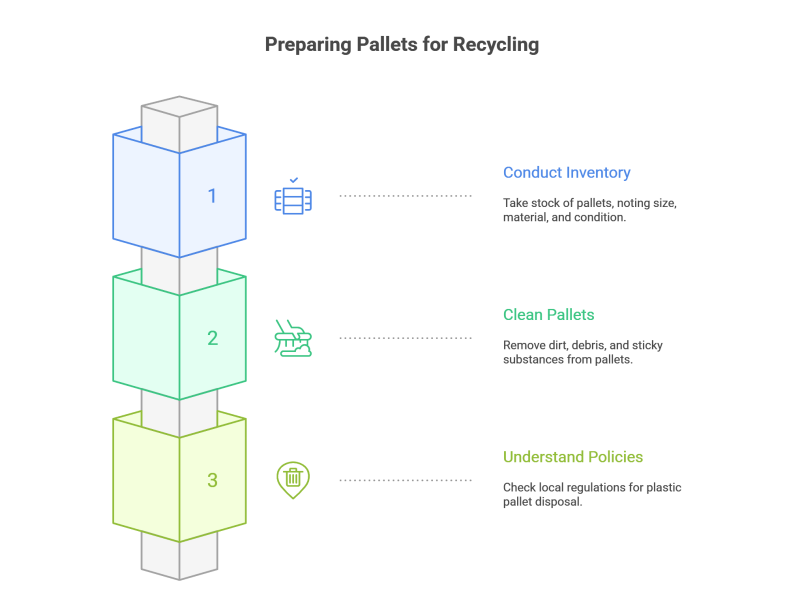
Realice un Inventario de sus Palets
Comience haciendo un recuento de sus palets. Necesita saber exactamente cuántos tiene, su tamaño, material (HDPE o PP), estado y si todavía son utilizables.
- Compruebe si hay Daños: ¿Los palets están agrietados, deformados o rotos? Si están en mal estado, puede que necesite considerar el reciclaje o enviarlos a una empresa especializada en gestión de residuos.
- Clasifíquelos por Estado: Organice los palets en categorías: buen estado, ligeramente usados o dañados. Esto le ayudará a priorizar sus opciones más adelante.
Limpie los Palets
Limpiar los palets es una tarea sencilla pero importante. Tanto si planea reutilizarlos internamente, venderlos o reciclarlos, tener los palets limpios facilitará el proceso y aumentará su valor. Así es como hacerlo:
- Elimine la Suciedad y los Residuos: Use un cepillo o un paño de limpieza para eliminar la suciedad, el polvo y cualquier material residual.
- Elimine las Sustancias Pegajosas: Si hay adhesivos u otros residuos, retírelos con un agente de limpieza adecuado.
- Compruebe si hay Clavos o Piezas Metálicas: Si hay clavos o piezas metálicas sobresalientes, retírelos para evitar dañar el equipo de reciclaje o que los palets sean inseguros para su reutilización.
Conozca las Políticas de Reciclaje Locales
Es importante consultar con las autoridades locales o los departamentos de medio ambiente sobre las normativas específicas relativas a la eliminación de palets de plástico. Cada zona puede tener sus propias regulaciones, como por ejemplo:
- Puntos de Recogida de Residuos Plásticos: Algunas regiones pueden tener ubicaciones de reciclaje designadas para plásticos, incluidos los palets.
- Etiquetas o Marcas Requeridas: Asegúrese de que sus palets tienen los símbolos o marcas de reciclaje de plástico necesarios que indican su material reciclable.
Paso 2: Evalúe el Estado de los Palets
Una vez preparados los palets, es necesario evaluar su estado con mayor detalle. Esto es fundamental, ya que los pasos siguientes dependerán de si los palets están en buen estado o deben desecharse.
Para Palets en Buen Estado
Si los palets están en buen estado, tiene varias opciones para maximizar su valor.
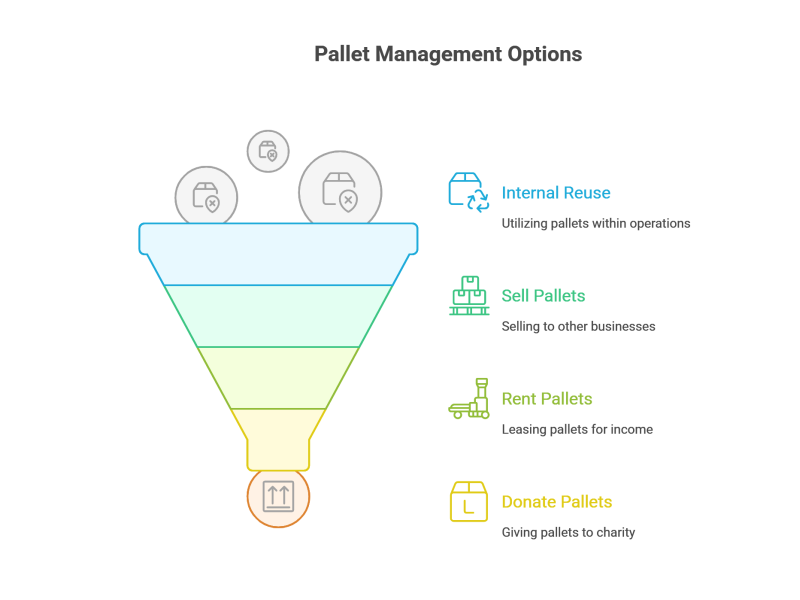
Reutilización Interna
La primera opción siempre debe ser reutilizar los palets dentro de sus propias operaciones. Quizás haya áreas de su fábrica o almacén donde estos palets puedan usarse para almacenar materiales o como plataformas para el transporte de mercancías. Esto ahorra dinero en la compra de palets nuevos y prolonga su vida útil.
Sin embargo, si los palets no se adaptan a las necesidades específicas de otros departamentos, puede que sea necesario modificarlos. En ese caso, cortarlos podría ser una solución práctica. Para más detalles sobre cómo hacerlo, lea nuestro artículo: Cómo Cortar Palets de Plástico
Vender
Si no va a reutilizar los palets internamente, venderlos es una excelente opción. Muchas empresas, como pequeños fabricantes, almacenes de comercio electrónico y empresas de logística, suelen necesitar palets y pueden aceptar un desgaste leve.
- Contacte con Empresas Locales: Comuníquese con empresas cercanas que utilicen palets con regularidad.
- Use Redes del Sector: Publique en grupos del sector (por ejemplo, grupos de oferta y demanda de parques industriales o logística).
- Establecer precios según la condición:
- Tarimas nuevas: 50%-70% de descuento.
- Poco usado:%-30%-50 de descuento.
- Tarimas nuevas: 50%-70% de descuento.
- Publique en Plataformas: Use Alibaba o Facebook Marketplace para una mayor difusión.
Alquiler
Si tiene muchos palets y desea obtener unos ingresos constantes, también podría considerar alquilarlos a otras empresas que necesiten palets con frecuencia pero no quieran comprar los suyos. Puede encontrar posibles arrendatarios a través de empresas de logística, operadores de almacenes o servicios de alquiler especializados en gestión de palets.
Donar
Si tiene muchos palets y desea obtener ingresos constantes, considere alquilarlos a empresas que necesiten palets pero no quieran comprar los suyos. Puede encontrar arrendatarios a través de plataformas del sector como Alibaba, grupos de LinkedIn, o contactando directamente con empresas de logística locales y operadores de almacenes.
Para Palets Rotos o Dañados
Cuando los palets están rotos o ya no son utilizables, la mejor opción es reciclarlos.
Contacte con Empresas de Reciclaje Especializadas
- Encuentre una Empresa de Reciclaje: Busque empresas locales que gestionen el reciclaje de plásticos. Pueden descomponer los palets y reutilizar el material plástico para fabricar nuevos productos. Confirme siempre que la empresa elegida esté autorizada para gestionar residuos industriales. Si desea saber más sobre el proceso de reciclaje y cómo se reutilizan los palets de plástico, consulte nuestro artículo: Guía sobre el Reciclaje de Palets de Plástico.
- Trituración y Granulación: La empresa de reciclaje triturará los palets en pequeñas piezas y las procesará en gránulos que podrán reutilizarse para nuevos productos.
Eliminación de Residuos Sólidos Industriales
- Eliminación de Residuos: Si no tiene acceso a un reciclador especializado, puede tratar los palets como residuos sólidos industriales generales. Contacte con una empresa de gestión de residuos industriales que pueda recoger y procesar los palets de forma segura. Asegúrese de obtener un certificado de eliminación de la empresa para conservarlo en sus registros.
Contacte con Fabricantes de Palets para Intercambio o Reciclaje
Si sus palets han superado su vida útil pero aún desea evitar enviarlos a un vertedero, considere contactar con su fabricante de palets. Muchos proveedores ofrecen programas de "usado por nuevo" en los que recogen los palets dañados a cambio de un descuento en los nuevos. Esta es una solución sostenible y rentable, especialmente para palets de plástico de alta calidad.
En Enlightening Pallet, ofrecemos una garantía de tres años en cada lote de palets de plástico, con reemplazo de cualquier unidad dañada.
Paso 3: Proceso y Equipos de Reciclaje
Si gestiona el reciclaje internamente o si los palets se envían a un reciclador, aquí tiene una descripción básica del equipo implicado:
Trituradoras
Las trituradoras descomponen los palets en piezas más pequeñas y manejables. Son esenciales para el proceso de reciclaje y facilitan el transporte del material.
Granuladoras
Tras la trituración, las granuladoras reducen aún más el plástico en gránulos uniformes que pueden reutilizarse en la fabricación de nuevos productos.
Sistemas de Lavado
Para garantizar plástico reciclado de alta calidad, los palets deben limpiarse. Esto implica el uso de sistemas de lavado para eliminar suciedad, adhesivos y cualquier otro contaminante.
Extrusoras
Las extrusoras se utilizan para fundir y dar nueva forma a los gránulos de plástico convirtiéndolos en nuevos productos, como nuevos palets. Esto convierte los palets de plástico en una solución verdaderamente sostenible para la logística y la fabricación.
Consideraciones Finales
Al valorar la mejor manera de gestionar sus palets de plástico, hay algunos puntos importantes a tener en cuenta. Si sus palets aún están en buen estado, evite venderlos a pérdida. Tómese el tiempo de comparar precios entre diferentes compradores o revendedores para asegurarse de obtener un trato justo. También es fundamental mantener registros detallados de todas las transacciones, ya sea que venda, recicle o done. Esto no solo mantiene todo organizado, sino que también garantiza el cumplimiento de las normativas medioambientales. De cara al futuro, vale la pena considerar sus próximas compras de palets. Optar por palets más reciclables o establecer un sistema de circuito cerrado puede ayudar a reducir residuos y hacer sus operaciones más sostenibles.